Peugeot 3008 II (2016–2024) problems and how to buy a good one.
Mostly yes. Check the 1.2 PureTech wet belt history, the 1.5 BlueHDi cam chain recall, AdBlue and DPF faults, and every other recall by VIN.
The short answer
- The second Peugeot 3008 (2016–2024), European Car of the Year 2017, is a roomy, well-made family SUV; 2017 cars still passed the British MOT at 77.7 percent at seven years, against an average of 69.5 percent.
- The big risks are the 1.2 PureTech's timing belt running in oil, the 1.5 BlueHDi's camshaft chain, AdBlue tanks and particulate filters on the diesels, and battery recalls on the plug-in hybrids.
- Buy one with full service history and every recall done; a 1.2 PureTech only with proof of on-time oil changes and a belt check or change. Stellantis has extended cover for the belt and the chain.
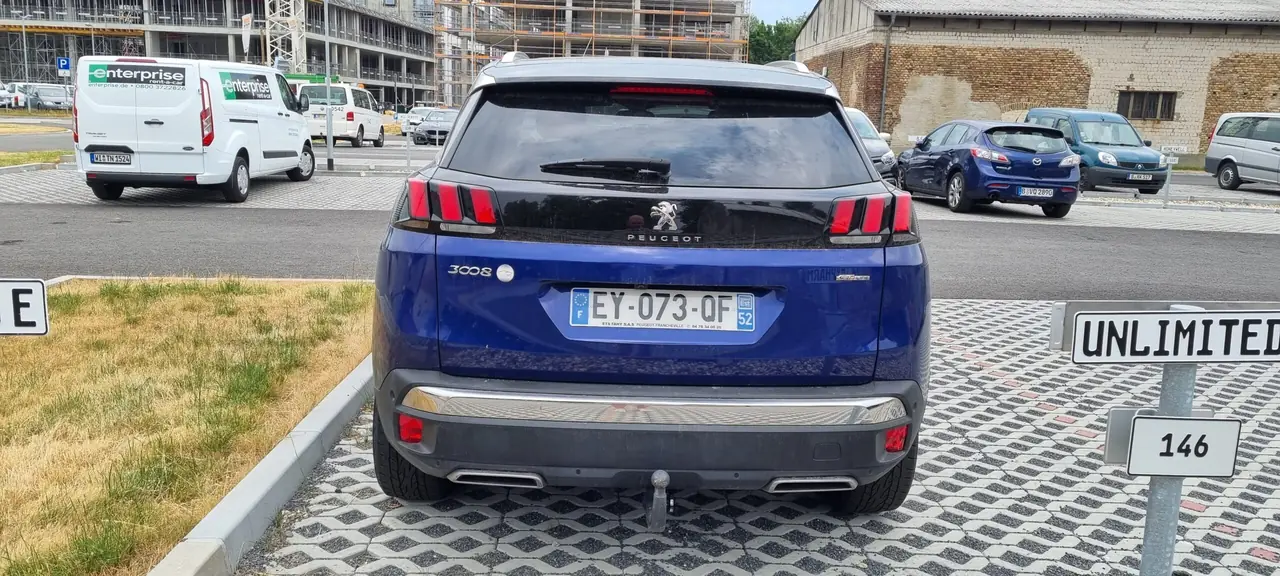
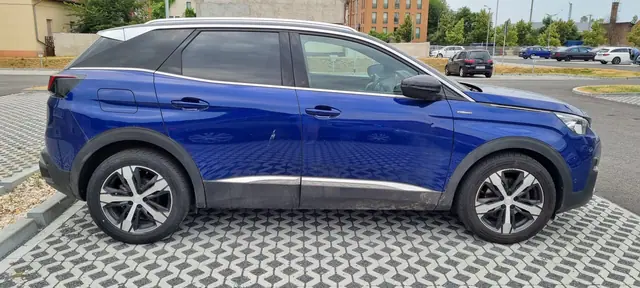
Peugeot presented the second 3008 at the Paris motor show in October 2016 and built it until June 2024 (L'argus). It turned the boxy first 3008 into a proper SUV with Peugeot's i-Cockpit, and in March 2017 it became the first SUV ever to win European Car of the Year (AutoGuide). The Opel/Vauxhall Grandland shares its basis (Gebrauchtwagenberater).
This guide covers the common Peugeot 3008 problems engine by engine, what the MOT, ADAC and owner-survey data say, the recalls and extended warranties, the plug-in hybrids, prices and which version to buy. In short: the body and cabin age well, but the 1.2 PureTech belt, the 1.5 BlueHDi chain and the diesels' AdBlue systems decide whether a used 3008 is a good buy or an expensive one.
The Peugeot 3008 II (2016–2024) at a glance
- October 2016: launch with five engines: the 1.2 PureTech and 1.6 THP petrols and three BlueHDi diesels (ADAC). UK sales started in January 2017 (The Car Expert).
- March 2017: European Car of the Year, voted by 58 journalists from 22 countries (AutoGuide).
- February 2018: the 1.5 BlueHDi 130 diesel arrives (L'argus).
- August 2018: the 1.6 THP 165 with the EAT6 automatic leaves the range (L'argus); Honest John also lists a later 1.6 PureTech 180 with the eight-speed EAT8.
- June 2019: the Hybrid4 plug-in hybrid with 300 PS and four-wheel drive (L'argus); a front-wheel-drive Hybrid 225 followed (Parkers).
- September 2020: facelift (L'argus) with the "sabre-tooth" LED daytime running lights and a frameless grille (Autocar). The 2.0 BlueHDi diesels were dropped in 2020 (L'argus).
- June 2024: end of production; the third-generation 3008 takes over (L'argus).
The boot of a 1.2 PureTech holds 520 to 1,482 litres (auto-data.net); in the plug-in Hybrid 225 it shrinks to 395 litres (Parkers).
Engines and specs
| Engine | Power | Years | Notes |
|---|---|---|---|
| 1.2 PureTech petrol (three-cylinder) | 130 PS | 2016–2024 | timing belt running in oil |
| 1.6 THP petrol | 165 PS | 2016–2018 | EAT6 automatic, timing chain |
| 1.6 PureTech petrol | 180 PS | later years | EAT8 automatic, timing chain |
| 1.6 BlueHDi diesel | 100–120 PS | from 2016 | turbo, water pump, AdBlue tank |
| 1.5 BlueHDi diesel | 130 PS | 2018–2024 | camshaft chain, AdBlue tank, DPF |
| 2.0 BlueHDi diesel | 150 / 180 PS | 2016–2020 | AdBlue tank, high-pressure pump, water pump |
| Hybrid 225 plug-in | 225 PS | 2020–2023 | front-wheel drive, e-EAT8 |
| Hybrid4 300 plug-in | 300 PS | 2019–2023 | four-wheel drive, e-EAT8 |
Sources: L'argus, Honest John, Parkers, Gebrauchtwagenberater; the diesels' weak points are the ones L'argus lists. Late in production, a 1.2 Hybrid 136 48-volt mild hybrid joined the range (Honest John, Parkers).
Which engine for which driver
The German motoring club ADAC calls the three-cylinder PureTech surprisingly strong and economical, though less smooth than the four-cylinders. It rates the early 1.6 BlueHDi as strong and frugal but notes reported turbo damage, and the later 1.5 BlueHDi as a good balance of performance and consumption. L'argus finds the 1.5 louder than the 1.6 and no stronger or more economical. Autocar advises against a diesel if you don't do many motorway miles, and recommends the 2.0 BlueHDi for towing, rated at up to 2,000 kg.
Gearboxes
The 3008 came with a six-speed manual, the six-speed EAT6 automatic and later the eight-speed EAT8 (Gebrauchtwagenberater). The four-cylinder petrols came with the automatic as standard (ADAC). Only the Hybrid4 has four-wheel drive; every other 3008 II is front-wheel drive.
Fuel economy
| Engine | Real MPG average | Litres per 100 km |
|---|---|---|
| 1.2 PureTech 130 manual | 41.5 mpg | about 6.8 |
| 1.2 PureTech 130 automatic | 38.2 mpg | about 7.4 |
| 1.6 PureTech 180 EAT8 | 35.5 mpg | about 8.0 |
| 1.6 BlueHDi 120 | 49.9 mpg | about 5.7 |
| 1.5 BlueHDi 130 | 48.0 mpg | about 5.9 |
| 2.0 BlueHDi 180 EAT8 | 41.7 mpg | about 6.8 |
Source: Honest John Real MPG (UK gallons, owner-reported). The diesels are the thriftiest, but they fall well short of their official NEDC figures: owners of the 1.5 BlueHDi 130 get 70 percent of it.
Living with it
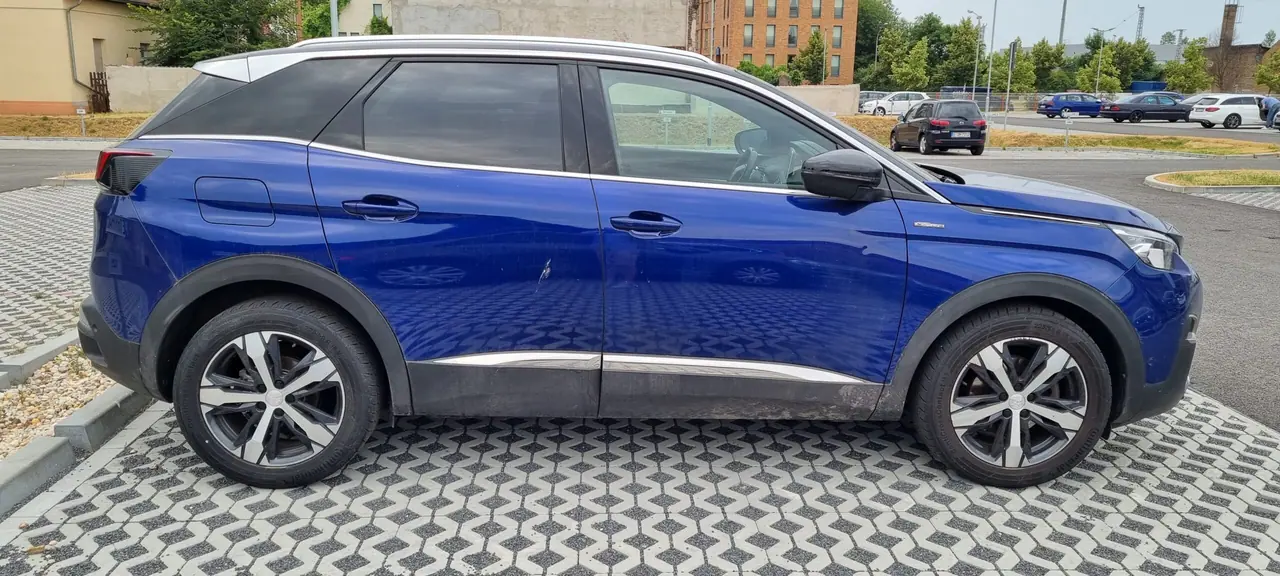
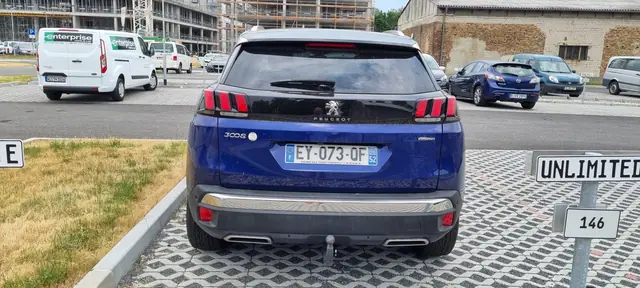
What Car? calls the 3008 a great family SUV and a good used buy; the boot is large, and the top of the rear bumper is left unpainted to resist scuffs. The ADAC praises the comfortable suspension, well-shaped seats and good build quality, but says the small, low-set steering wheel takes getting used to and all-round visibility in town is limited. Parkers likes the styling, interior and punchy engines, but finds the touchscreen controls annoying and the interior storage poor; Autocar calls the digital instruments a bit contrived.
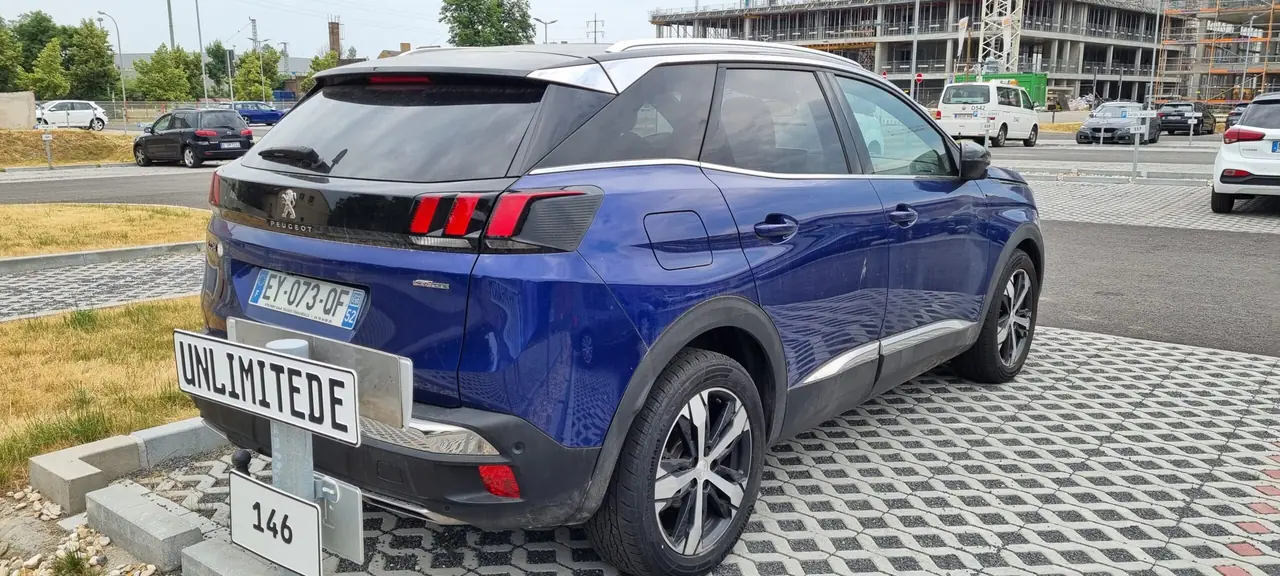
Even the entry-level UK Active has a reversing camera, 18-inch alloys, LED headlights and an 8-inch touchscreen with Apple CarPlay and Android Auto; Allure adds keyless entry, half-leather seats and a 10-inch screen, and GT adds adaptive cruise control (Parkers). Motor1's 1.6 BlueHDi GT Line long-termer averaged 56.4 mpg over 11,763 miles, and its only fault was a sluggish infotainment system fixed by a software update. If you are also considering a Japanese rival from the same years, read our Mazda CX-5 guide.
Reliability: MOT, ADAC and survey data
In What Car?'s reliability survey the 3008 came 18th of 34 family SUVs with 95.8 percent, ahead of the diesel Nissan Qashqai and behind the Hyundai Tucson and Volkswagen Tiguan; owners reported slightly better mechanical reliability from the petrols. The British MOT data show how the cars age:
| Age of 2017-built cars | MOT tests | Pass rate |
|---|---|---|
| 3 years | 17,494 | 91.0% |
| 4 years | 16,525 | 87.0% |
| 5 years | 13,216 | 83.7% |
| 6 years | 16,518 | 79.5% |
| 7 years | 21,756 | 77.7% |
Source: passyourmot. At seven years the average for all cars of that age was 69.5 percent, so the 3008 was 8.2 points better; the average seven-year-old 3008 had covered about 56,400 miles (about 90,800 km). Tyres, brakes, body and suspension cause the most failures. CarHunch found 2017 petrols passing their MOT first time more often than diesels (88.3 against 85.5 percent).
In Germany the 3008 sold in too few numbers for the TÜV report, but the ADAC's own used-car report gives 10.9 breakdowns per 1,000 cars for 2017 models, 9.9 for 2018, 6.2 for 2019 and 4.9 for 2020, and rates its reliability as average.
Peugeot 3008 problems: what goes wrong
1.2 PureTech: the wet timing belt
The 1.2 PureTech's timing belt runs in engine oil. With late oil changes, the wrong oil or many short trips it can break up, which usually ends in engine damage (Gebrauchtwagenberater). Belt debris can block the oil pickup and the vacuum pump for the brake servo, so the oil-pressure light is often the first warning and braking assistance can weaken; Peugeot recalled cars to inspect or replace the belt and update the engine software (ADAC). Peugeot, Citroën and DS cut the belt replacement interval from 10 years or 175,000 km to 6 years or 100,000 km (L'argus). A workshop can check the belt's width through the oil filler with a gauge (Triscan).
PureTech oil use, carbon and spark plugs
The 1.2 can burn oil, and carbon can block the inlet manifold (Autocar). L'argus lists oil consumption, the timing belt and spark plugs as the 1.2's weak points. Since March 2024, Stellantis has covered belt failures and excessive oil consumption on earlier 1.0 and 1.2 PureTech engines for up to 10 years or 175,000 km, with parts and labour (Peugeot UK, L'argus); the conditions include following the manufacturer's service schedule (Caradisiac). According to Passionnément Citroën, the engines concerned were built between April 2014 and 20 June 2022.
1.5 BlueHDi: camshaft chain
In 2025 Stellantis recalled 1.5 BlueHDi engines built from October 2017 to January 2023 because the camshaft chain can wear early, cause unusual noise or vibration and, in the worst case, break (Peugeot UK). For the 3008 the recall covers cars built from 11 October 2017 to 31 January 2023 under code MXL (car-recalls.eu). Peugeot UK now covers the chain for 10 years or 150,000 miles if the car was maintained to schedule with approved oil.
AdBlue tank and SCR system
The 1.6, 1.5 and 2.0 BlueHDi diesels can show an AdBlue warning that ends with a new AdBlue tank; Peugeot pays part of the cost (L'argus). What Car? lists cars built from 1 October 2019 to 17 March 2020 whose urea injection could block and needed a software update.
Particulate filter and 1.6 BlueHDi turbo
Particulate filters often clog, so Autocar steers short-trip drivers away from the diesels. On some diesels, the filter can overheat and crack; Peugeot recalled cars under codes KWM, KWJ and KWL (ADAC, australiancar.reviews). What Car? also lists cars built from 28 January to 7 May 2018 whose filter could be damaged by a plastic exhaust part. On the early 1.6 BlueHDi, the ADAC reports turbo failures.
EAT6 and EAT8 automatic gearboxes
Gebrauchtwagenberater reports odd shifts in second and third gear on the EAT8 and a grabbing clutch on some EAT6 cars. On the plug-in hybrids, L'argus names the e-EAT8 gearbox, the charger and the battery as weak points.
Electrics, infotainment and the electric handbrake
Infotainment crashes and black screens, central-locking faults and an electric handbrake that sticks are known problems (Gebrauchtwagenberater, Autocar). What Car? owners also mention warning lights. Test every function on the touchscreen, the keyless entry and the handbrake.
Suspension, brakes and driveshafts
Haynes reports a knock from the front suspension caused by worn upper shock-absorber mounts, brake calipers that leak grease or fluid onto the pistons, a droning noise when braking on cars with 304 mm front discs, and a knock when pulling away that points to a worn driveshaft. A faulty starter motor can stop the car from starting. What Car? lists rear-suspension bolts that could break on cars built from 12 October 2019 to 15 January 2020.
Body and interior
Panoramic roofs can leak, and the dashboard can creak (Autocar, Gebrauchtwagenberater). Look for damp in the headlining and footwells.
The 3008 is the French SUV that finally got the inside right. With the PureTech, the service history matters as much as the trim.
Recalls
The 3008 II has had a long list of recalls and service actions. The most important:
- 1.2 PureTech timing belt: inspection or replacement of the belt and new engine software, because belt debris can block the brake servo's vacuum pump (ADAC).
- 1.5 BlueHDi camshaft chain: cars built from October 2017 to January 2023 (Peugeot UK, car-recalls.eu).
- Particulate filter: overheating and cracking on some diesels (ADAC, australiancar.reviews).
- Towbar: fixings not tightened correctly on cars built from 15 June 2017 to 15 January 2018 (What Car?); the ADAC lists further towbar recalls.
- Oil leak: a sealing plug not tightened on cars built from 27 April to 30 May 2018 (What Car?).
- Engine: internal parts that could break in extreme cases on cars built from 1 October to 30 November 2017 (What Car?).
- Emissions software: an update for cars built from 1 February 2017 to 12 April 2019 (What Car?).
- Fuel line: a pipe rubbing on the tank cover could leak fuel; Australia recalled early cars for a fire risk (ADAC, australiancar.reviews).
- Starter cable and relay: a misplaced cable terminal could chafe or short, and a faulty starter relay could cause a fire (ADAC).
- Diesel cooling: in Australia, 2017–18 diesels were recalled because the engine could overheat and seize (australiancar.reviews).
Ask a Peugeot dealer to check every recall by VIN, and use the national recall databases as well.
The plug-in hybrids: Hybrid 225 and Hybrid4 300
The Hybrid4 has 300 PS and four-wheel drive; the Hybrid 225 drives the front wheels only (L'argus, Parkers). In the UK, the Hybrid 225 can tow 1,250 kg braked (Parkers). Charged regularly, the hybrids are quick and economical, and the ADAC notes that the strongest version is rare on the used market.
Their battery recalls are serious. What Car? lists a cell problem on a small number of hybrids built from 1 October to 23 December 2019. Under code MA5, Peugeot recalled 3008 and 508 hybrids built from 12 March 2019 to 12 December 2022 because water can enter the battery housing and cause corrosion and a fire risk (car-recalls.eu). In 2025, a further 18,479 3008s and 508s built from 2 July 2019 to 12 October 2022 were recalled because the battery could overheat and catch fire, even while charging (car-recalls.eu, KBA). Only buy a plug-in hybrid with written proof that every battery recall has been done.
Prices and running costs
Parkers lists UK used prices from £6,991 to £34,077, insurance groups from 11 to 38, road tax from £20 to £600 a year, and official economy of 35.2 to 60.8 mpg. Extended manufacturer cover can matter more than the price:
| Fault | Extended cover | Source |
|---|---|---|
| 1.0/1.2 PureTech belt and oil consumption | up to 10 years or 175,000 km (Peugeot UK: 112,000 miles), parts and labour, with service history | Peugeot UK, L'argus |
| 1.5 BlueHDi camshaft chain (built Oct 2017–Jan 2023) | 10 years or 150,000 miles in the UK since June 2025 | Peugeot UK |
| BlueHDi AdBlue tank | partial cover of the replacement | L'argus |
Owners who paid for PureTech repairs between 1 January 2022 and 18 March 2024 at a Stellantis workshop can claim through Stellantis's customer support platform (Peugeot UK). The rules differ from country to country, so check them with your Peugeot importer.
Petrol, diesel or hybrid?
For long motorway distances and towing, a diesel; for short trips, a petrol, because the diesels' filters and AdBlue systems dislike short runs (Autocar). With the 1.2 PureTech, oil quality and change intervals are everything; the 1.6 petrols avoid the wet belt. A plug-in hybrid only makes sense if you can charge at home and the battery recalls are done. Every 3008 II meets the Euro 6 standard (ADAC), so it complies with London's Ultra Low Emission Zone – check any car on Transport for London's vehicle checker before you buy (UK). Other cities have their own rules; check them with the local authority.
Safety
Euro NCAP gave the 3008 five stars in 2016: 86 percent for adult occupants, 85 for children, 67 for pedestrians and 58 for safety assist. Autonomous emergency braking was optional rather than standard at the time (Fleet World), and the rating was confirmed after the 2020 facelift (DrivingElectric). The ADAC notes a medium risk to the driver's chest in the offset crash and a high risk for pedestrians at the bonnet edges and A-pillars.
Which Peugeot 3008 should you buy?
- Best all-rounder: a facelifted car (from September 2020) with the 1.5 BlueHDi 130 for long distances, once the chain recall is done, or a 1.6 petrol for short ones, with full service history.
- Budget: an early 1.2 PureTech is cheap, but only with invoices for on-time oil changes with the correct oil and proof of a belt check or change.
- Towing: the 2.0 BlueHDi, which Autocar rates at up to 2,000 kg.
- Plug-in hybrid: only with home charging and written proof of the battery recalls.
- Avoid: cars with gaps in the service history, a 1.5 BlueHDi with chain rattle, AdBlue or engine warnings, or an automatic that shifts oddly.
Buying checklist
- 1.2 PureTech: proof of on-time oil changes with the correct oil, and of the belt check, belt change or recall.
- 1.5 BlueHDi: ask whether the camshaft-chain recall has been done, and listen for rattle or vibration.
- Ask a Peugeot dealer to check the VIN for open recalls, especially on plug-in hybrids.
- Diesel: check for AdBlue and engine warnings, and ask how the car was used.
- Test the automatic for odd shifts, especially in second and third gear.
- Check the infotainment, central locking, keyless entry and electric handbrake.
- Listen for knocks from the front suspension and when pulling away, and for droning brakes.
- Look for damp under the panoramic roof and in the footwells.
- Check the MOT, APK or TÜV history for repeated advisories.
Verdict
The Peugeot 3008 II is a stylish, practical SUV with a good safety record and better MOT results than its reputation suggests. A 1.6 petrol or a diesel for long distances avoids the wet belt; a 1.2 PureTech is fine only with spotless history; and the extended cover on the belt and the 1.5 diesel's chain takes some of the risk away. For an older, simpler alternative, read our Nissan Qashqai J10 guide.
FAQ
Is the Peugeot 3008 II reliable?
Better than its reputation. It came 18th of 34 family SUVs in the What Car? survey, and 2017 cars passed the MOT at seven years more often than average. The main risks are the 1.2 PureTech's wet belt, the 1.5 BlueHDi's camshaft chain, AdBlue tanks and particulate filters on the diesels, and battery recalls on the hybrids.
What is the PureTech wet belt problem?
The 1.2 PureTech's timing belt runs in engine oil. With late oil changes, the wrong oil or many short trips it can break up; debris can block the oil supply and the brake servo's vacuum pump. The replacement interval has been cut to 6 years or 100,000 km, and Stellantis covers failures for up to 10 years or 175,000 km if the car was serviced to schedule.
Which 3008 engine should I buy?
For most drivers, a 1.6 petrol with a timing chain, or a 1.5 BlueHDi for long distances once the chain recall is done. For towing, Autocar recommends the 2.0 BlueHDi.
Is the 1.5 BlueHDi affected by the chain recall?
Yes, if it was built between October 2017 and January 2023. Peugeot checks the camshaft chain and replaces it if needed, and in the UK covers it for 10 years or 150,000 miles.
Does the 3008 have four-wheel drive?
Only the Hybrid4 plug-in hybrid with 300 PS; all other versions, including the Hybrid 225, are front-wheel drive.
Based on manufacturer data, crash tests, MOT and breakdown data and owner and workshop reports, not on our own test drive. Sources: L'argus (3008 II), L'argus (PureTech), L'argus (AdBlue), Gebrauchtwagenberater, ADAC (PDF), Autocar (reliability), Autocar, What Car?, Parkers, Parkers (Hybrid 225), Honest John (Real MPG), auto-data.net, passyourmot, CarHunch, Haynes, Peugeot UK (PureTech), Peugeot UK (1.5 BlueHDi), car-recalls.eu (MXL), car-recalls.eu (MA5), car-recalls.eu (KBA), australiancar.reviews, Triscan, Caradisiac, Passionnément Citroën, Motor1, Euro NCAP (PDF), Fleet World, DrivingElectric, AutoGuide, The Car Expert.