Ford Taunus TC1
Check the body first: the Knudsen Taunus rusts at the wings, scuttle, sills and arches. The fours and V6s are simple, but the V6 cam gear wears.
The short answer
- The first Taunus TC, nicknamed "Knudsen", was built from autumn 1970 to late 1975 as a saloon, estate and fastback coupé, with 1.3 and 1.6 four-cylinders and 2.0 and 2.3 V6 engines from 55 to 108 PS.
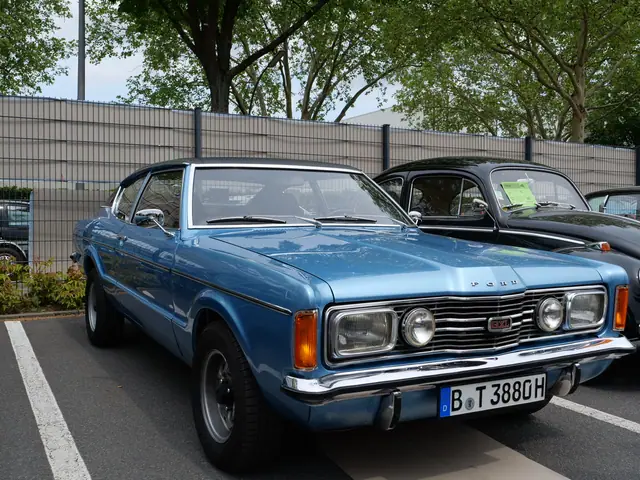
- Rust decides the car's value; check the tops of the front wings, the scuttle at the A-pillars, the sills, the rear arches, the spare-wheel well and the metal under a vinyl roof or chrome trim.
- The mechanicals are simple; on the V6, ask about the camshaft drive gear. Coupés are listed at roughly €10,000 to €20,000 depending on engine and condition.
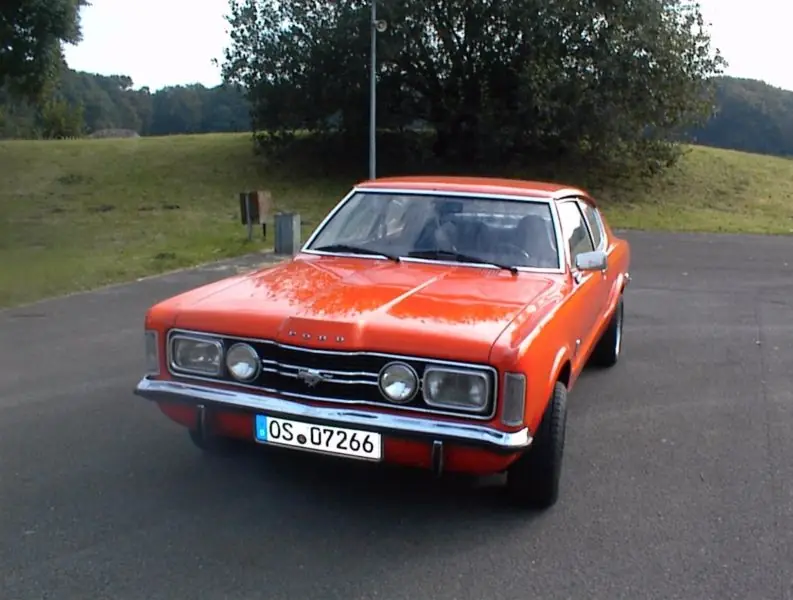
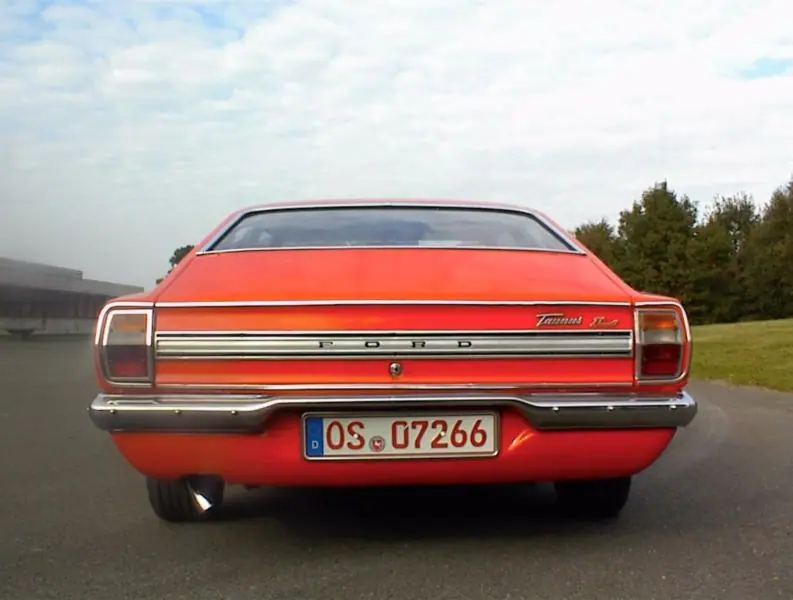
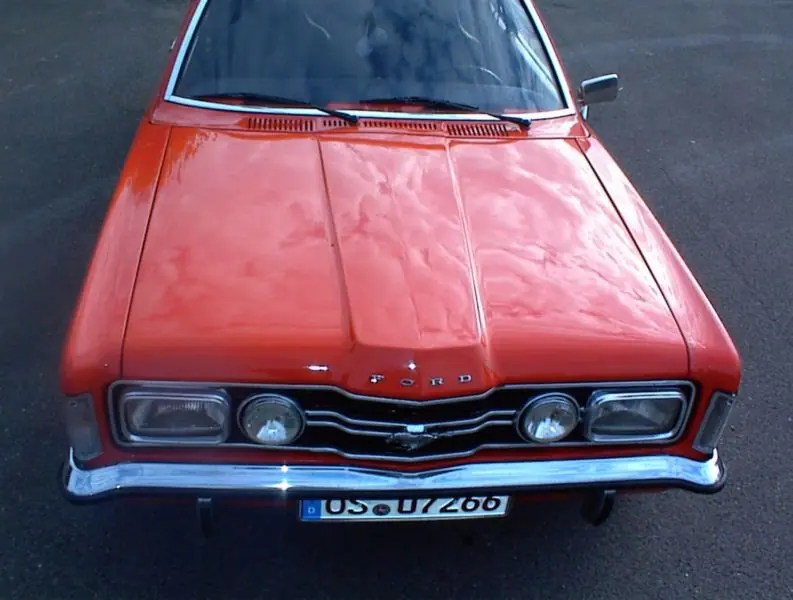
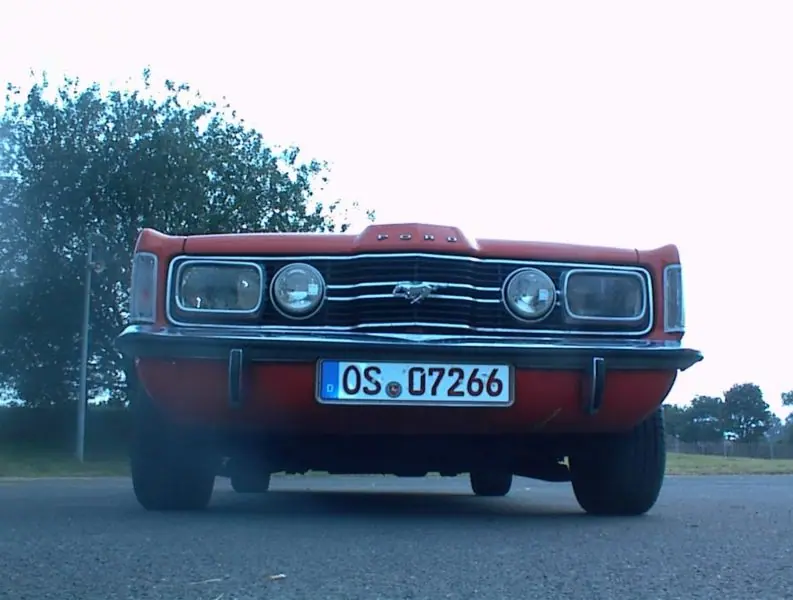
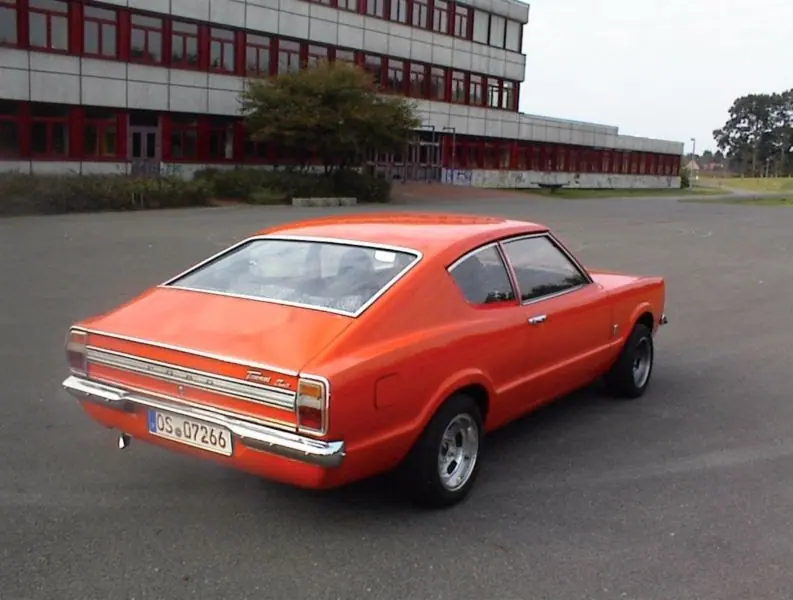
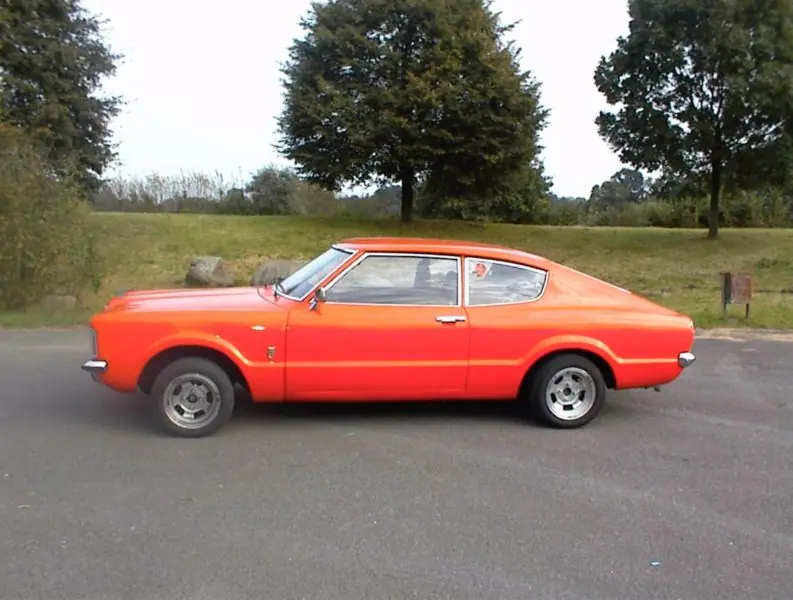
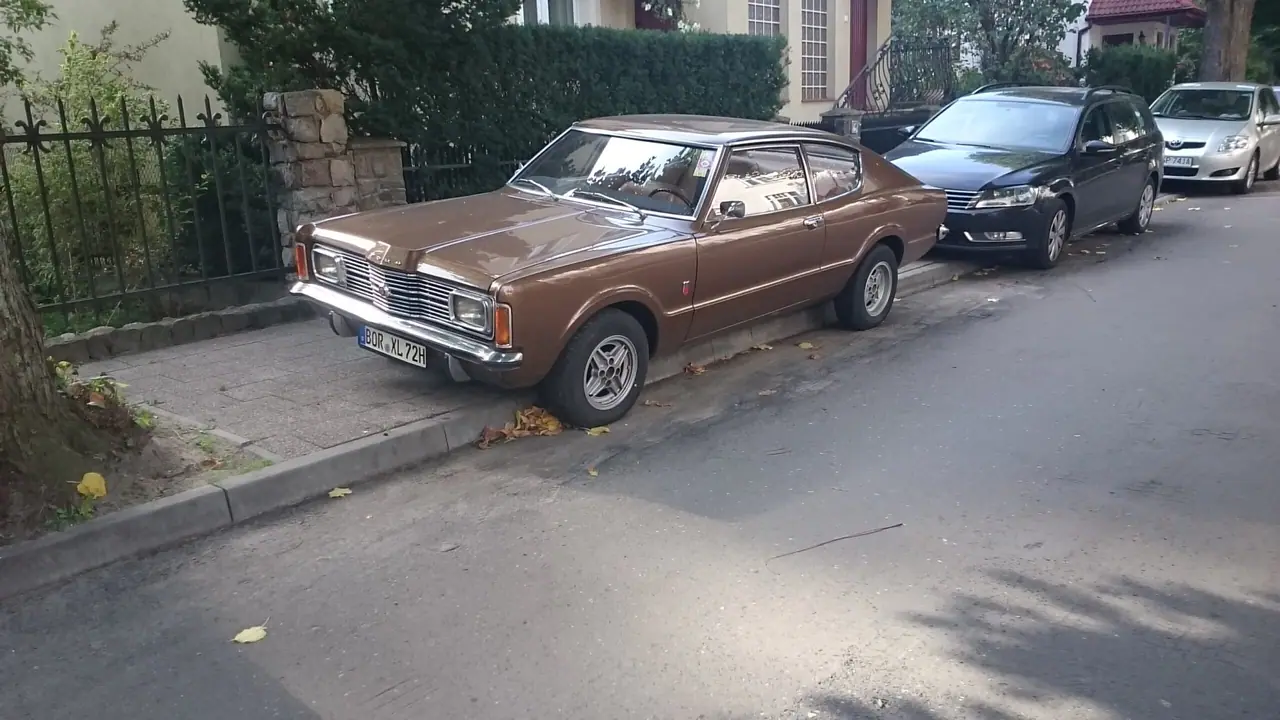
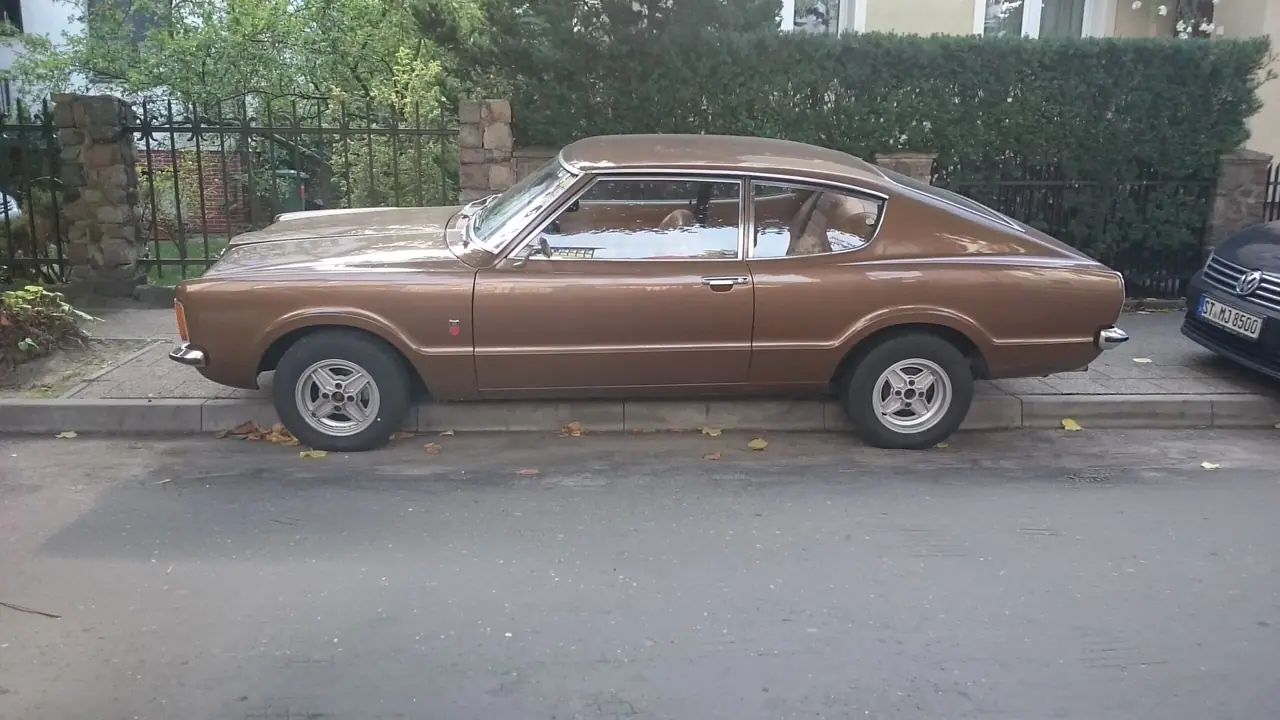
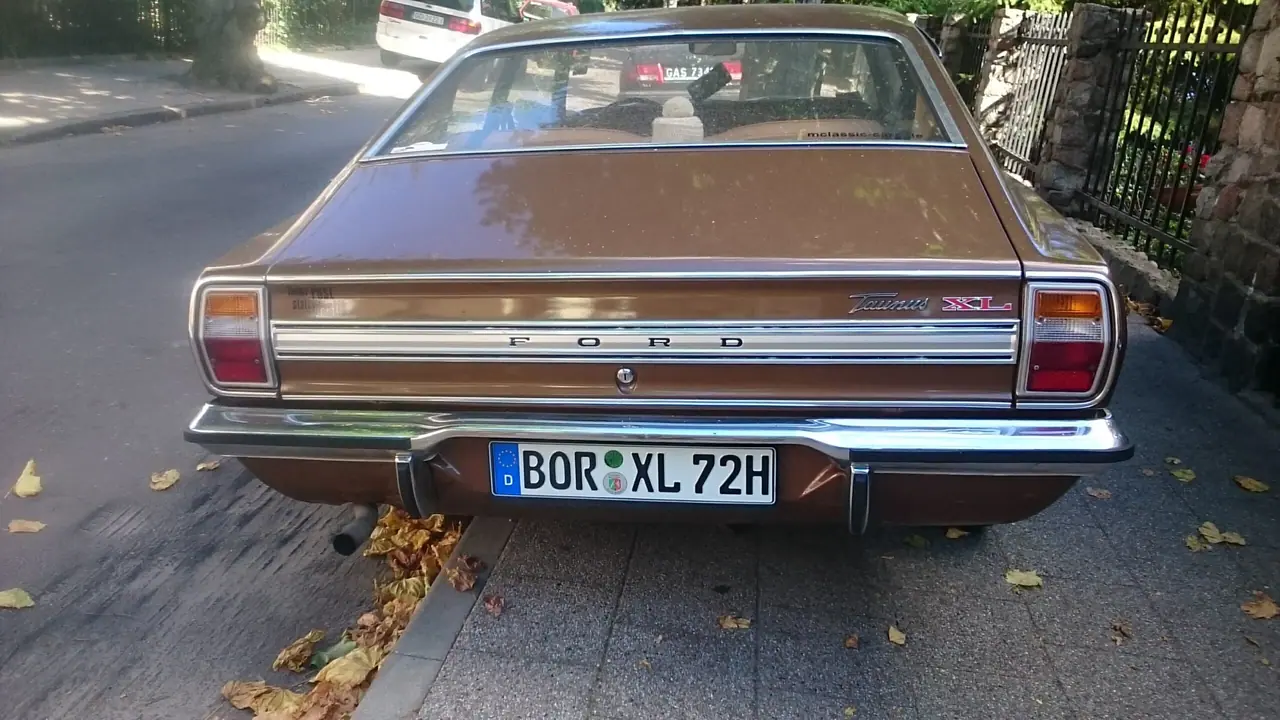
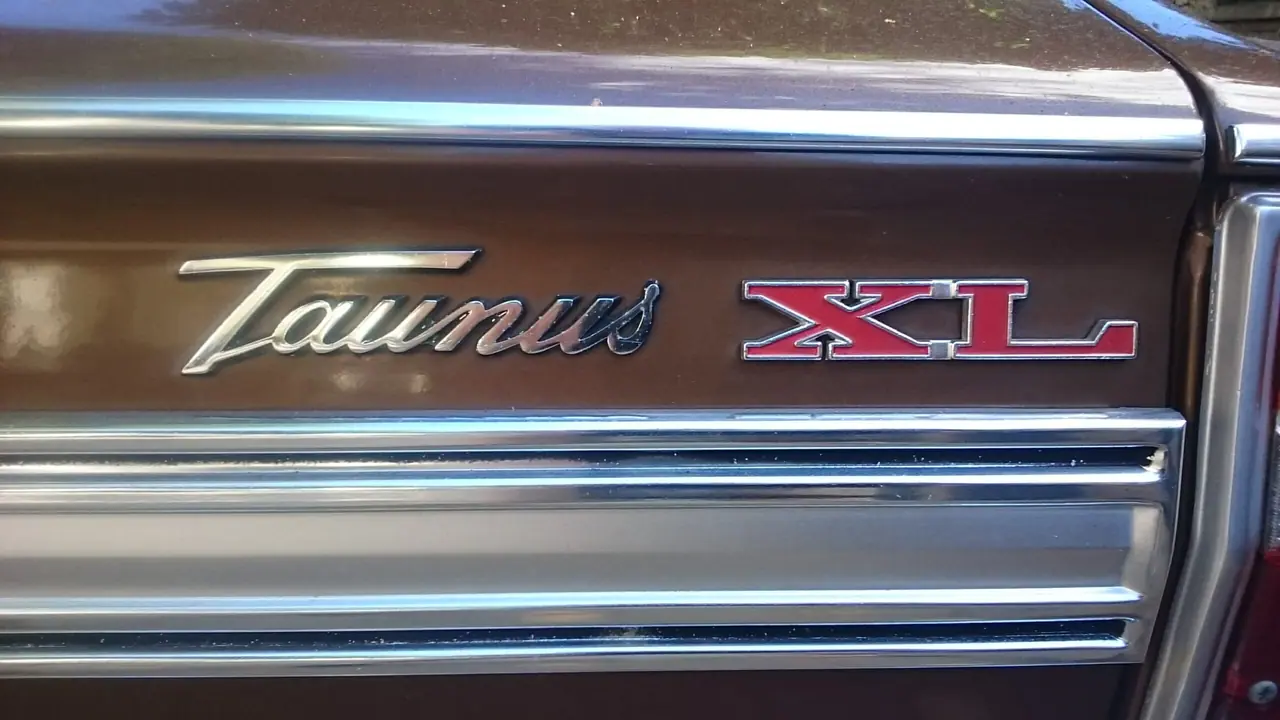
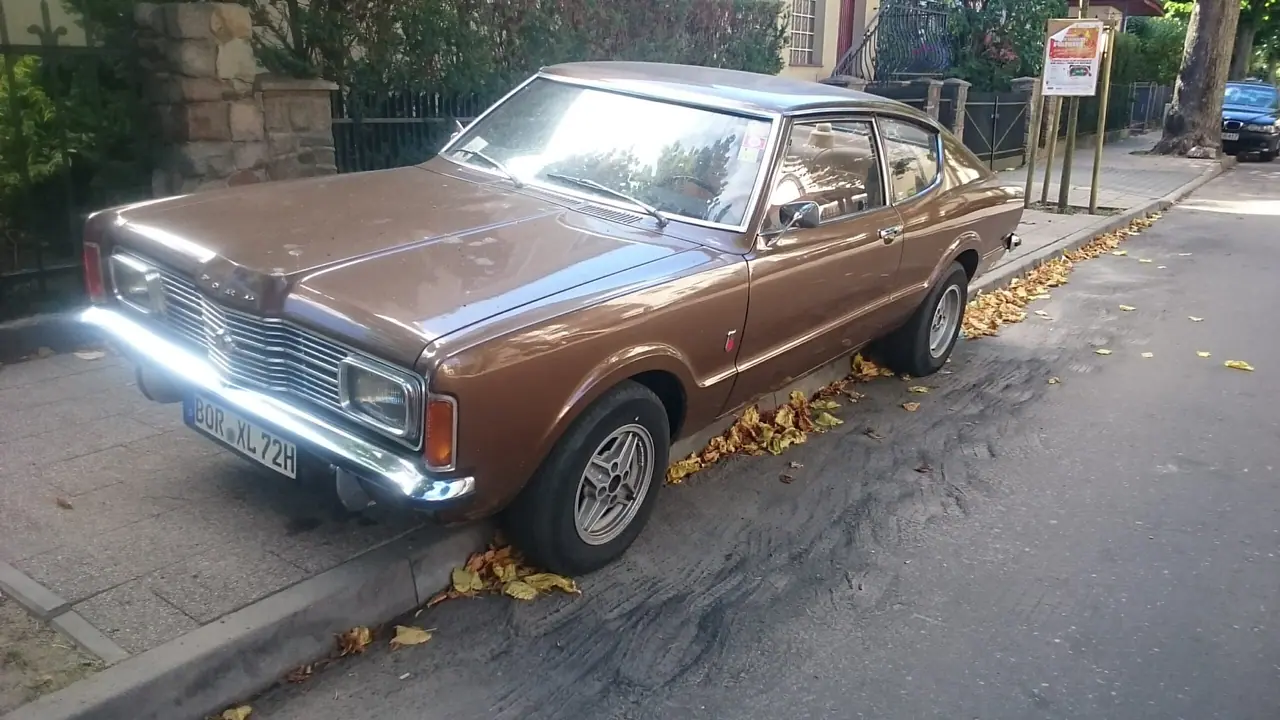
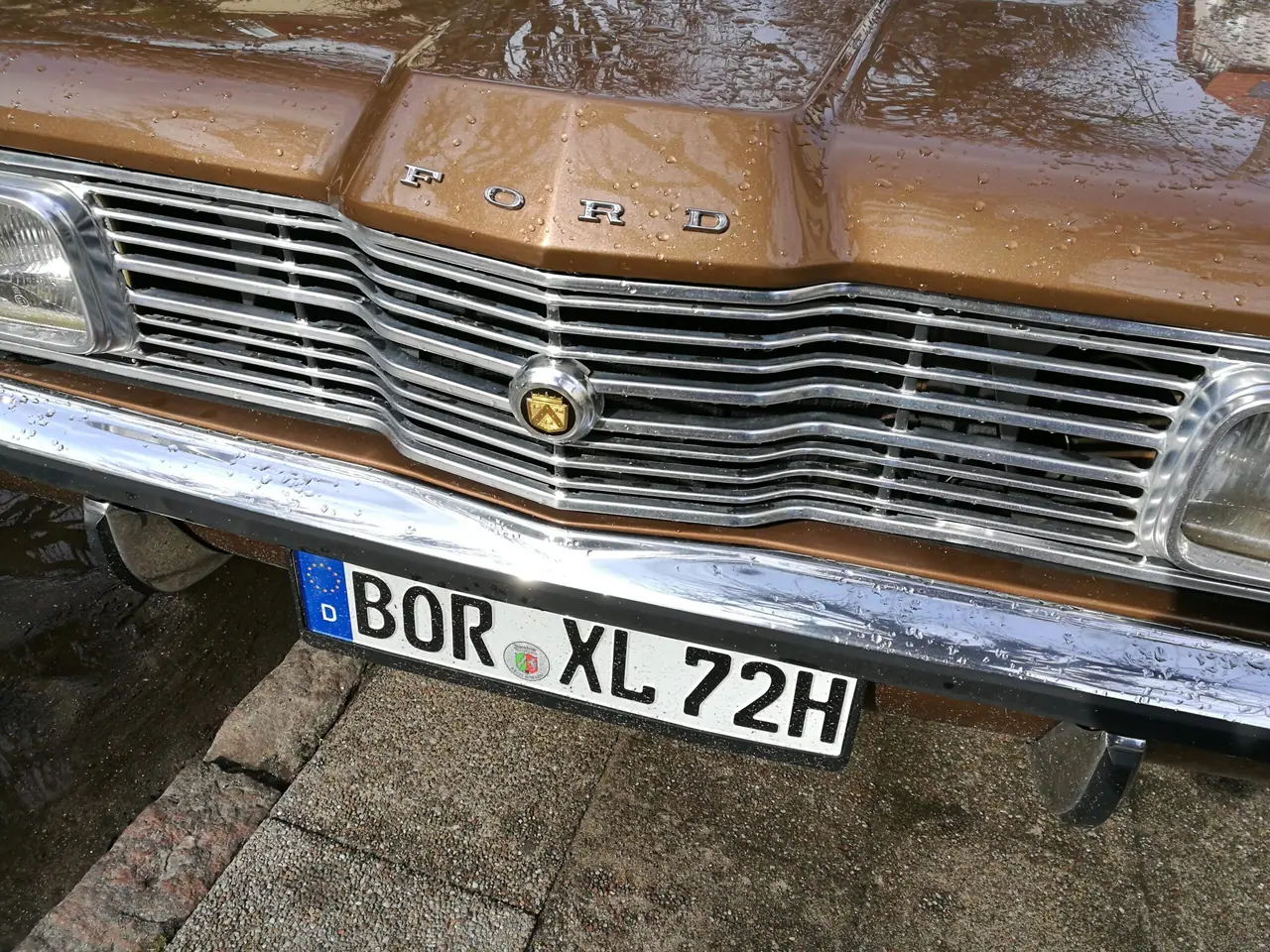
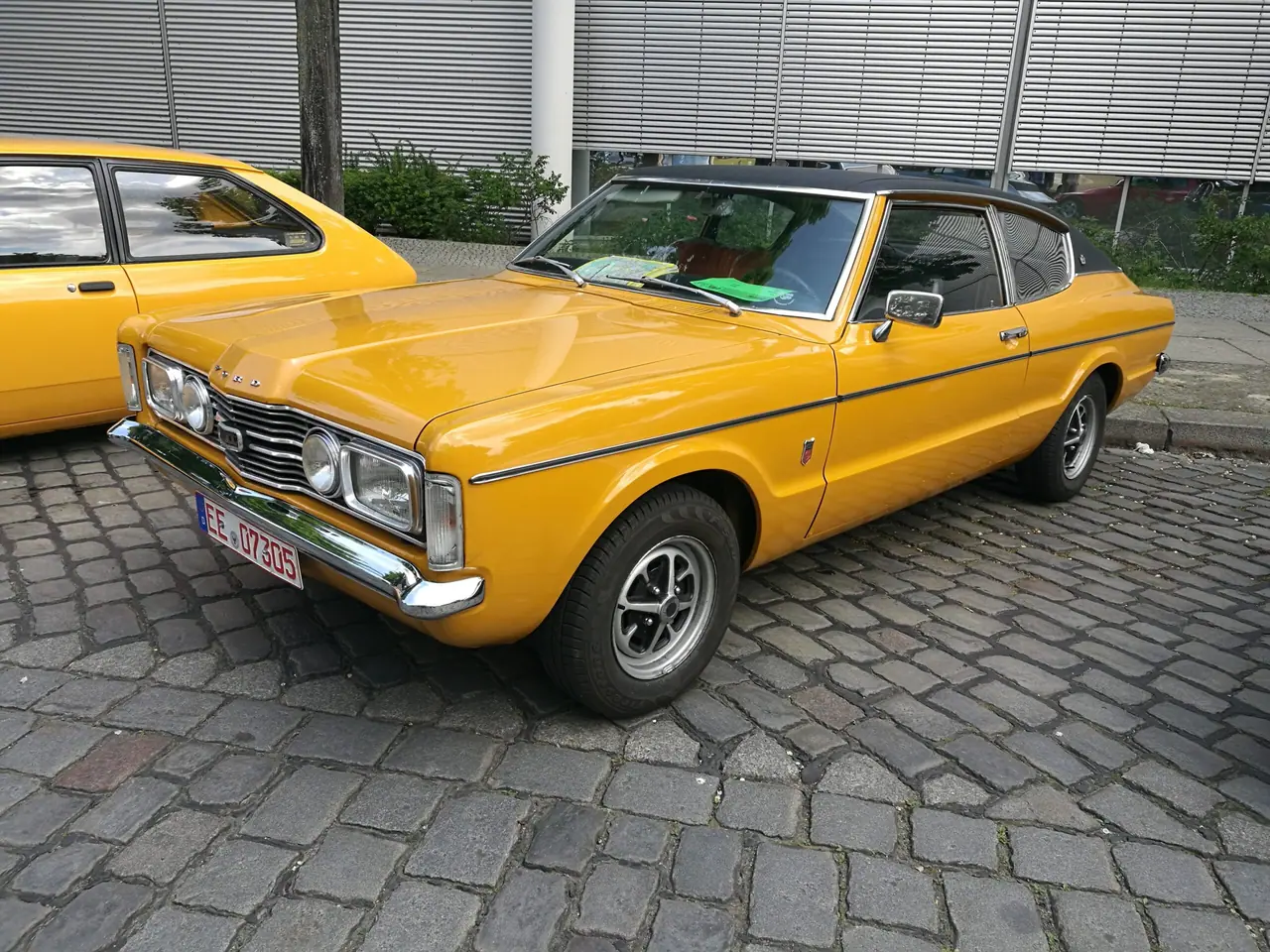
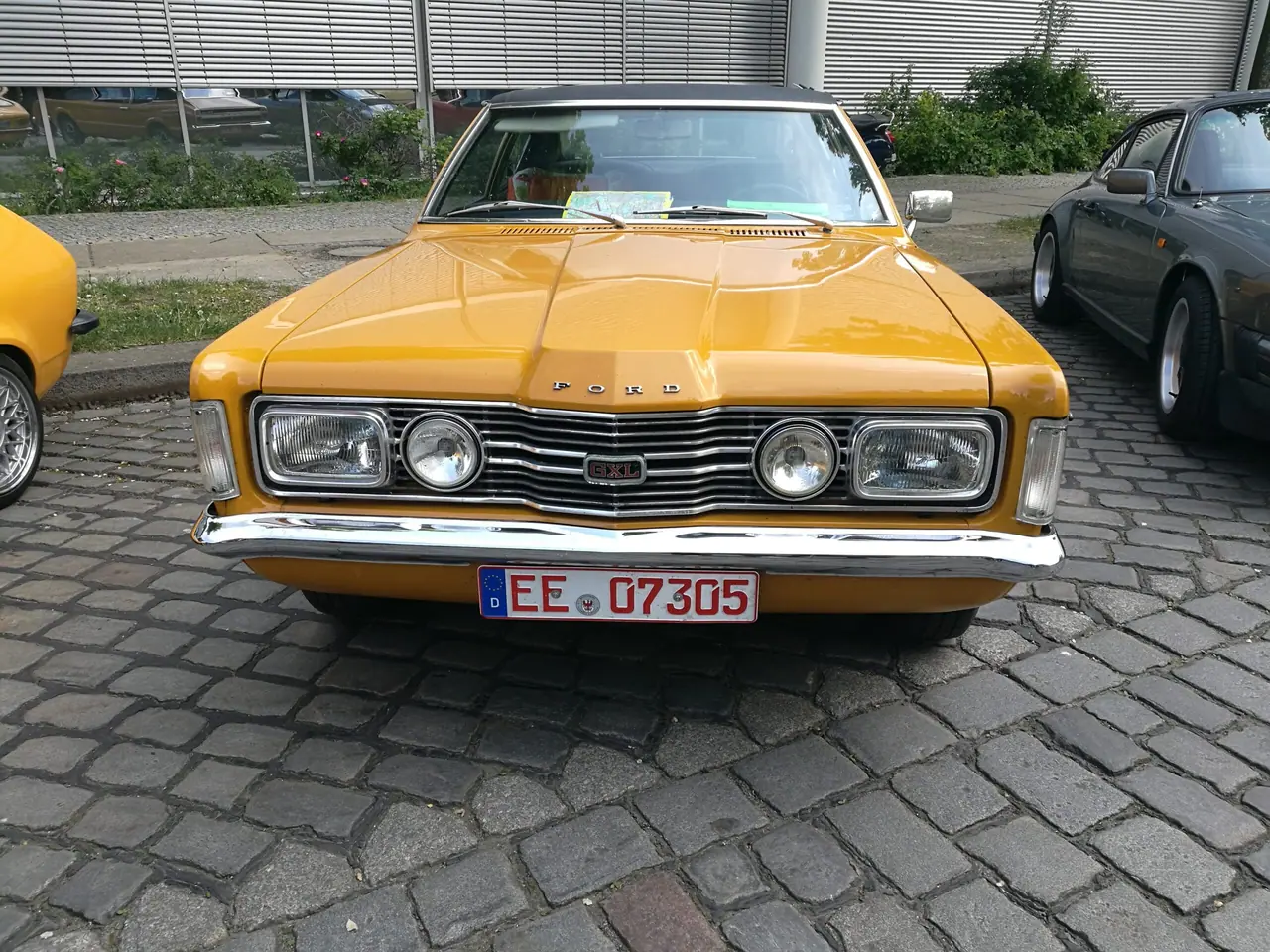
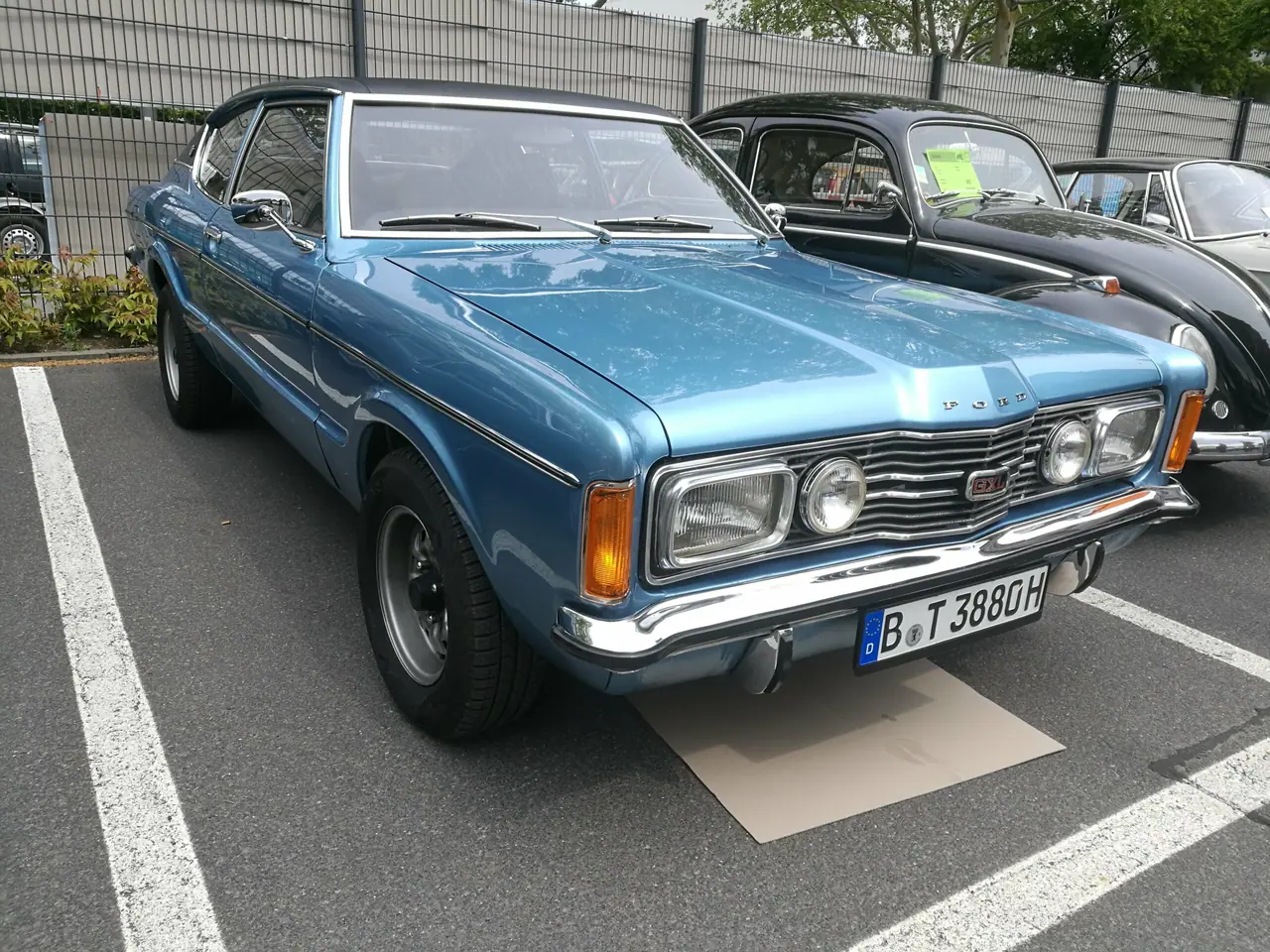
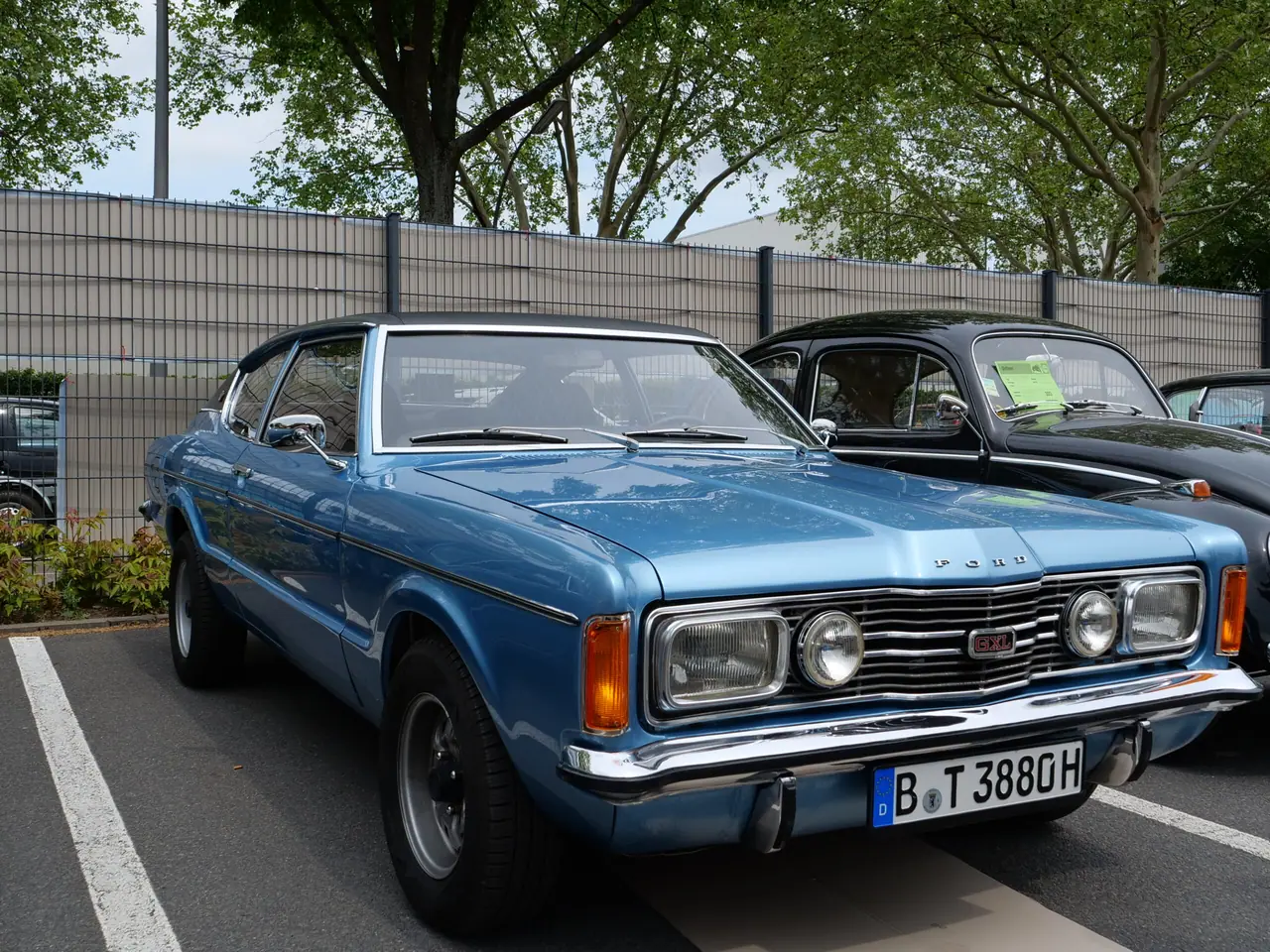
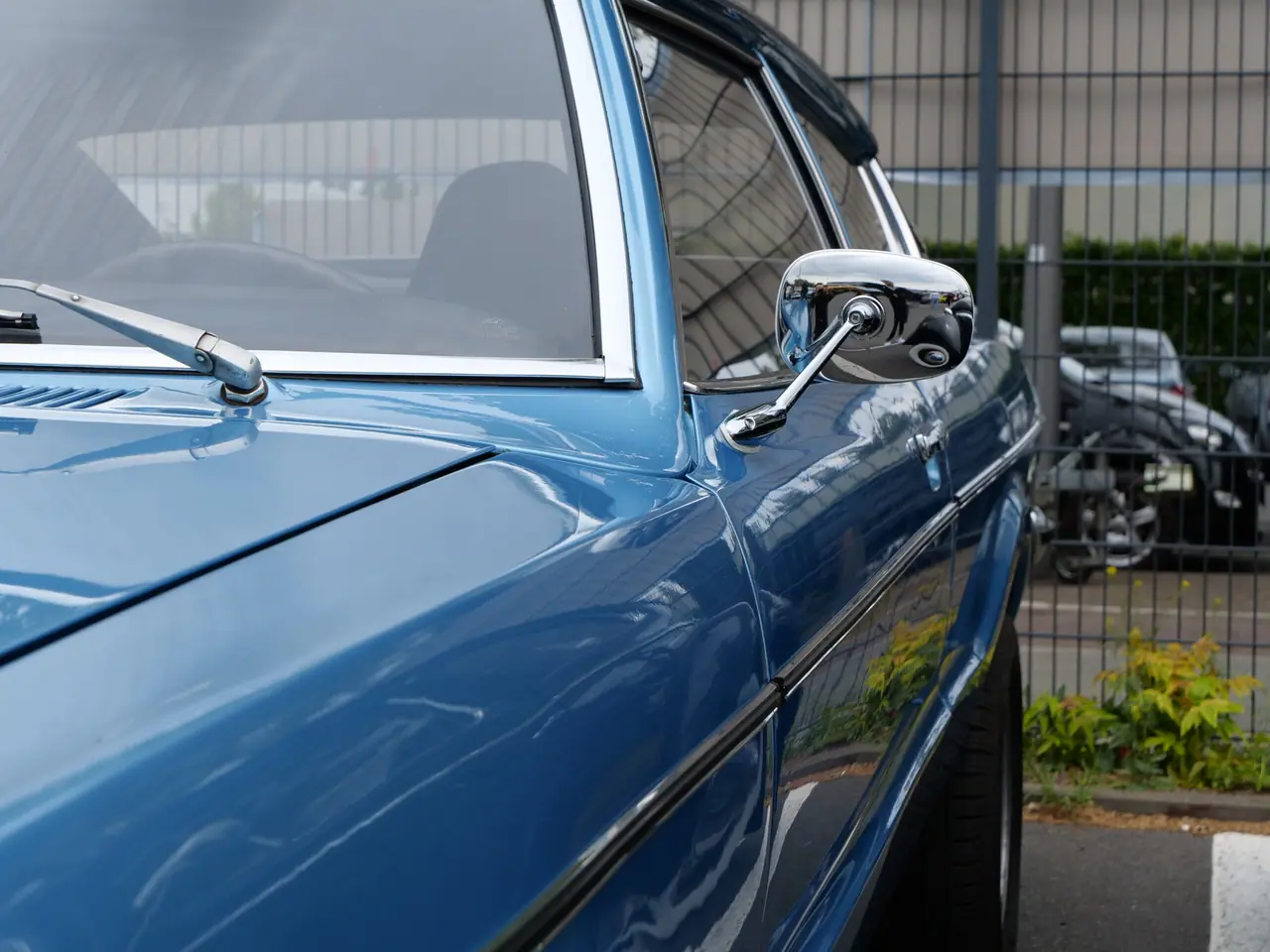
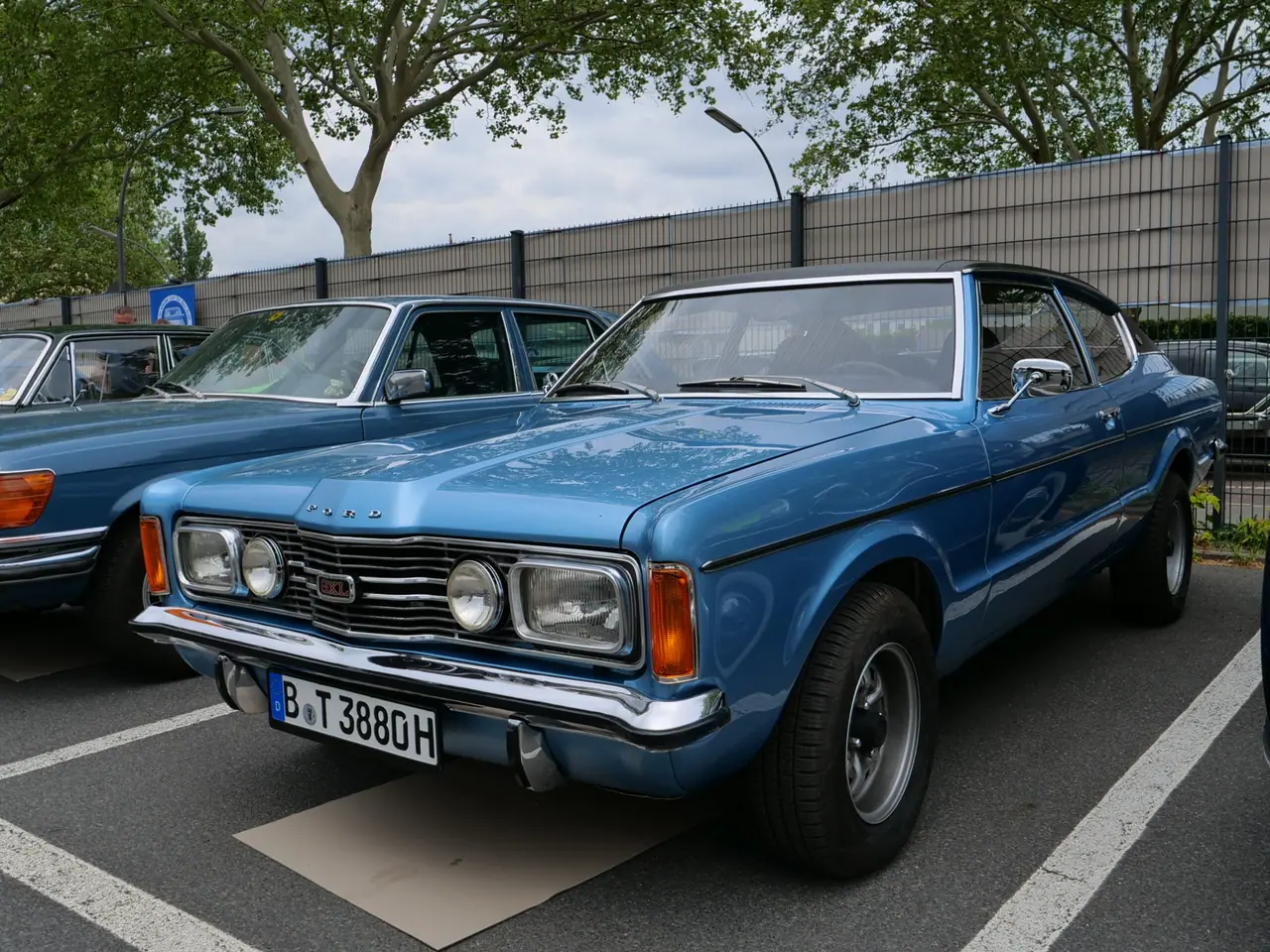
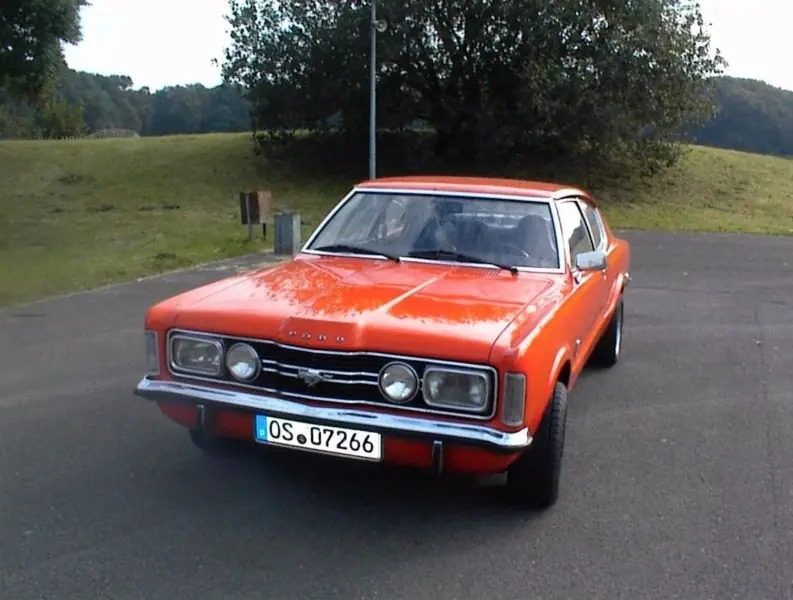
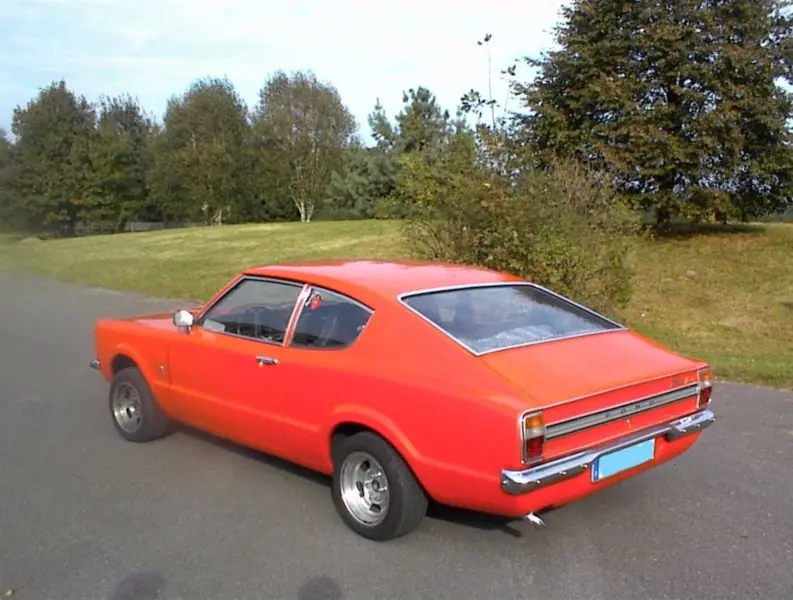
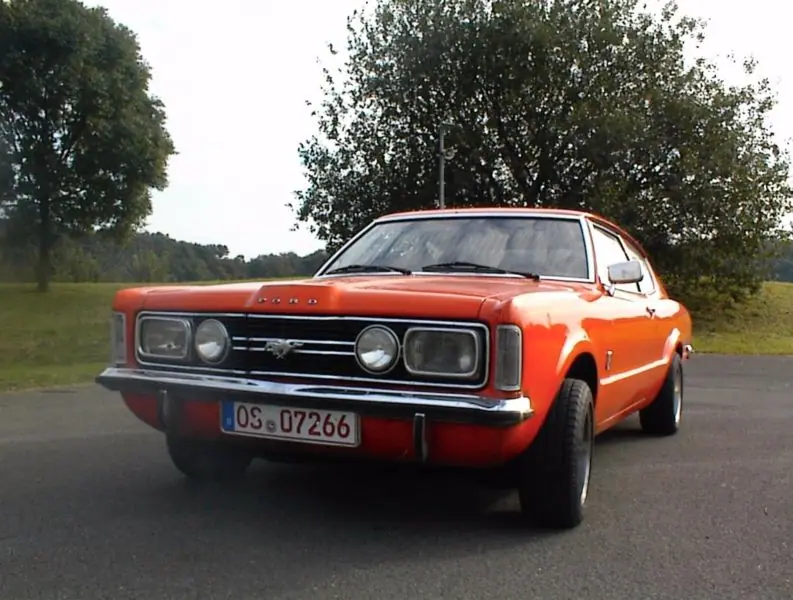
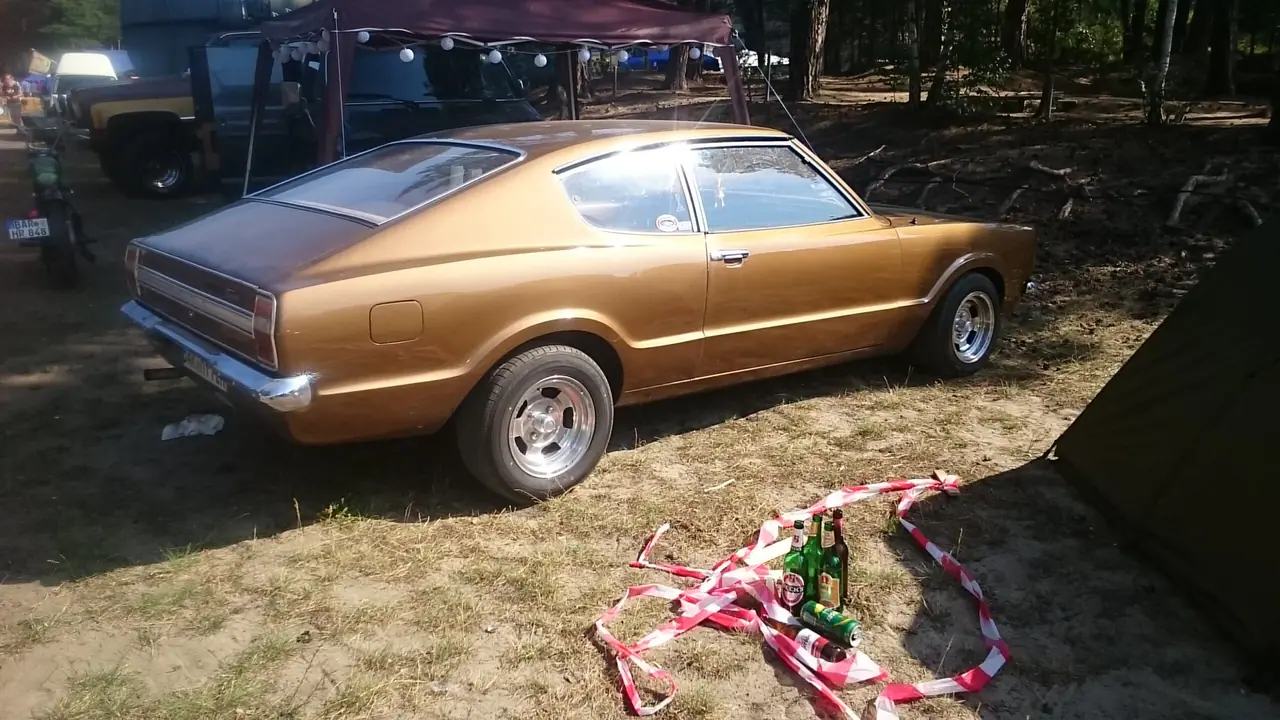
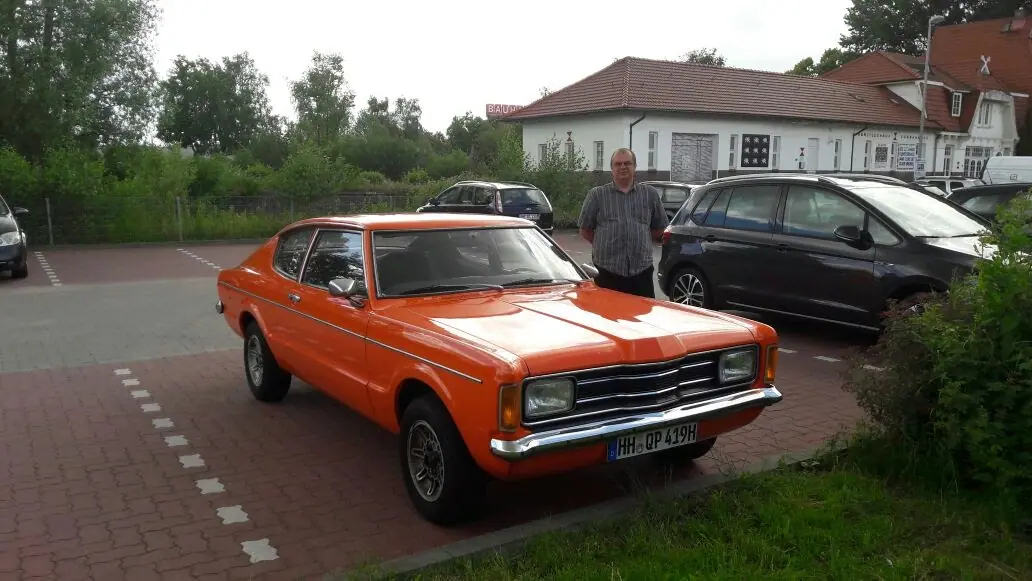
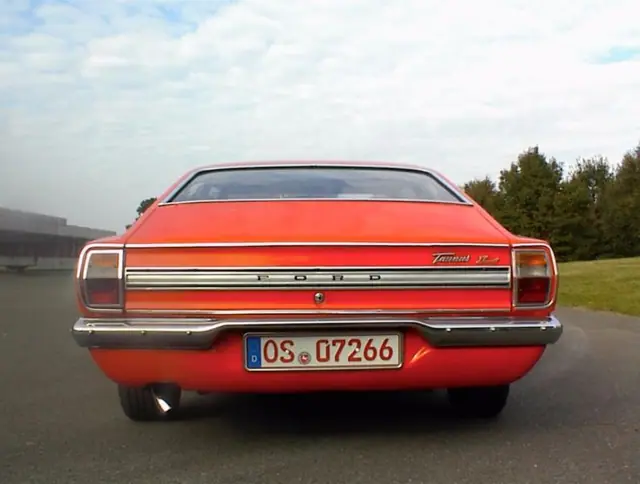
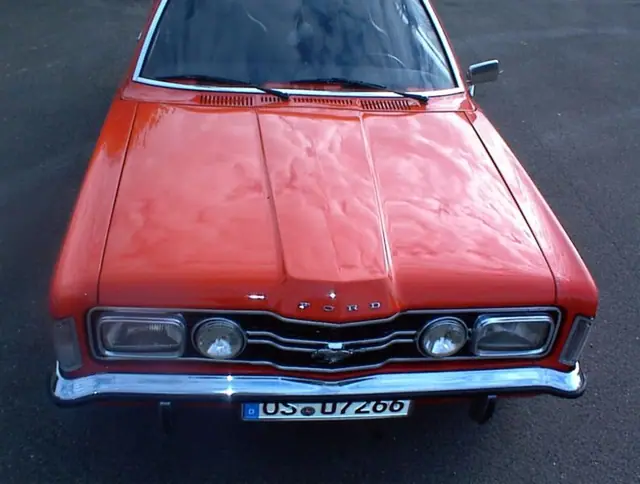
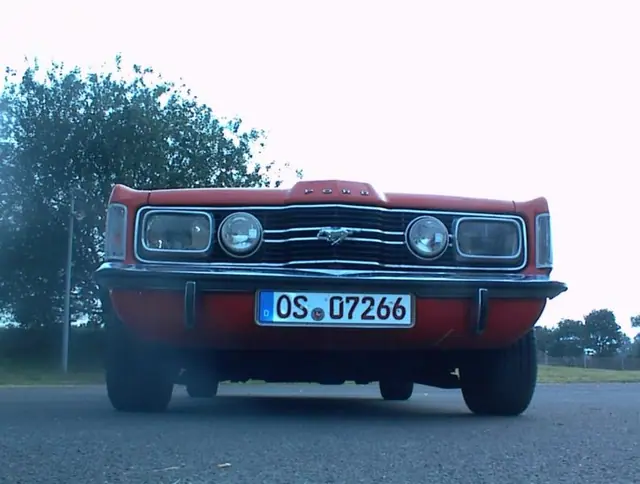
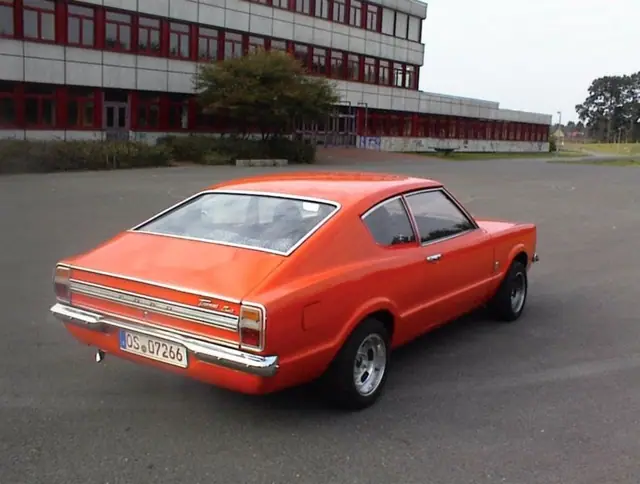
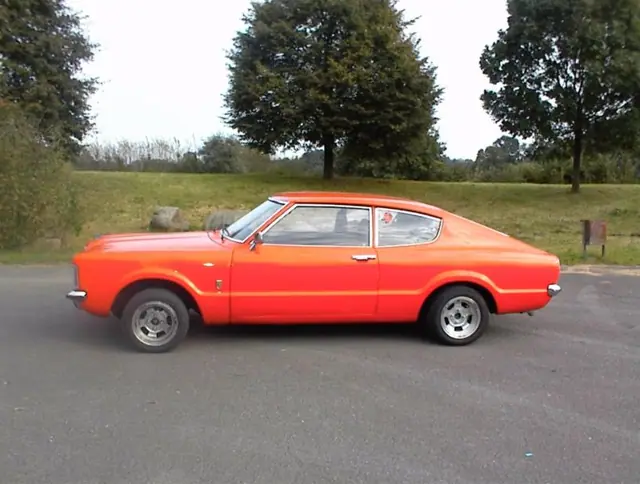
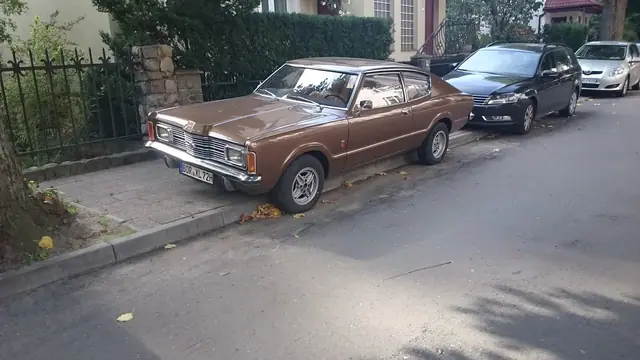
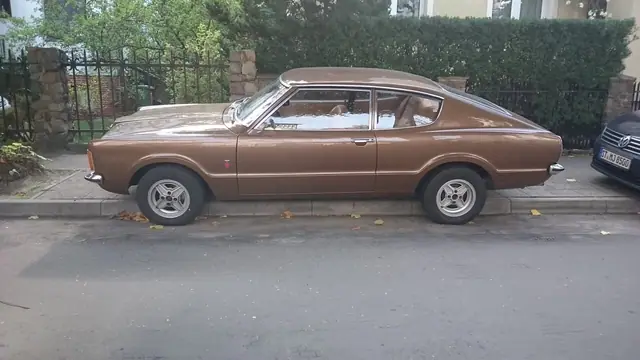
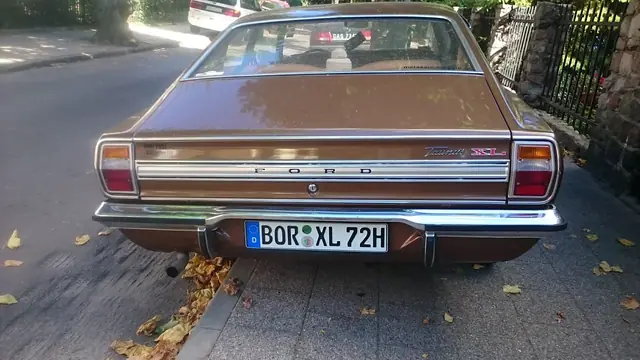
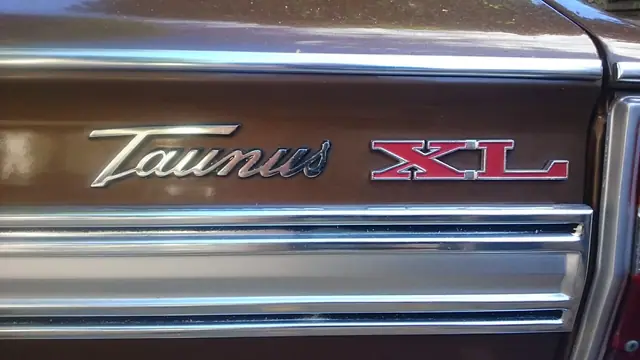
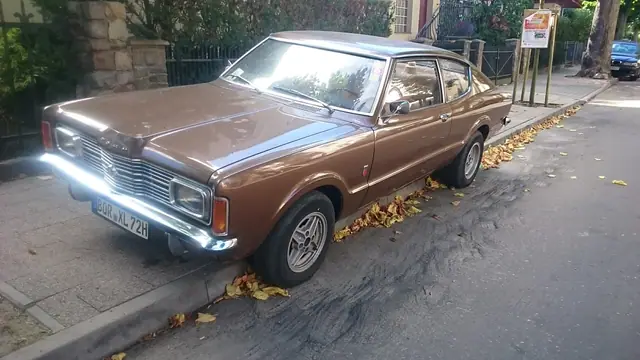
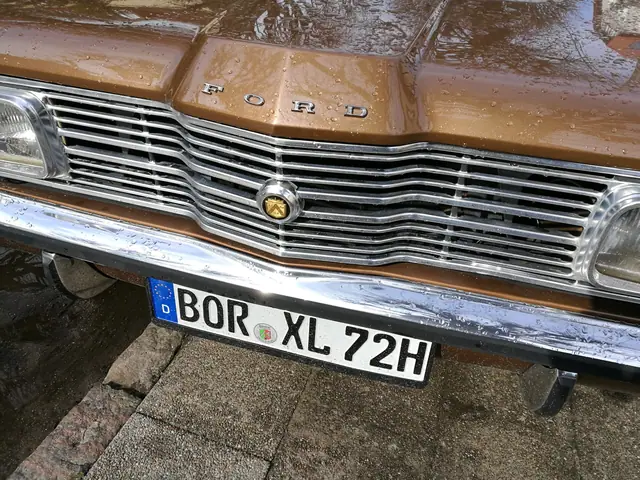
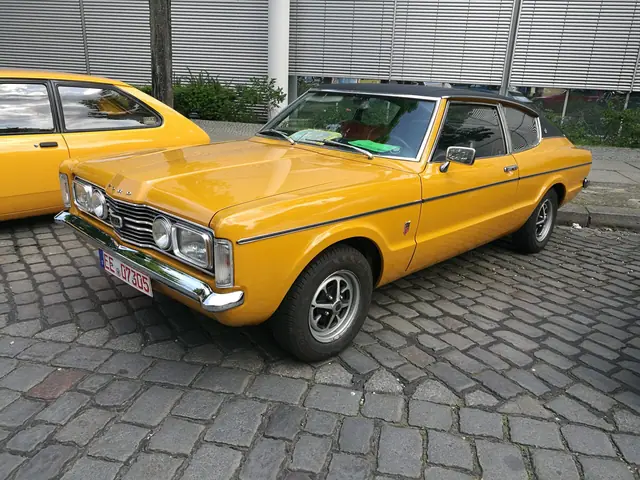
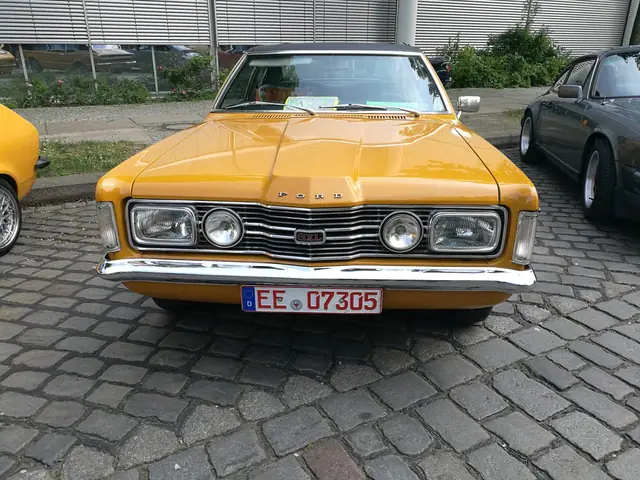
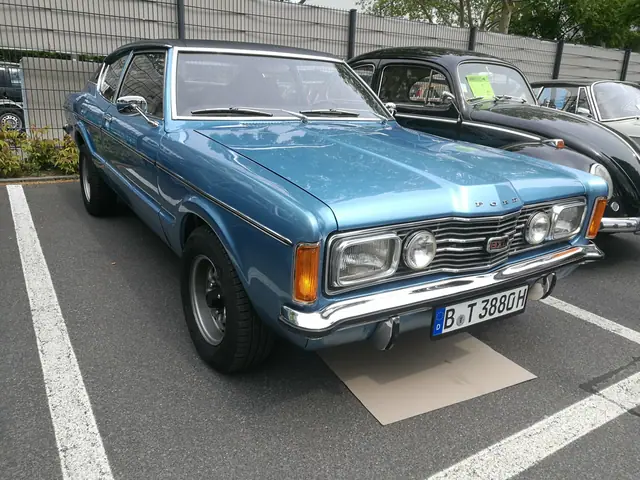
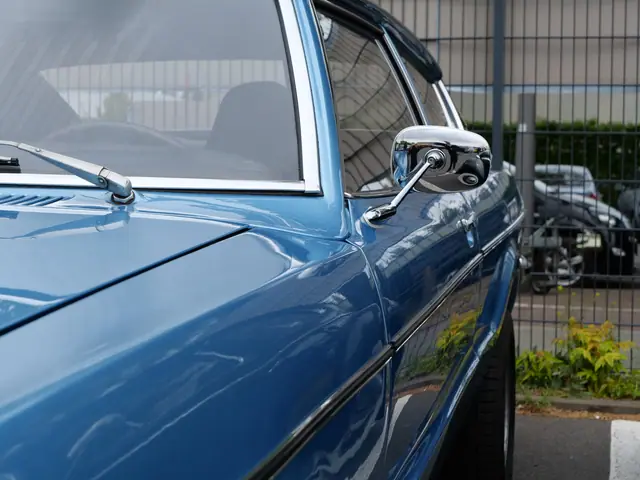
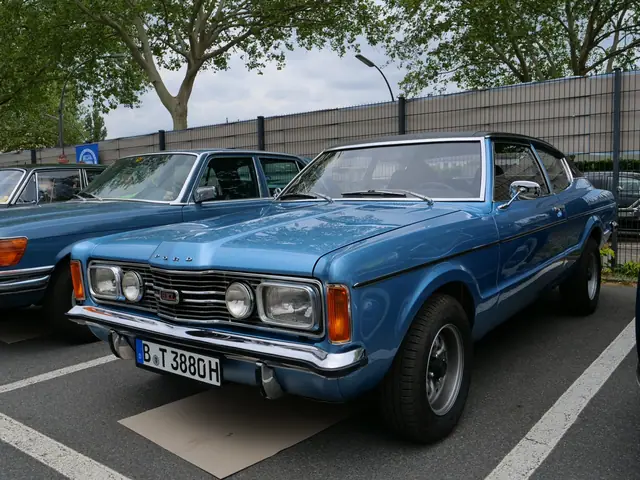
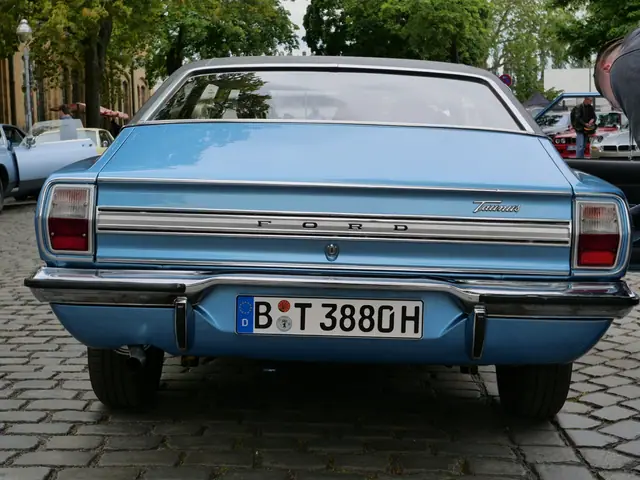
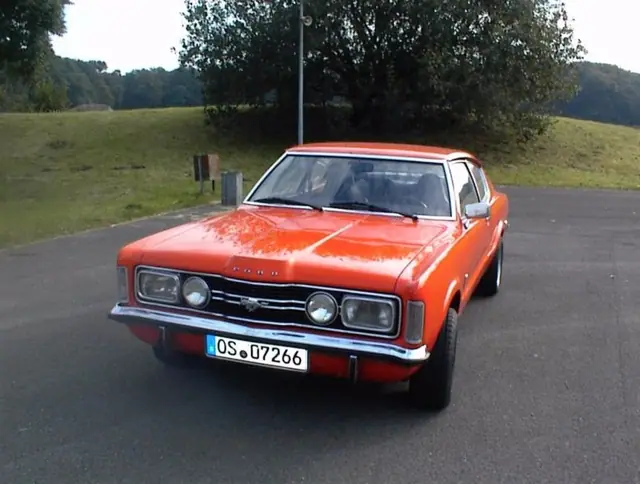
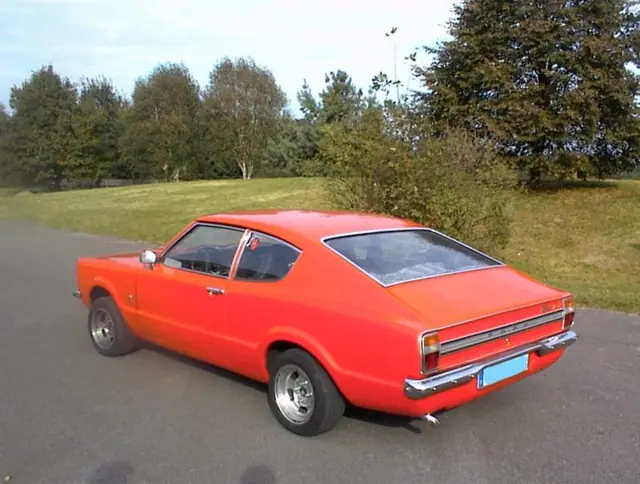
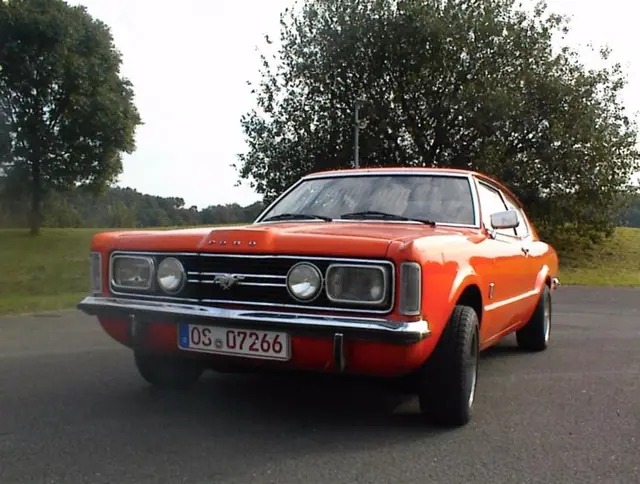
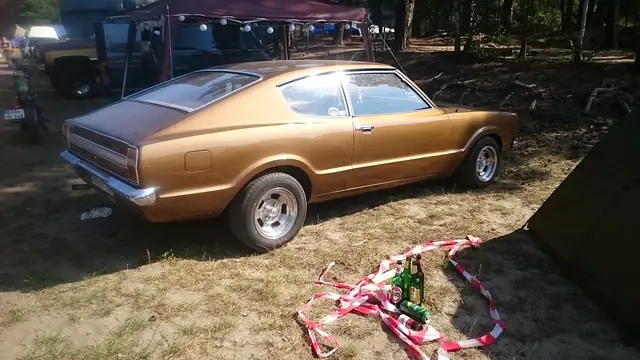
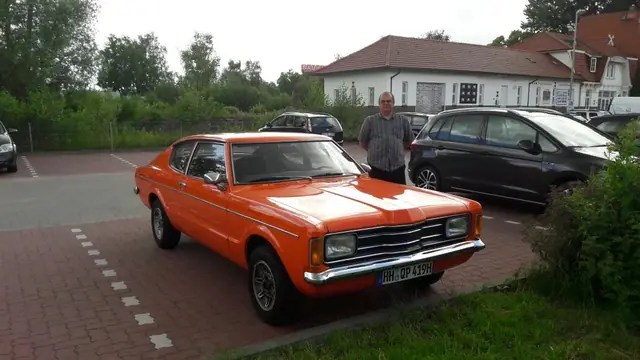
Ford Germany launched the Taunus TC in September 1970 as the successor to the front-wheel-drive Taunus P6. TC stands for Taunus Cortina: the car shared its floorpan and most major components with the British Cortina Mk III, which never got a fastback coupé (Wikipedia). Germans call the first series the "Knudsen" after Semon "Bunkie" Knudsen, the former GM manager who was Ford's president from 1968 to 1969 and is said to have ordered the pointed nose in the bonnet himself. Our photos show several early coupés, orange, brown, yellow and blue, all with that nose.
History and versions
The TC1 came as a two- or four-door saloon, a five-door estate called Turnier and, from 1970 to 1975, a two-door fastback coupé, the niche model of the range (Curbside Classic). It had rear-wheel drive, wishbones at the front and a coil-sprung rear axle located by four links instead of the old leaf springs. In September 1973 Ford gave it a facelift: rectangular headlights became standard, a flatter dashboard replaced the old one, and stabiliser bars were added front and rear. The successor, the TC2, went into production at the end of November 1975. Ford Germany built about 930,000 TC1s from 1970 to 1974 (Wikipedia production figures). Across all TC generations up to 1982 it was almost 2.7 million, plus more than 1.1 million Cortinas (Auto Zeitung).
Engines and specs
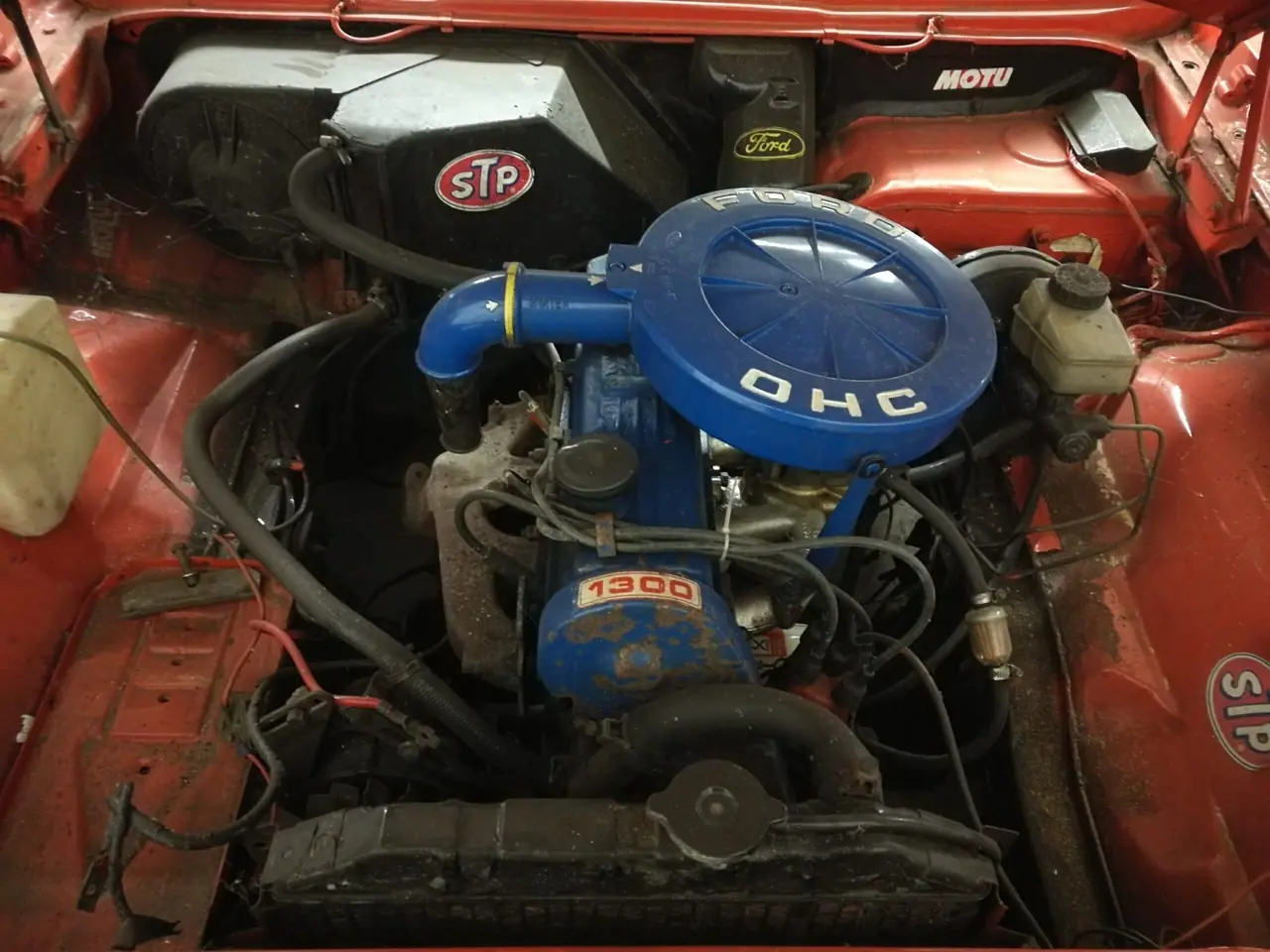
The old V4 engines were gone. The four-cylinders were overhead-cam units from Ford's Pinto family with a toothed belt (ADAC), and the six-cylinders were the Cologne V6.
| Version | Engine | Power | Data |
|---|---|---|---|
| 1300 | 1.3 four-cylinder OHC | 55 PS | 90 Nm, 0–100 km/h in 20.4 s, 136 km/h |
| 1600 | 1.6 four-cylinder OHC | 72 PS | the regular 1.6 |
| 1600 S | 1.6 four-cylinder OHC | 88 PS | 124 Nm, e.g. in the GXL coupé |
| 2000 V6 | 2.0 V6 | 90 PS | 149 Nm, 0–100 km/h in 13.0 s, 165 km/h (GXL coupé) |
| 2300 V6 | 2.3 V6 | 108 PS | 177 Nm, 0–100 km/h in 11.6 s, 172 km/h (GT) |
Sources for the table: Auto Zeitung (1300, 2000 V6, 2300 V6), ADAC (1600 S), autodata1 (1600). A four-speed manual was standard, and a three-speed automatic was available with every engine except the 1.3 (Wikipedia).
Living with it
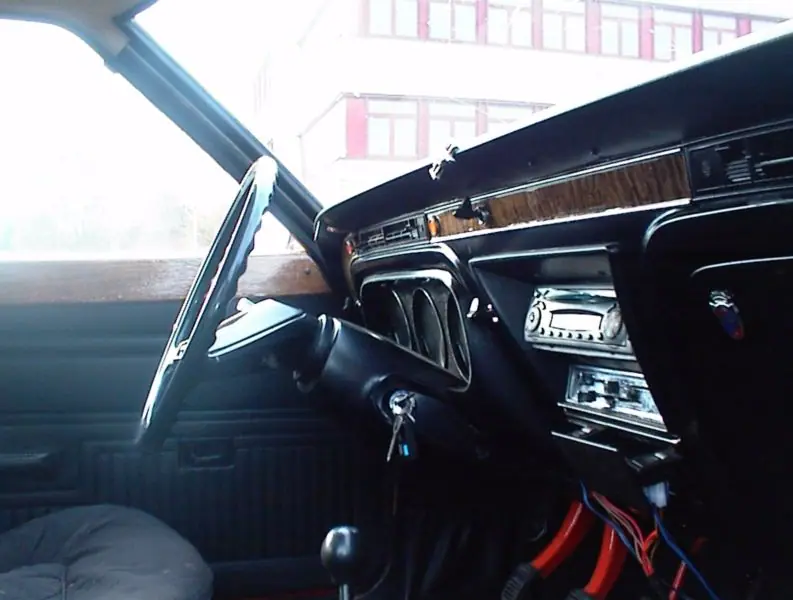
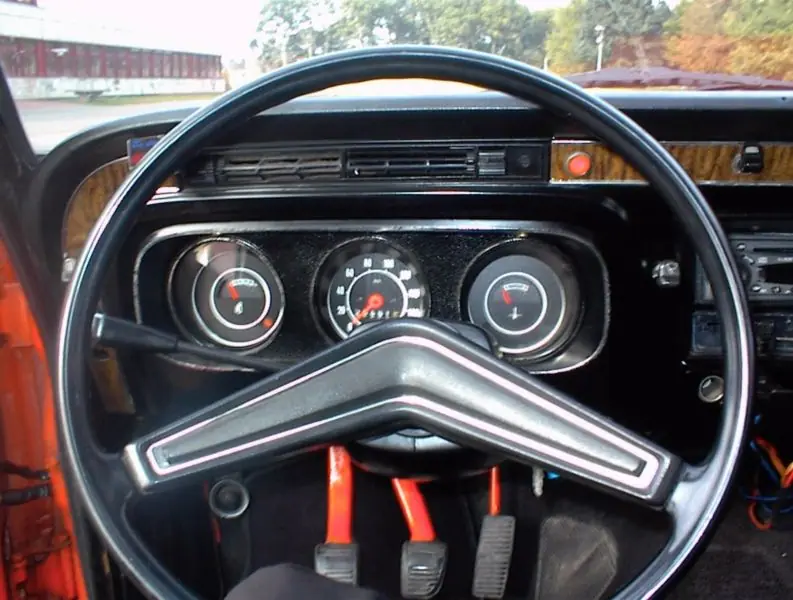
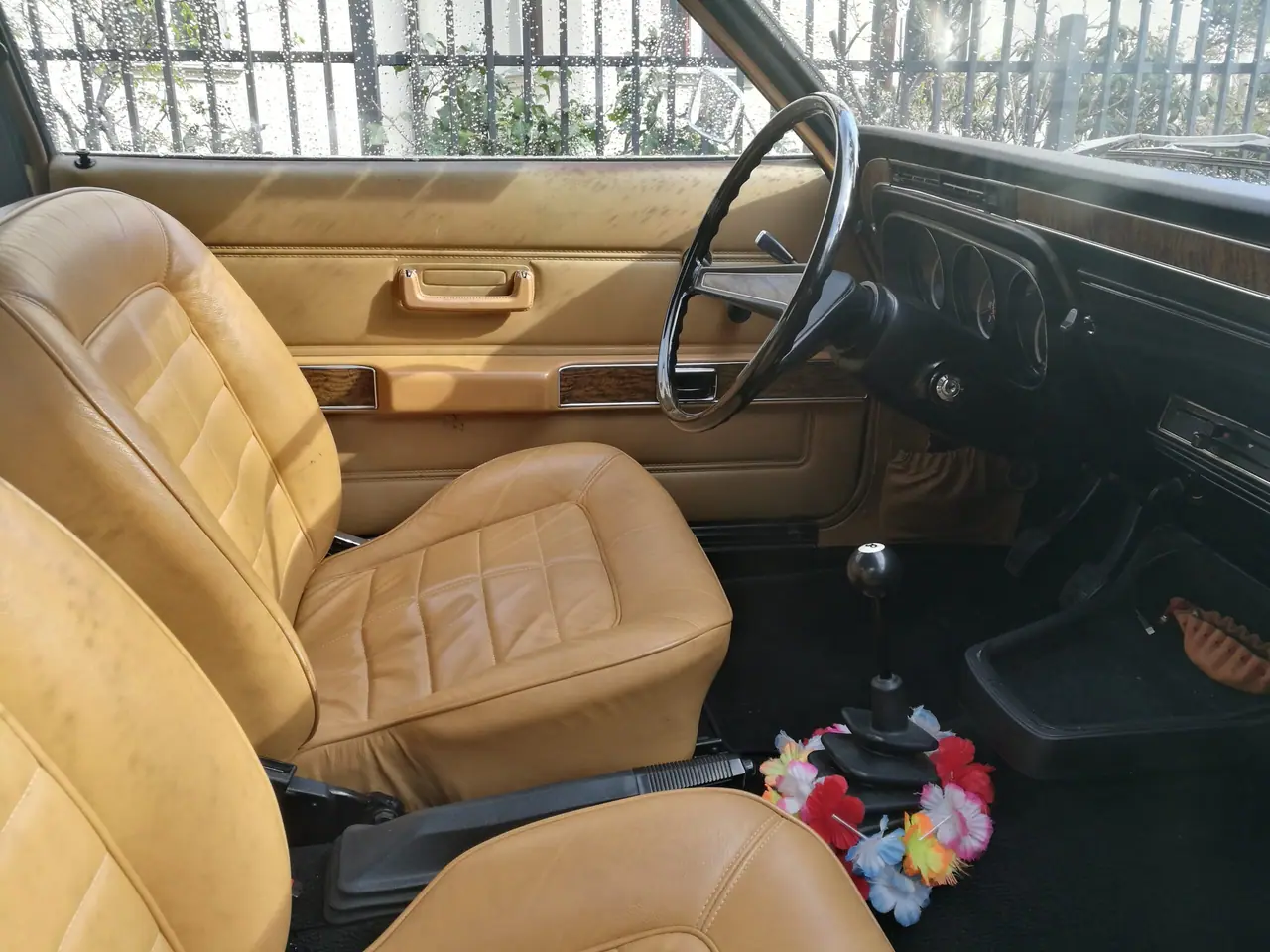
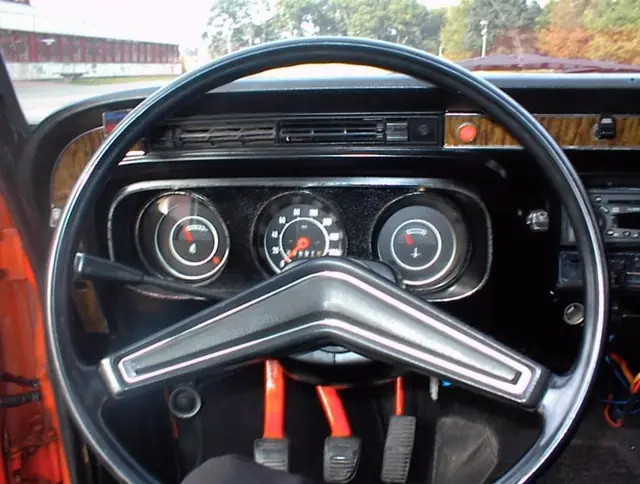
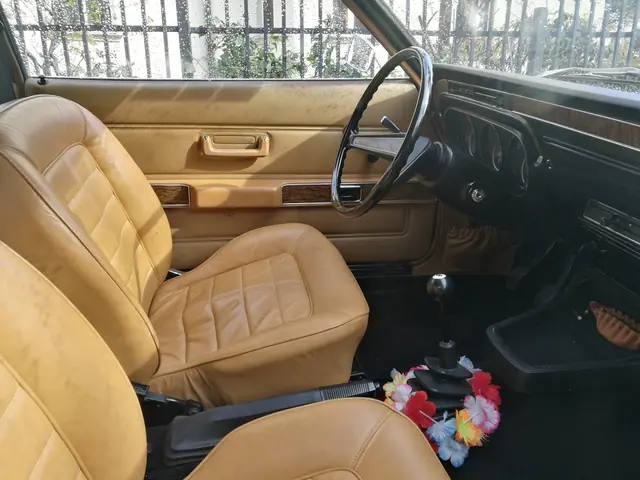
The Knudsen is a 1970s car to drive. Period critics found the ride soft and the car prone to understeer, especially with the heavier V6 (Wikipedia), and according to Auto Zeitung many owners have fitted firmer aftermarket suspension and wider wheels. The magazine finds the stronger 90 and 108 PS versions the most fun; the 1300 needs more than 20 seconds to reach 100 km/h. Period test figures range from 11.8 l/100 km for the 1300 to 15.9 l for the 2.3 V6. The orange coupé in our photos has the early dashboard, with three round dials set in deep pods and wood-look trim.
It has no airbags and no ABS, and there is no crash-test rating for a car of this age. Replace old tyres even if the tread looks fine.
Rust and weak points
Auto Zeitung puts rust at the top of the list:
- Front: the top edges of the front wings (they are bolted on, so they're easy to replace), the panels next to the headlights, the cross member behind the grille and the area around the bonnet hinges.
- Scuttle: the panel where the bonnet meets the A-pillars is critical. Rust you see there is only the tip of the iceberg.
- Sills, rear and boot: the sills, the rear end, the spare-wheel well and the rear wheel arches, where panels overlap.
- Vinyl roof and chrome: cracks in a vinyl roof let water in and the metal underneath blisters. Chrome trim, standard on the GXL or added later, traps moisture and hides rust for a long time.
- Engine: the magazine's mechanical warning is the Novotex gear wheels in the camshaft drive, which wear quickly; many cars already have replacements. The four-cylinders use a toothed belt instead (ADAC). Valve clearances should be checked regularly.
- Gearbox: the four-speed is robust, but worn joints in the gearshift linkage make gears hard to select.
- Suspension and interior: joints and bushes wear as on any old car, and the seats can be saggy or worn at the side bolsters.
The good news is that the Pinto four and the Cologne V6 stayed in the Taunus range until 1982, and much of the car is shared with the Cortina Mk III.
The engines are simple and well known. The bodywork decides whether a Knudsen is a bargain or a money pit.
Prices
We found no current Classic Data valuation for the TC1, so these are asking prices from listings, not sale prices.
- 1600 GXL coupé: on Classic Trader roughly €9,500 to €16,000 in the last few years.
- 2.0 V6 GXL coupé: a car advertised as never welded was listed at €18,500 to €19,500 (Auto Bild, AutoScout24). One first-owner car was offered at almost €40,000 on Oldtimer Markt's classifieds, an exception.
- Saloons: on mobile.de, from about €3,000 to about €12,000 for a 1300 L with 39,000 km.
For comparison, Classic Data values a late 1981 Taunus 2.0 GL at €6,900 in condition 2 (Auto Bild). Auto Zeitung says the coupé is the most sought-after Knudsen, while the estate and the later models are less in demand and can be better value.
Buying checklist
- Look at the tops of the front wings, the area around the headlights and the cross member behind the grille.
- Check the scuttle at the base of the A-pillars. If it's rusty, expect more underneath.
- Inspect the sills, the rear arches, the boot floor and the spare-wheel well from below and from inside.
- On a vinyl roof, look for cracks and bubbles. Ask whether the chrome trim has ever been off.
- On a V6, ask whether the camshaft drive gear has been replaced, and listen for noise from the front of the engine.
- Work through all four gears. Hard shifting usually means worn linkage joints.
- Check the bushes, joints and brake lines. Note any non-original suspension and wheels: in Germany they need to be in the papers, and an H plate needs a largely original car. Check details with your inspection body.
Verdict
The Knudsen Taunus is a simple, affordable classic with a design that stands out, especially as a coupé. The V6 is the more enjoyable choice, the four-cylinders avoid its camshaft-gear issue, and the body matters more than either. Buy the most solid car you can find, and have it checked on a lift before you pay. For another affordable classic coupé, read our VW Karmann Ghia guide.

FAQ
Why is it called the Knudsen Taunus?
Because of the pointed nose in the bonnet and grille. According to Wikipedia, Semon "Bunkie" Knudsen, who was Ford's president from 1968 to 1969, is said to have ordered it. Later TC models dropped it.
Which engine is best?
For driving fun, Auto Zeitung recommends the 2.0 V6 with 90 PS or the 2.3 V6 with 108 PS. The 1.6 with 72 or 88 PS has a toothed-belt camshaft drive and avoids the V6's camshaft-gear issue. The 1.3 with 55 PS is slow.
Where does a Taunus TC1 rust?
On the tops of the front wings, around the headlights and the grille cross member, at the scuttle by the A-pillars, on the sills and rear arches, in the spare-wheel well and under vinyl roofs and chrome trim.
What does a Taunus TC1 coupé cost?
Listings for 1600 GXL coupés have been roughly €9,500 to €16,000 in recent years, and a 2.0 V6 GXL advertised as never welded was listed at about €19,000. Have the car checked before you pay.
Based on period data, classic-car magazine reports and market listings, not on our own test drive. Sources: Auto Zeitung buyer's guide, Wikipedia, ADAC (1600 S GXL), Curbside Classic, autodata1, Classic Trader, Auto Bild, Auto Bild on Classic Data.