Citroën C1 1.0i
Yes, as a cheap city car: the first C1 has Toyota engineering and a strong ADAC breakdown record. Check the brakes, lights, clutch, water pump and leaks.
The short answer
- The first C1 was built from 2005 to 2014 in Kolín, Czech Republic, together with the near-identical Peugeot 107 and Toyota Aygo; most have the 68 PS Toyota 1.0 three-cylinder.
- In the ADAC breakdown statistics it ranks near the top, but at the TÜV it does worse than average, mainly because of lights and worn brakes.
- Check the brakes, lights and exhaust, look for coolant loss at the water pump and water in the footwells, and prefer cars from after the late-2008 facelift.
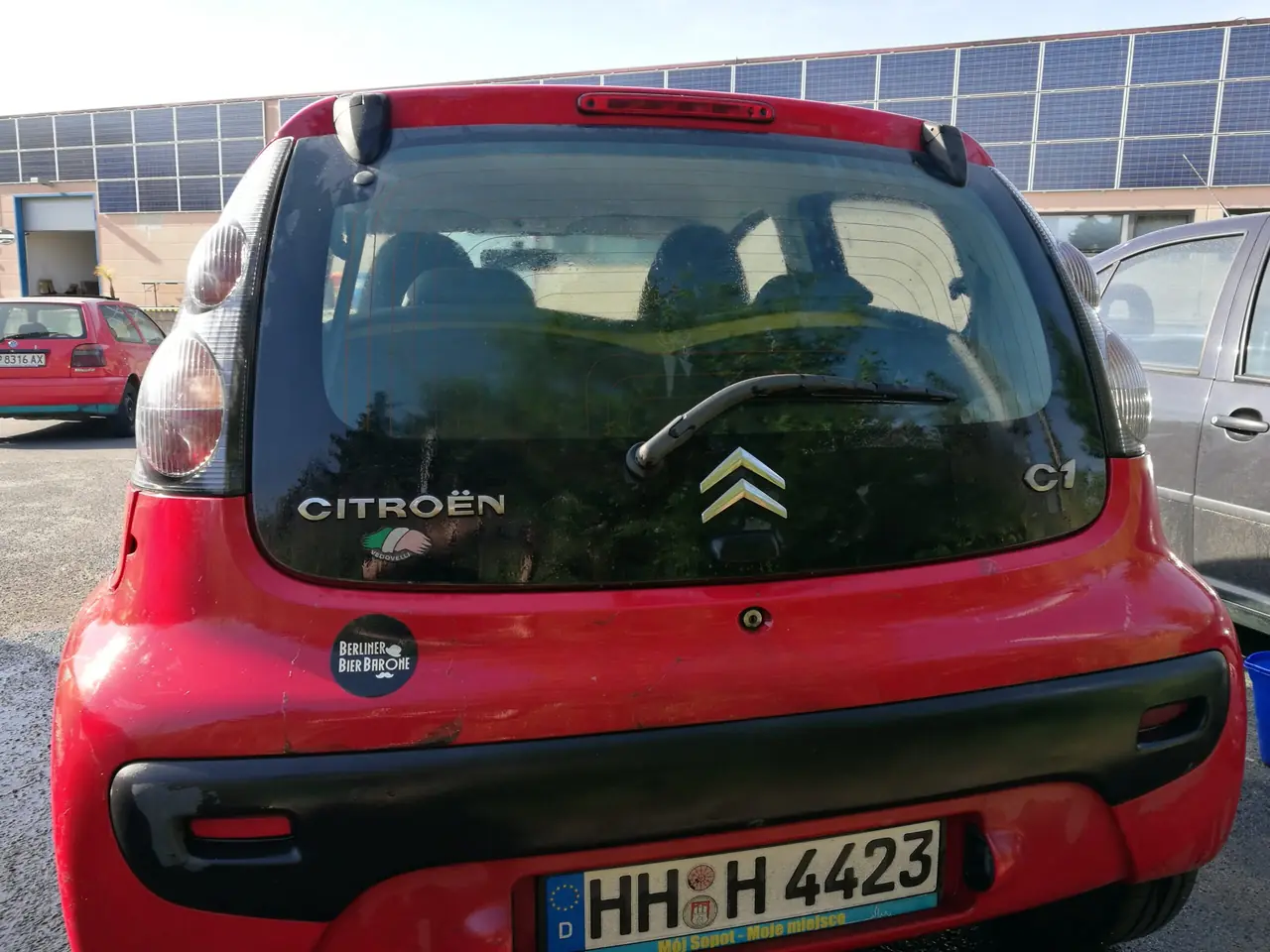
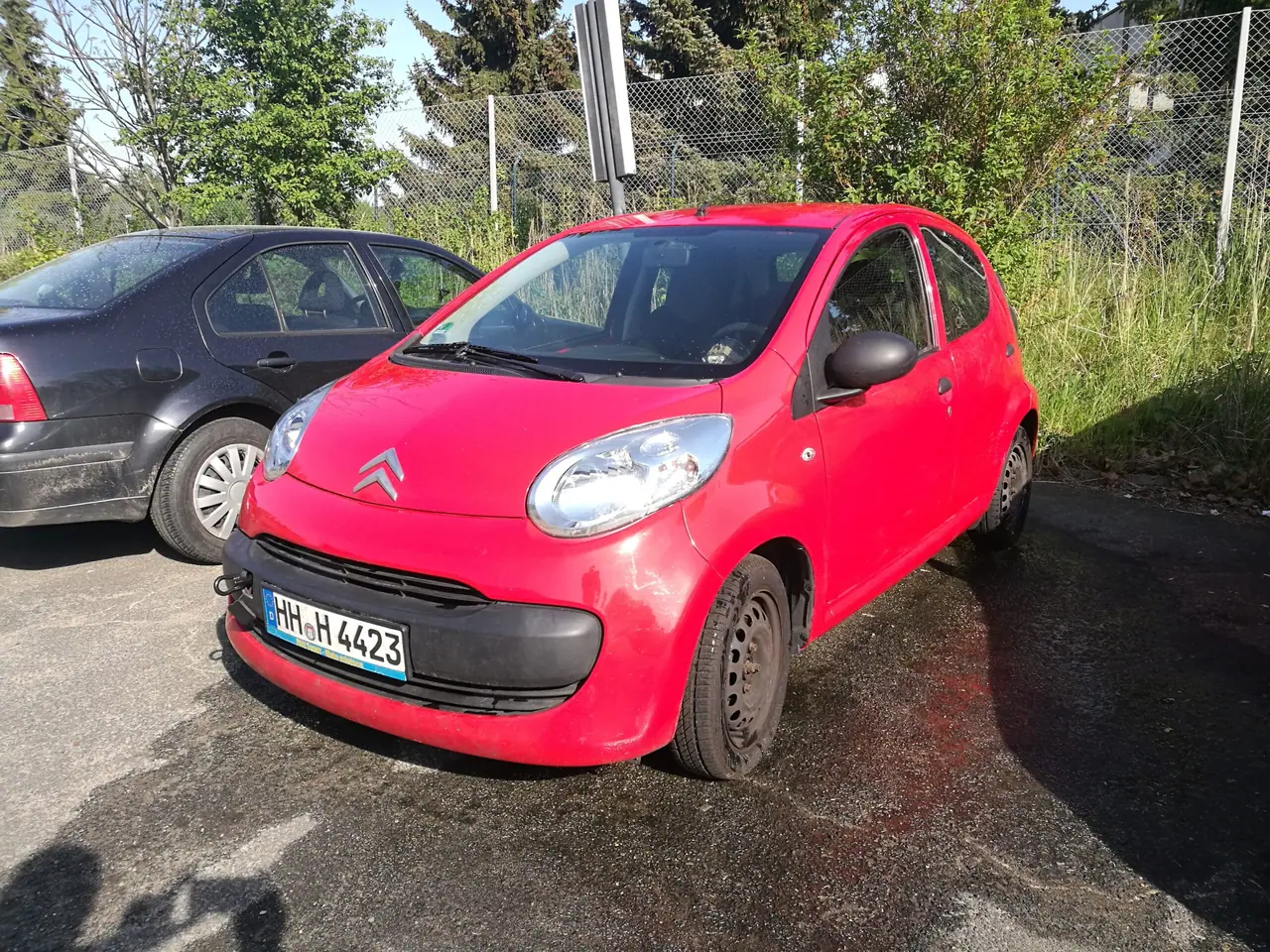
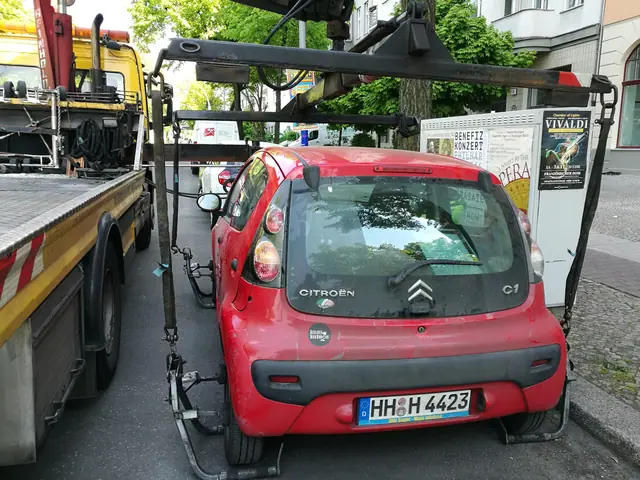
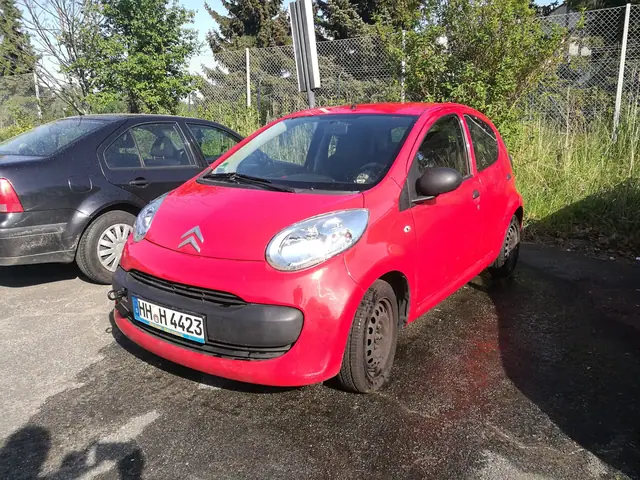
The C1 was developed together with Toyota and built from June 2005 in Kolín in the Czech Republic, alongside the Peugeot 107 and Toyota Aygo. The three differ mainly in the front design, lights and details (ADAC). The C1 came as a three- or five-door. Facelifts followed at the end of 2008 and in 2012, and in 2014 the second generation took over (ADAC, Gebrauchtwagenberater). Our photos show an early red C1.
Engines and specs
| Engine | Power | Notes |
|---|---|---|
| 1.0 three-cylinder petrol (Toyota 1KR-FE) | 68 PS, 93 Nm | the engine almost all used C1s have |
| 1.0 SensoDrive | 68 PS | automated manual gearbox, 2006–2008 in the ADAC data |
| 1.4 HDi diesel | 54 PS | 2006–2008, rare |
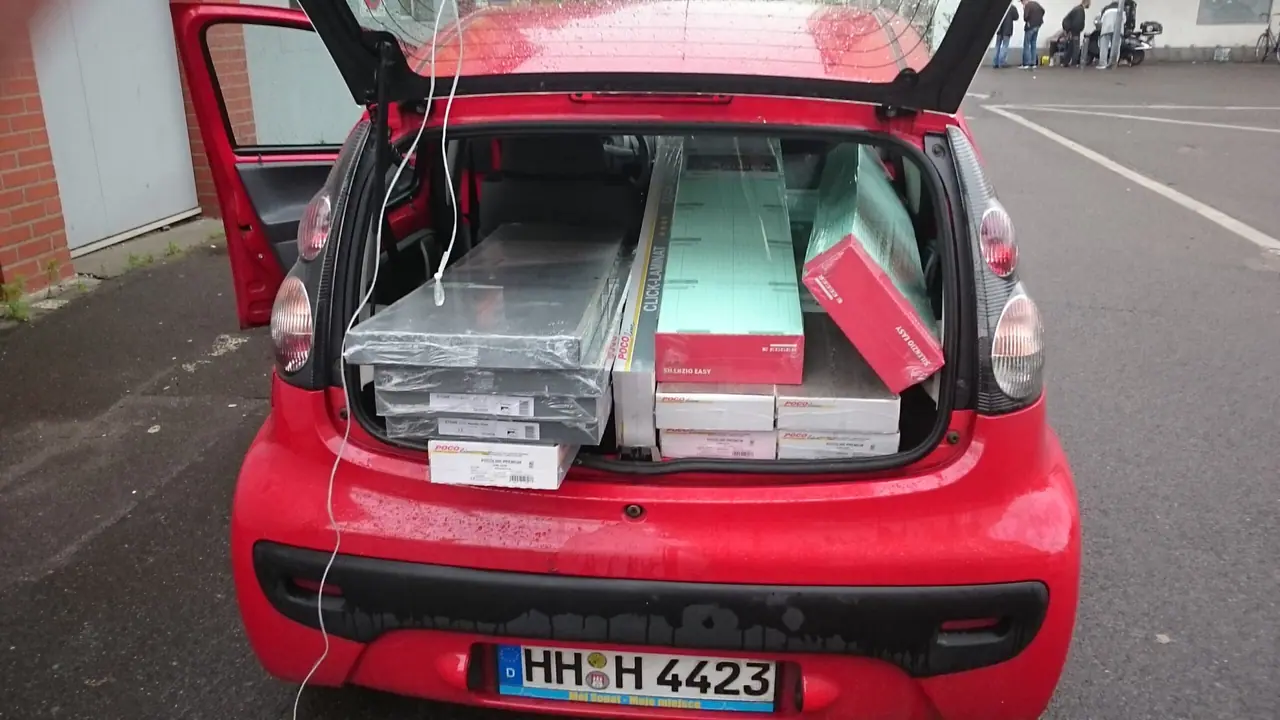
Figures from the ADAC and Gebrauchtwagenberater. A five-speed manual is standard. The C1 is 3.44 m long, and the boot holds 139 to 751 litres (dpa). Many special editions had air conditioning, while the base version is sparse (ADAC).
Living with it
The ADAC calls the C1 an ideal city car: good all-round visibility, a tight turning circle and a short body. The three-cylinder is lively, refined and economical. Weak points are the limited rear and boot space, the low payload, the small, hard-to-load boot, brakes that are weaker than the class average and only moderate rust protection. ESP was only optional on many cars. The ADAC advises the SensoDrive gearbox only for relaxed drivers, because it shifts unevenly.
Common problems
- Brakes and lights: They are the most frequent TÜV complaints, along with worn brake lines and poor exhausts (ADAC, Gebrauchtwagenberater). Worn brakes usually point to poor maintenance.
- Exhaust and spark plugs: The ADAC names them as breakdown hotspots.
- Water pump: Coolant loss often comes from the water pump, which on some cars leaked after about 50,000 km (Gebrauchtwagenberater). Honest John reports clutch and water pump failures as common on 2005 to 2009 cars.
- Clutch: It can wear early because most C1s live in the city (Gebrauchtwagenberater); from 2009, a bigger, stronger clutch was fitted (Honest John).
- Water ingress: Check the footwells and spare-wheel well for damp (Gebrauchtwagenberater).
- Lambda sensor: Faults are common and show up as code P0420 (Gebrauchtwagenberater).
Recalls covered a sticking accelerator pedal (2005 to 2009 cars), rear pop-out windows that could come loose and fall into traffic, a starter motor that stayed powered, and small batches of cars with faulty wheel bolt threads, rear axle welds or front dampers (ADAC, Gebrauchtwagenberater).
The C1 is not robust in the details. But its simple Toyota technology rarely leaves you stranded.
Safety
The ADAC gives four of five Euro NCAP stars for occupant protection from the 2005 test and notes that the criteria have since become much stricter. At launch, ABS and front and side airbags were standard; head airbags and ESP were options (ADAC).
Buying checklist
- Check brake discs, pads and lines; budget for them if the history is patchy.
- Test all lights; they are the most common TÜV fault.
- Look for coolant residue at the water pump and a rising temperature gauge.
- Check the clutch for slipping, especially on pre-2009 cars.
- Lift the mats and check the spare-wheel well for water.
- Ask about the recalls for the accelerator pedal and the rear windows.
Verdict
As a cheap, economical car for town, the first C1 makes sense, especially after the 2008 facelift, which Gebrauchtwagenberater recommends. Choose the manual over SensoDrive, and a car with ESP if you can find one. For a slightly bigger small car with similar Toyota roots, read our 2005 Toyota Yaris guide.
FAQ
Is the Citroën C1 reliable?
Mechanically, yes: the ADAC ranks it near the top of its breakdown statistics. At the TÜV it does worse than average, mainly because of lights and worn brakes.
Is the Citroën C1 the same as the Peugeot 107 and Toyota Aygo?
Almost. All three were built in the same factory with the same technology and differ mainly in the front, lights and equipment (ADAC).
What engine does the Citroën C1 have?
Almost always the 1.0-litre three-cylinder petrol from Toyota with 68 PS. A 1.4 diesel with 54 PS was sold only briefly (ADAC).
How big is the Citroën C1's boot?
139 litres, or up to 751 litres with the rear seat folded (dpa).
Based on manufacturer data, crash tests and owner and inspection reports, not on our own test drive. Sources: ADAC used-car report, Gebrauchtwagenberater, Honest John, dpa via Sport1.