VW Golf Mk4 (1997–2006) problems and how to buy a good one.
Mostly yes, if the body is sound. Check window regulators, door locks, 1.8T coils, oil use on the 1.4 and 2.0, the TDI cambelt and rust on the wings.
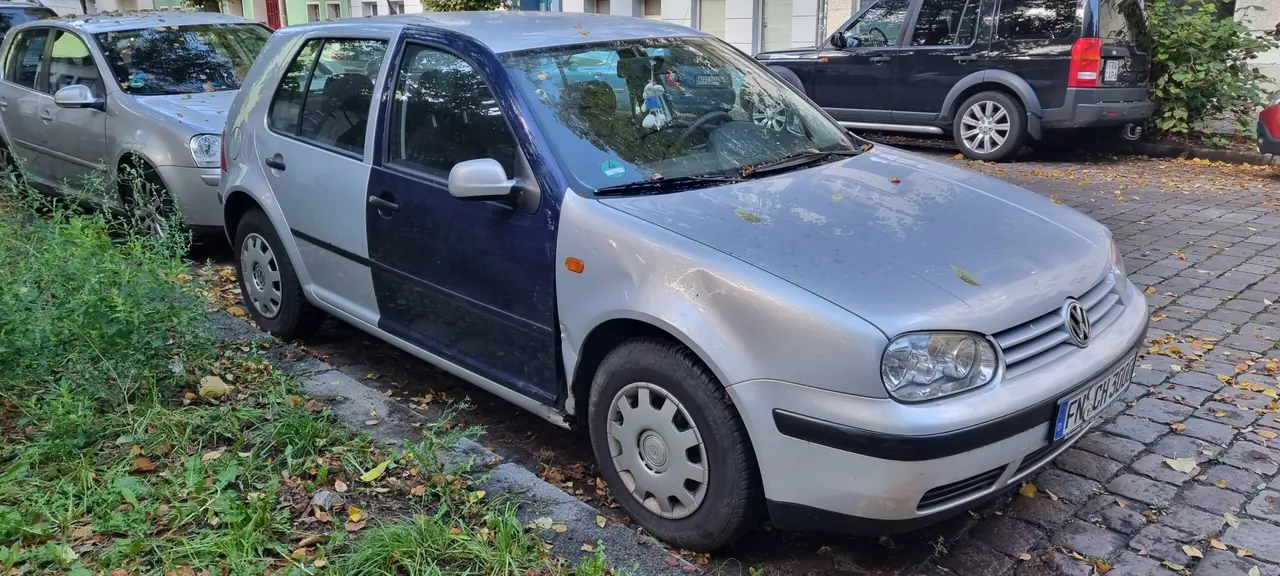
The short answer
What are the common VW Golf Mk4 problems (1997–2006), and is a used one still a good buy?
- The VW Golf Mk4 (1997–2006) is a cheap, solid and easy-to-fix used car, but it is now old – only 54 to 59 percent of 2003 Golfs pass the British MOT, so condition matters more than engine or trim.
- The typical faults are window regulators, door lock microswitches, ignition coils on 2001–2003 1.8T engines, oil use on the 1.4 and 2.0, the 01M automatic and rust on the front wings and tailgate.
- Buy a 1.9 TDI or a 1.6 or 2.0 petrol with proof of cambelt changes and a rust-free body; the R32 has become a collector car whose best examples cost far more than any other Mk4.
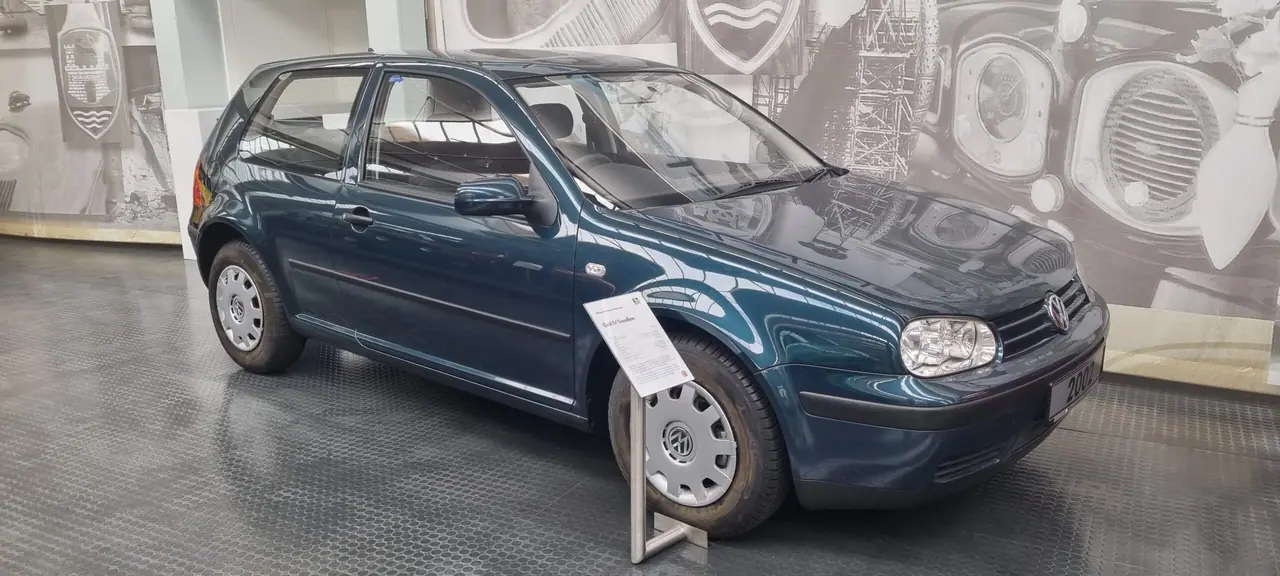
The fourth Golf arrived in November 1997, and VW built almost five million of them (Auto Bild). It uses the platform developed for the Audi A3, and the same parts went into the Bora, the New Beetle and a whole family of Audi, SEAT and Skoda models (Parkers). Auto Bild calls it one of the most solid used cars below €5,000.
This guide covers the common VW Golf Mk4 problems engine by engine, what the MOT data say, the recalls to check, the Golf R32 and the US GTI, prices and which version to buy. In short: most Mk4s die of rust, neglect and tired electrics, not of engine failure – so the body and the paperwork decide whether a used one is worth having.
The VW Golf Mk4 (1997–2006) at a glance
- November 1997: launch of the three- and five-door hatchback with 1.4, 1.6, 2.0, 1.8T and 2.3 V5 petrol engines and a 1.9 diesel as TDI or non-turbo SDI (NewCarNet).
- 1999: the estate (Variant) followed (NewCarNet), and the Mk4 GTI went on sale in the US (Sports Car Market).
- January 2000: a 2.8 V6 with 4Motion all-wheel drive went on sale (NewCarNet).
- May 2002: ESP became standard, and a 25th Anniversary Edition GTI with the 1.8T arrived (NewCarNet).
- November 2002: the R32 with a 3.2 V6 went on sale (NewCarNet).
- May 2003: the 1.4, 1.8T and 2.0 were updated to Euro 4 (NewCarNet).
- 2003 to 2006: the Golf 5 replaced the hatchback in 2003, but the estate was still sold in 2005 and 2006 (Gebrauchtwagenberater).
The Golf Cabriolet sold in the same years wears a Mk4-style face but is a Golf 3 underneath, so most of this guide does not apply to it.
Engines and specs
| Engine | Power | Notes |
|---|---|---|
| 1.4 and 1.6 petrol | 75 to 110 PS | 1.4 can burn oil and suffer piston slap; the 1.6 is enough for most people (Parkers) |
| 2.0 8V petrol | 115 PS | the easiest to maintain (Parkers), but can use a lot of oil |
| 1.8 and 1.8T petrol | 125 to 180 PS | 1.8T ignition coils on 2001–2003 cars |
| 2.3 V5 | 150 or 170 PS | Parkers advises against it unless it is a second car for fun |
| 2.8 V6 4Motion / 3.2 R32 | 204 / 241 PS | all-wheel drive; timing chains on the 3.2 |
| 1.9 SDI / TDI | TDI up to 150 PS | TDI durable; cambelt by 90,000 km |
Sources: Gebrauchtwagenberater, NewCarNet, Parkers, ADAC. With the optional tow bar, the Golf 4 can tow about 1.4 tonnes (AutoScout24).
Which engine for which driver
Gebrauchtwagenberater recommends the TDIs with 131 and 150 PS, and Auto Bild says a well-kept TDI can run for more than 500,000 km. Parkers names the 2.0 8V as the easiest petrol to keep running and the 1.8 Turbo 20V as the better mix of economy and performance, one that specialists know well. For short trips and low mileage, a 1.6 petrol is simpler and cheaper than any diesel.
Gearboxes and 4Motion
Most Mk4s have a five-speed manual. The automatic is the four-speed 01M, which repair guides and owners on CarComplaints describe as the weak point of the range (see below). The V6 4Motion and the R32 send power to the rear axle through a Haldex coupling, the same system as in the Audi TT 3.2, so ask for proof that its oil has been changed.
Living with it
The Golf 4 brought a big step up in quality, materials and comfort, with good space and simple controls (AutoScout24). Equipment varies a lot: electric windows and mirrors came only from Comfortline upwards, so check the spec of the car you are looking at. Parkers finds the diesels noisy, and AutoScout24 criticises the poor all-round visibility.
Parts are cheap and everywhere. Auto Bild notes that used wings and new wings painted to match cost little in the aftermarket, and the same goes for the tailgate. Because the engines are shared with so many other cars, any independent garage knows them – the 1.8T also powers the Audi A4 Cabriolet of the same era, covered in our Audi A4 Cabriolet B6 guide.
Reliability: MOT and breakdown record
When it was newer, the Mk4 had a good record. What Car? calls this generation pretty tough and cites relatively few warranty claims at Warranty Direct. According to ADAC data cited by Gebrauchtwagenberater, the breakdown hot spots were the clutch cable, the distributor and the ignition coil. Today the Golf 4 is too old for the ADAC breakdown statistics and the TÜV defect report; ADAC says the last data for the related Bora were still good for its age.
The British MOT data show what age does to these cars:
| Source | Cars | Tests | Pass rate |
|---|---|---|---|
| Honest John | Golfs registered in 2003 | 27,733 in 2021 | 54.3% |
| passyourmot | Golfs built in 2003, at 10 years | – | 58.6% |
| passyourmot | Golfs built in 2003, at 21 years | 17,015 in 2024 | 58.5% |
At six years old, passyourmot still recorded a pass rate of 69.1%. Brakes and suspension top the list of failures, and the average 21-year-old Golf arrived at its test with about 135,000 miles. In other words: roughly four in ten tests end in a fail, usually on wear components, so budget for brakes, bushes and springs rather than for engine work.
VW Golf Mk4 problems: what goes wrong
These are the common problems, from everyday annoyances to the faults that can end a car's life.
Window regulators and door lock microswitches
Windows that won't open or close, or drop on their own, usually mean a broken driver piece in the window regulator; Gebrauchtwagenberater puts the repair at €120 to €220 per side, and ADAC calls broken regulators a frequent annoyance on the Bora. Failing microswitches in the door locks can set off the alarm, confuse the central locking or leave the interior light dark; a lock with switch costs €150 to €250 per door.
Ignition coils on the 1.8T and V engines
On cars from about 2001 to early 2003, the pencil-type ignition coils failed far more often than normal. Misfires, a flashing engine warning light and power loss are the symptoms. VW replaced them in a worldwide action (see Recalls). On any petrol Mk4, misfires can also occur because of worn spark plugs, coils or leads (Auto Bild); coils and leads cost €100 to €200 (Gebrauchtwagenberater).
Oil consumption on the 1.4 and 2.0
The 1.4 and 2.0 are prone to burning a lot of oil (Gebrauchtwagenberater). Auto Bild names the 1.4 as a weak point and mentions piston slap, known in German as "Kolbenkipper". On the 1.4 up to early 2002, the crankcase breather could freeze in winter; a 2003 service action fitted a heated breather. Ask how much oil the car uses between services, and check the dipstick yourself.
1.9 TDI: cambelt, injectors and air mass meter
The TDI is the engine that keeps most Mk4s alive, but it needs its cambelt (timing belt) and water pump by 90,000 km, at €400 to €650 (Gebrauchtwagenberater); mobile.de warns about snapped cambelts. At high mileage, the pump-injector (PD) engines may need an injector overhaul at €500 to €1,100, and the air mass meter fails now and then.
Manual gearbox rivet and the 01M automatic
On 1.4, 1.6 and 1.9 SDI cars up to July 2001, a weak rivet in the manual gearbox can tear; repair or replacement costs €800 to €1,400 (Gebrauchtwagenberater). The four-speed 01M automatic transmission is worse: its valve body and solenoids fail, often made worse by old fluid and a clogged filter (go-parts, owner reports on CarComplaints), so preventive maintenance with fresh fluid and a new filter is worth it. Harsh gear changes, slipping or a stuck gear on the test drive mean you should walk away or price in a rebuilt gearbox.
Rust: front wings and tailgate
On the related Bora, ADAC names rust on the front wheel arches and the estate's tailgate. Auto Bild explains why: foam wedges behind the wheel arch liners hold moisture against the wings. VW gave the related Bora a 12-year warranty against rust perforation (ADAC) – long expired, so any rust now is your problem. Check the wings, the tailgate and the sills on every car.
R32 and V6: timing chains
The 3.2 V6 in the R32 uses timing chains, and fastcar warns that broken tensioners can wreck the engine. Honest John puts a chain job on the later Mk5 R32, which has the same engine, at about £3,000. Listen for a rattle at idle and ask for proof of any chain work.
Electrics and small faults
Parkers lists "electrical gremlins" among the Mk4's weak points, and ADAC mentions occasional electronic faults and electrical components such as the fuse and relay box; these are common faults rather than rare ones. A vehicle with every warning light out, working windows and quiet central locking has usually had regular maintenance.
A Golf 4 is easy to keep alive. Check the electrics in every door before you check the engine.
Recalls
What Car? counts nine safety-related recalls for the Mk4 Golf in the UK. The important ones:
- Airbags: gas generators with incomplete sealing on 1997–1999 models, and driver airbag propellant affected by moisture on 2001–2002 models (Gebrauchtwagenberater).
- Ignition coils: in February 2003, VW announced the replacement of the coils on all 2001 and 2002 cars and some early 2003 cars with the 1.8T, V5, 2.8 VR6 and other engines. About 850,000 cars were affected worldwide, about 530,000 of them in the US (UPI, The Auto Channel) and about 320,000 in Europe, including the Bora and Audi A3 (WardsAuto).
- Seat belt pretensioner: ADAC lists a recall for the Bora because an insulation mat could catch fire when the pretensioner fires; TDI and 4Motion models are named.
- ABS: on cars with ABS but without traction control or ESP, an electrical fault in the ABS control unit could cause overheating damage (ADAC, Bora).
- R32: VW's 6463 update removed a flat spot between 2,000 and 3,000 rpm (fastcar).
Ask a VW dealer to check every recall by VIN, and check national recall databases as well.
The Golf R32 and the US GTI
The R32 is the Mk4 that collectors want. It has a 3.2 VR6 with 241 PS, four-wheel drive and a six-speed manual; fastcar quotes 0–62 mph in 6.4 seconds and a claimed 154 mph. Much of its hardware comes from the first Audi TT 3.2, which helps with parts but makes work in the tight engine bay expensive (redriven). Honest John praises its grip and exhaust note, and Parkers warns that GTI and R32 models are more likely to have been driven hard.
| Market | What was sold | Notes |
|---|---|---|
| Europe | R32, from November 2002 | evo's guide: £5,000 to £10,000 |
| US | R32, 2004 model year only | 5,017 cars (Volkswagen), all six-speed manuals (TFLcar) |
| US | GTI, 1999 to 2004 | nearly 60,000 sold (Sports Car Market); 1.8T at 180 hp from 2002 |
The special US GTIs that collectors look for are the 337 Edition of 2002, named after the original GTI's internal project code, and the 20th Anniversary Edition of 2003 (German Cars For Sale). Many US Mk4 Golfs and Jettas have the 01M automatic, so the warning above applies there too.
R32 values climbed fast. Hagerty reported a 46 percent rise for the 2004 R32 in its price guide, a 97-mile car sold for $109,000 including fees on Bring a Trailer in February 2023, and Hagerty says values peaked in the summer of 2023. Classic.com's market benchmark stood at about $26,000, and evo's price guide lists £5,000 for an average car and £10,000 for an excellent one. Low-mileage, unmodified cars with full history fetch the most.
Prices and running costs
Gebrauchtwagenberater sees entry-level Golf 4s below €1,000 and well-kept late estates from 2005 and 2006 at about €3,000 to €5,000. When Auto Bild looked for a solid compact for €2,000 to €3,000 in its used-car test, it picked the Golf 4. In the UK, Parkers puts tired cars below £1,000 and good ones at around £2,500; new, the hatchback cost £10,768 to £23,068.
| Repair | Typical cost |
|---|---|
| Cambelt with water pump (TDI) | €400 to €650 |
| Clutch kit | €450 to €950 |
| Window regulator, per side | €120 to €220 |
| Door lock with microswitch, per door | €150 to €250 |
| Coils and leads (petrol) | €100 to €200 |
| Pump-injector overhaul (TDI) | €500 to €1,100 |
| Manual gearbox rivet repair | €800 to €1,400 |
Source: Gebrauchtwagenberater. Labour rates vary, so get a quote for your car.
The H-Kennzeichen in Germany
In Germany, a car can get historic plates (H-Kennzeichen) once it is 30 years old, largely original and in good condition, confirmed by an expert report under § 23 StVZO from an organisation such as TÜV, DEKRA, GTÜ or KÜS (ADAC). The report costs about €80 to €200, and the car tax is then a flat €191.73 a year (auto motor und sport). The first Golf 4s from November 1997 become eligible from late 2027, and later cars follow year by year until the mid-2030s. The flat rate has been questioned by the Federal Audit Office (Auto Zeitung), so check the current rules with TÜV, DEKRA or your registration office before you plan around it.
Safety
In the 1998 Euro NCAP crash test, a Golf 1.4 with two front airbags earned four stars for adult occupants and two for pedestrian protection (australiancar.reviews, encycarpedia), scoring 25 points under the old system (autokiste). In an ADAC comparison, a 2003 Golf IV scored 27 points and four stars, against one star for a 1984 Golf II (sicurauto). In the US, the IIHS rated a 1998 Golf four-door "marginal" overall in its moderate overlap test (CarComplaints). ESP became standard from May 2002, partway through the production run (NewCarNet).
By today's standards, ADAC rates its active and passive safety as poor. Check that the airbag recalls are done and that the airbag and ABS warning lights go out after the start.
Which VW Golf Mk4 should you buy?
- Best all-rounder: a 1.9 TDI, ideally with 131 or 150 PS (Gebrauchtwagenberater), documented cambelt changes and ESP, standard from May 2002.
- Low mileage: a 1.6 petrol or the 2.0 8V – simple, cheap to fix and with normal oil use.
- Most practical: a late estate from 2005 or 2006, if you can find one; Parkers notes they are rare in the UK and suggests the related Skoda as an alternative.
- For fun: a 1.8T GTI or the R32, bought on condition and history, not on price.
- Avoid: cars with the 01M automatic and no service records, oil-burning 1.4s, the V5 and V6 unless you want a second car for fun (Parkers), and any car with rust in the wings or sills.
Buying checklist
- Test every window and the central locking on each door.
- Check that the interior light and alarm behave normally.
- Look for rust on the front wings, the tailgate and the sills.
- On a petrol car, listen for misfires and ask about oil consumption.
- On a TDI, ask when the cambelt and water pump were last changed, and check for smoke and a hesitant start.
- On early manual cars, listen for gearbox noise and ask about a gearbox repair.
- On an automatic, check for harsh shifts, slipping and fluid changes.
- On an R32 or V6, listen for chain rattle and ask for Haldex oil changes.
- Check the MOT or TÜV history before purchase, and contact a VW dealer to ask whether all recalls have been done.
Verdict
The VW Golf Mk4 is a cheap, solid and easy-to-fix used car, and a good TDI or 1.6 with a sound body and working electrics is still a sensible buy. Avoid cars with oil-burning engines, neglected automatics or TDIs and rust in the wings, and budget for window regulators and wear parts. The R32 is a different market: a collector car that you buy on its history. For its van cousin, read our VW Caddy Maxi guide.
FAQ
Is the VW Golf Mk4 reliable?
It was tough when new, and its engines last if serviced. Today age decides: only 54 to 59 percent of 2003 Golfs pass the British MOT, mostly because of brakes and suspension, so buy on condition.
What are the most common Golf Mk4 problems?
Broken window regulators, failing door lock microswitches, ignition coils on 2001–2003 1.8T engines, oil use on the 1.4 and 2.0, the 01M automatic, TDI cambelts and rust on the front wings and tailgate.
Which Golf Mk4 engine is best?
Gebrauchtwagenberater recommends the 1.9 TDI with 131 or 150 PS, which is durable if the cambelt is changed in time. For low mileage, Parkers says the 1.6 petrol is enough and the 2.0 8V is the easiest to maintain.
What is a Mk4 Golf R32 worth?
Far more than any other Mk4. Classic.com's US benchmark stood at about $26,000, a 97-mile car sold for $109,000 in 2023, and Hagerty says values peaked that summer. In the UK, evo lists £5,000 to £10,000.
When can a Golf 4 get an H-Kennzeichen in Germany?
At 30 years old, with an expert report confirming a largely original car in good condition. The first cars from November 1997 qualify from late 2027. Check the current rules with TÜV, DEKRA or your registration office.
Based on manufacturer data, crash tests, MOT data, buyer's guides and owner and workshop reports, not on our own test drive. Sources: Gebrauchtwagenberater, NewCarNet, Auto Bild (parts and repairs), Auto Bild (used-car test), ADAC (VW Bora), AutoScout24, Parkers buying guide, Parkers review, Parkers engines, What Car?, mobile.de, Honest John MOT, passyourmot, UPI, The Auto Channel, WardsAuto, go-parts, CarComplaints (01M), fastcar, evo, Honest John R32, Honest John Mk5 R32, redriven, Volkswagen, TFLcar, Sports Car Market, German Cars For Sale, Hagerty (price guide), Hagerty (market), Hagerty (sale), Classic.com, australiancar.reviews, encycarpedia, autokiste, sicurauto, CarComplaints (IIHS), ADAC Oldtimer guide, auto motor und sport (tax), auto motor und sport (costs), Auto Zeitung.