2021 Renault Mégane E-Tech Plug-in
Yes, if you can charge often: it drives about 40 km on electricity and is well built. Weak points: a small boot, 750 kg towing and long motorway trips.
The short answer
Is a used Renault Mégane E-Tech Plug-in Hybrid (2020–2023) a good buy?
- The plug-in hybrid arrived with the 2020 facelift of the fourth Mégane, first as the Grandtour estate and from 2021 as a hatchback; it combines a 1.6 petrol engine with two electric motors for 158 PS.
- In the ADAC test it covered about 42 km on electricity and used 5.9 litres per 100 km in hybrid mode; on long motorway trips the battery runs flat quickly.
- Check the charging history and cable, the infotainment and climate control, brake discs and lights, and have a Renault dealer confirm recalls and service campaigns.
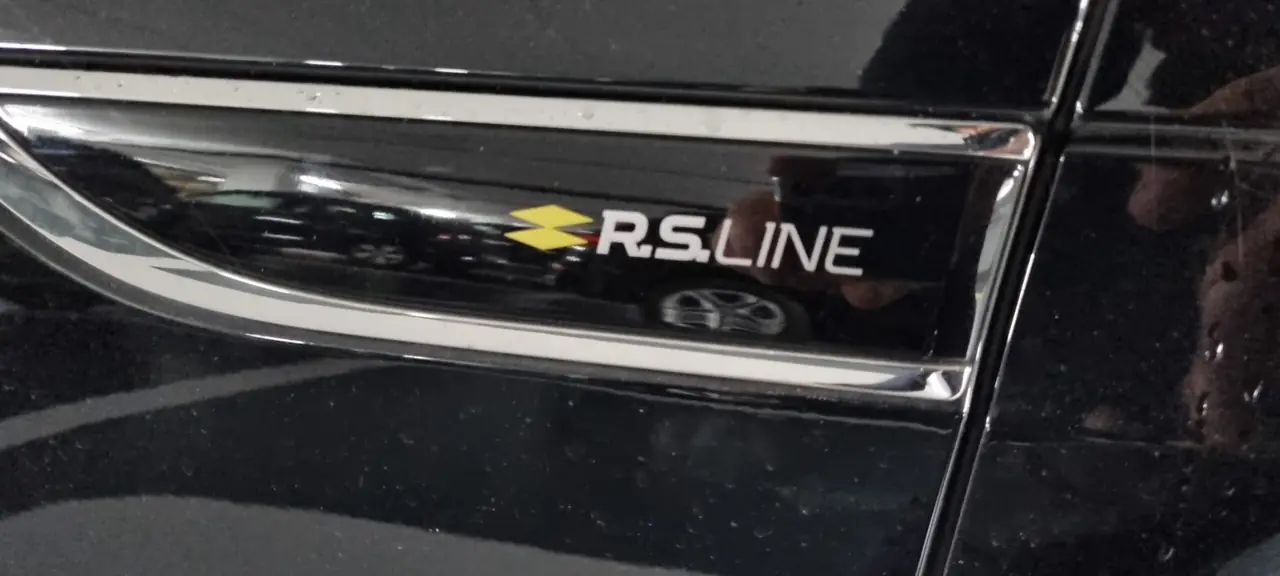
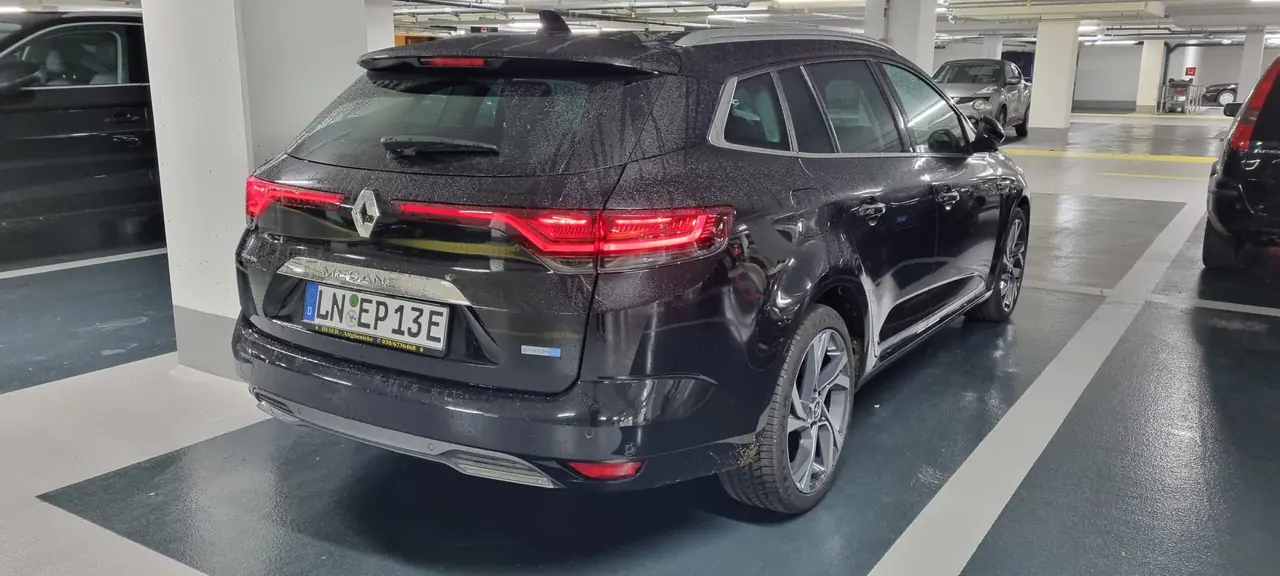
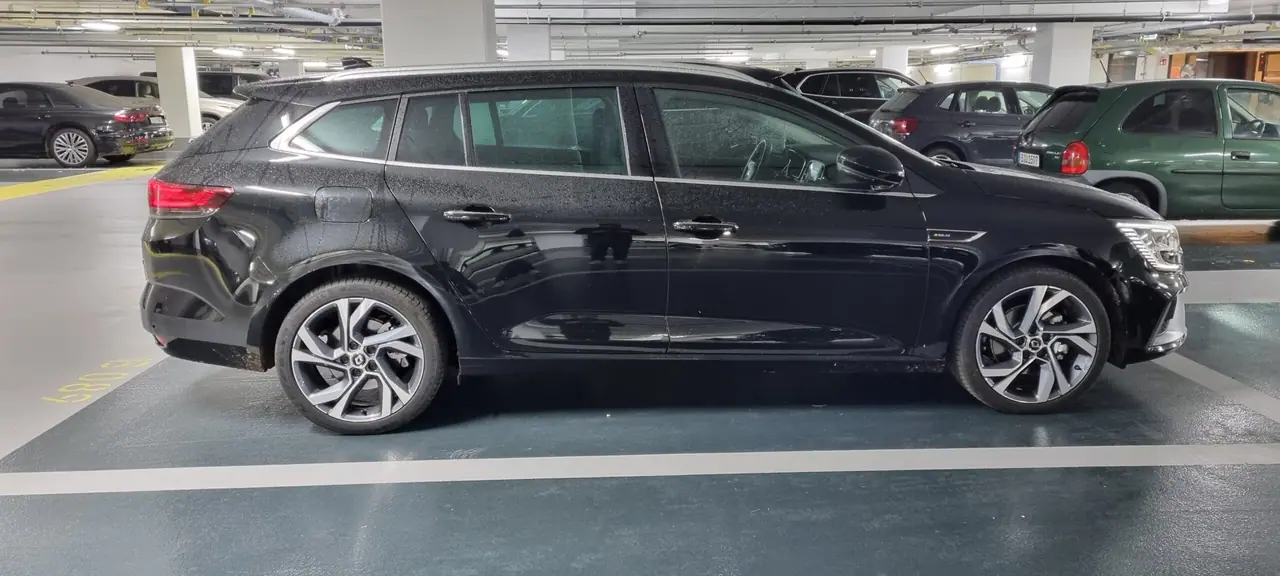
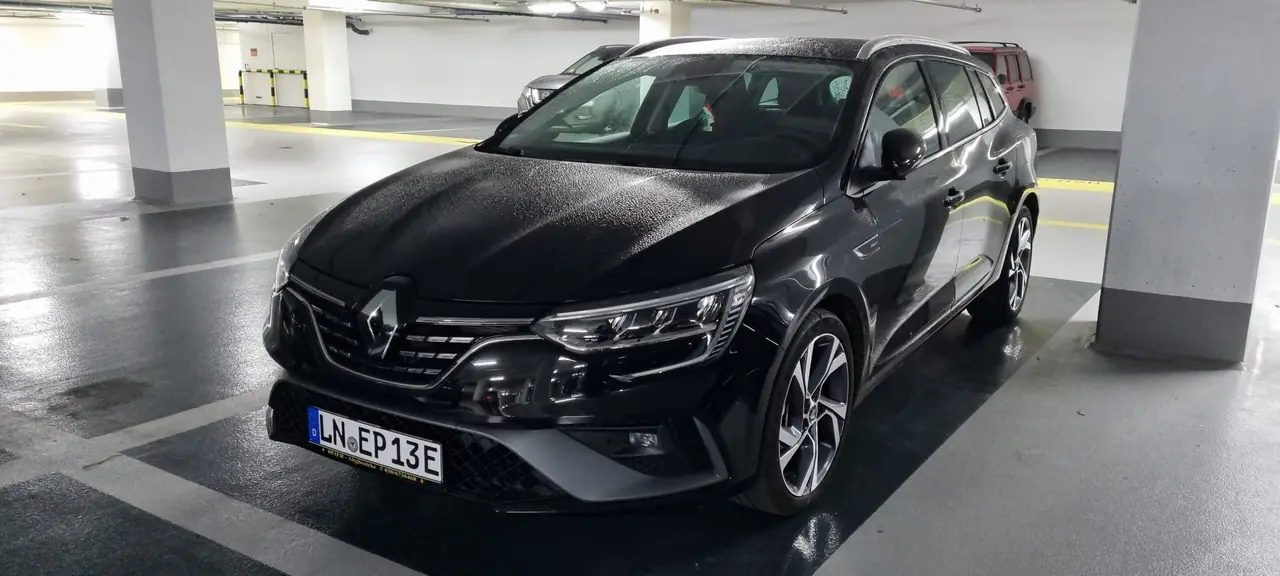
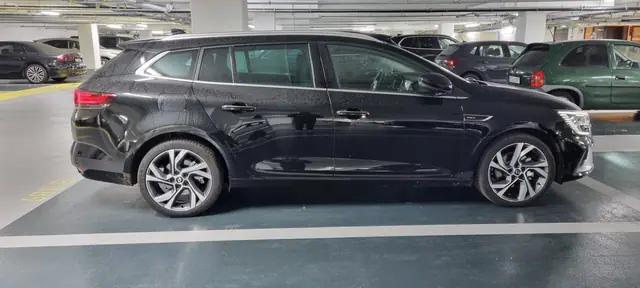
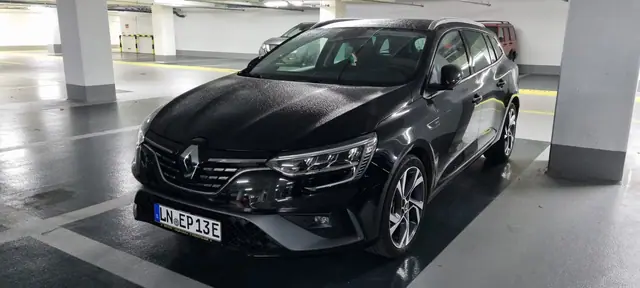
This is the plug-in hybrid version of the fourth Mégane, not the all-electric Mégane E-Tech Electric that followed in 2022. Renault added the E-Tech Plug-in 160 with the 2020 facelift, which also brought LED headlights as standard and a revised interior (Gebrauchtwagenberater). The Grandtour estate came first in July 2020; the hatchback followed in 2021 (ADAC, Auto Express). Our photos show a Grandtour in R.S. Line trim.
Engines and specs
| Item | Value |
|---|---|
| Drive | 1.6 petrol plus two electric motors, front-wheel drive |
| System output | 158 PS, 349 Nm |
| Gearbox | clutchless multi-mode automatic |
| Battery | 9.8 kWh, under the rear seat |
| Charging | up to 3.6 kW AC, no fast charging |
| Electric range (WLTP) | 50–54 km, top speed 135 km/h on electricity |
| Fuel tank | 39 litres |
| Boot (Grandtour) | 447 to 1,408 litres |
| Towing | 750 kg braked |
Figures from the ADAC, auto motor und sport, Auto Express and motor1. The battery takes space: Irish site CompleteCar notes that the petrol Grandtour holds up to 563 litres. Charging at a household socket takes about four to five hours (motor1, autohaus).
Living with it
The ADAC gave the Grandtour E-Tech an overall grade of 2.5 in March 2021. It praises good build and materials, standard LED headlights, extensive safety and comfort equipment, precise steering and low emissions. It criticises partly awkward controls, moderate visibility, the keycard, the low towing limit and rear head restraints that do not rise high enough.
According to Renault, it always starts on electricity. In the ADAC test it covered about 42 km electrically (Renault claims up to 54 km) and used 24.3 kWh per 100 km including charging losses. With a flat battery it averaged 5.9 litres per 100 km: 4.9 in town, 5.2 on country roads and 7.7 on the motorway. In motor1's real-world test it covered 41 to 51 km on electricity. auto motor und sport warns that at higher motorway speeds the battery runs flat after a few minutes, after which power drops noticeably.
Common problems
- Infotainment and climate control: Owners report problems with the R-Link system and the automatic climate control (Gebrauchtwagenberater), and Auto Bild finds the touchscreen partly illogical.
- TÜV weak spots of the Mégane IV: Axle mounts, steering, dipped beam and rear lights are criticised more often than average, brake discs wear faster than average, and exhaust rust is more common than on the predecessor (Auto Bild).
- Tie rods: They had to be replaced on Auto Bild's long-term test car, which still earned an overall grade of 2.
- Motorway use: It is not a fault, but with an empty battery the car feels weaker (auto motor und sport).
In the ADAC breakdown statistics the Mégane IV is mid-table (Gebrauchtwagenberater). Most known recalls concern 2016 cars, the R.S. and the diesels. Auto Bild also lists incorrect battery wiring, a fire risk from engine cooling parts and wrongly tightened wheel bolts. In 2025 Renault told owners that a gearbox service campaign may affect Mégane IV cars built between April 2019 and September 2022 (Renault E-Tech community).
As a plug-in hybrid, the Mégane only makes sense if you charge it. Then it is a cheap and comfortable commuter estate.
Safety
The plug-in hybrid was not crash-tested on its own. Euro NCAP gave the Mégane five stars in 2015, reviewed the rating in 2019 and applies it to the plug-in hybrid: 88 percent for adult occupants, 87 percent for children and 71 percent for safety assistants (DrivingElectric). The test is over ten years old, so it says little compared with newer cars.
Buying checklist
- Ask about charging habits; a car that was rarely charged has mostly run on petrol.
- Check the charging cable and test charging at a wallbox or socket.
- Test the infotainment, climate control and all assistance systems.
- Check brake discs, lights and the exhaust.
- Ask a Renault dealer to check recalls and service campaigns using the VIN.
- If you tow a caravan or a heavy trailer, look elsewhere: only 750 kg is allowed.
Verdict
The Mégane E-Tech Plug-in suits drivers with a short commute and a place to charge, who want a comfortable estate with low running costs. For long motorway trips, towing or maximum boot space, a diesel or a larger estate fits better. For a roomier estate that is also available as a plug-in hybrid, read our 2020 Škoda Octavia guide.
FAQ
Is this the same as the Mégane E-Tech Electric?
No. The Mégane E-Tech Plug-in is a plug-in hybrid version of the fourth-generation Mégane. The Mégane E-Tech Electric is a separate all-electric car that arrived in 2022.
How far can the Mégane E-Tech Plug-in drive on electricity?
Renault claims 50 to 54 km (WLTP). The ADAC managed about 42 km, motor1 between 41 and 51 km.
Can the Mégane E-Tech Plug-in fast-charge?
No. It charges with up to 3.6 kW AC, so a full charge takes about four to five hours at a household socket.
How much can the Mégane E-Tech Plug-in tow?
750 kg, braked or unbraked (ADAC). The ADAC lists this as a weakness.
Based on manufacturer data, crash tests and owner and inspection reports, not on our own test drive. Sources: ADAC test, auto motor und sport, motor1 consumption test, Auto Bild TÜV report, Gebrauchtwagenberater, Auto Express, autohaus, CompleteCar, DrivingElectric.