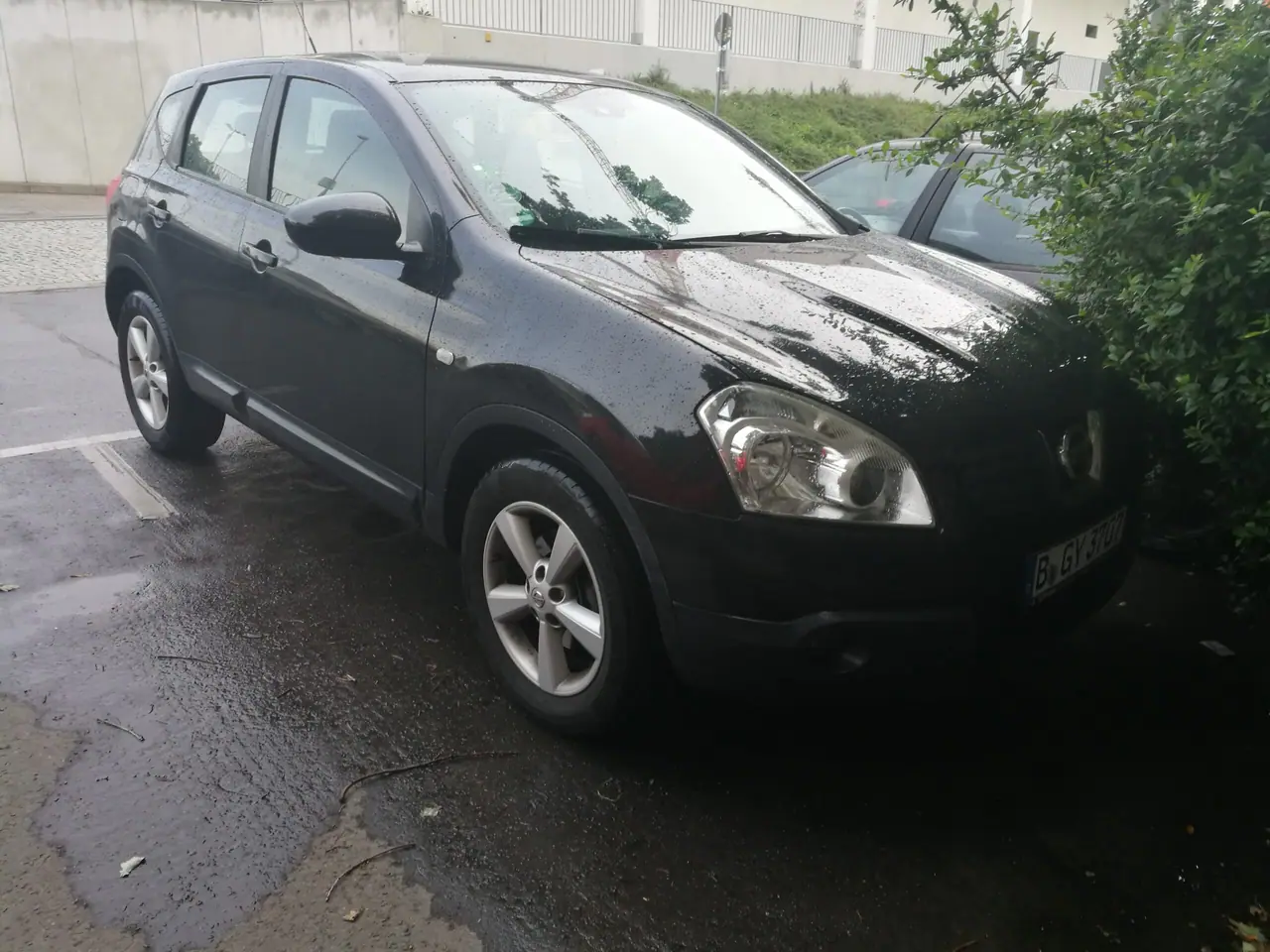
Nissan Qashqai J10 problems and how to buy a good one.
Mostly a good buy: the first Qashqai beats the MOT average, but check suspension, subframe rust, the 1.5 dCi cambelt, DPF, CVT and open recalls.
The short answer
What are the common Nissan Qashqai J10 problems, and is a used one a good buy?
- The first Qashqai (J10, 2007–2014) fails the UK MOT less often than the average car of its age, but suspension, steering joints, driveshafts and brakes are its typical weak points.
- The biggest risks are on diesels and automatics – the 1.5 dCi cambelt, clogged DPFs on the 2.0 dCi and CVT gearboxes – while the manual petrols avoid most of them.
- Buy one with a full service history, check the subframe for rust on a lift and have a Nissan dealer confirm that every recall has been done.
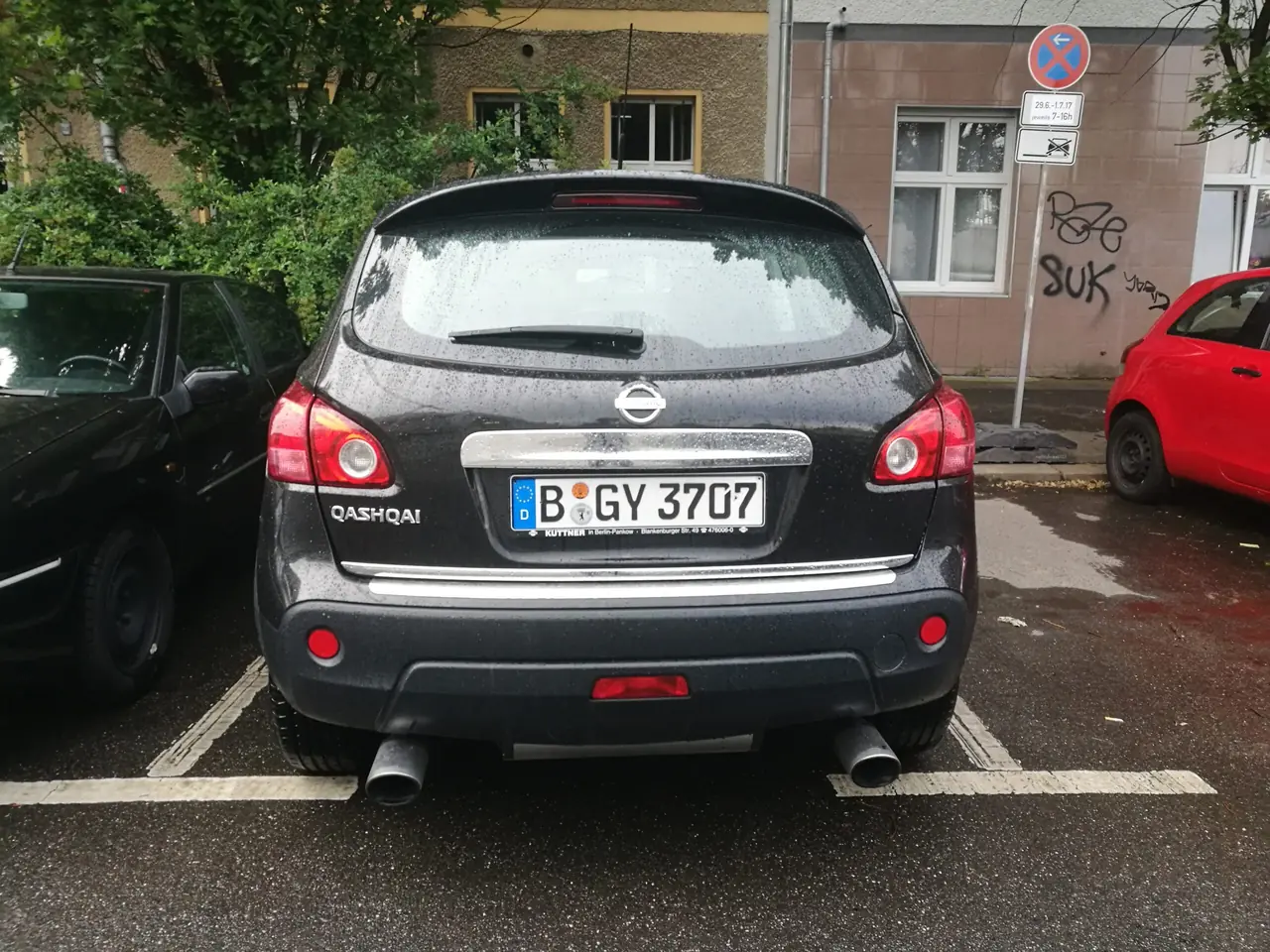
The Qashqai went on sale in February 2007 as a five-door compact SUV with front- or all-wheel drive, built at Nissan's Sunderland plant (ADAC). It practically invented the crossover class, and Auto Express notes that it beat the VW Golf in its first twin test. What Car? still calls the first generation, known internally as J10, a very worthy used buy.
This guide covers the common Nissan Qashqai J10 problems, what they cost to fix and which version to buy. The short version: the car itself is fairly robust, but many examples are now 12 to 19 years old, so condition and service history matter far more than the badge.
Nissan Qashqai J10 at a glance
- February 2007: launch with 1.6 and 2.0 petrol engines and a 1.5 dCi diesel; the 2.0 dCi followed in June 2007 (ADAC).
- October 2008: the seven-seat Qashqai+2 arrives, 211 mm longer and 38 mm taller than the standard car (Auto Express).
- 2010 facelift: a redesigned nose, a revised dashboard and suspension, and extra soundproofing (Auto Express).
- 2011: the 1.6 dCi with 130 PS replaces the 2.0 dCi in the UK (Auto Express).
- 2014: the second-generation Qashqai (J11) takes over (ADAC).
UK trims ran from Visia (alloys, air-con, Bluetooth) through Acenta (climate control, parking sensors) and n-tec (sat-nav, 18-inch alloys) to Tekna (leather, heated seats, xenon lights, glass roof), according to Auto Express.
Engines and specs
| Engine | Power | 0–100 km/h | Available |
|---|---|---|---|
| 1.6 petrol | 115 PS, 117 PS from 2010 | 12.0 s | 2007–2014 |
| 2.0 petrol | 141 PS | 10.1 s | 2007–2014 |
| 1.5 dCi diesel | 103–110 PS | 12.2–12.7 s | 2007–2014 |
| 1.6 dCi diesel | 130 PS | 10.3 s | from July 2011 |
| 2.0 dCi diesel | 150 PS | 10.5 s | from June 2007 |
All figures from the ADAC. Auto Express warns that the smaller engines can struggle. Four-wheel drive was offered on the 2.0 petrol, the 2.0 dCi and later the 1.6 dCi (Auto Express). The Qashqai is 4,315 mm long; the boot holds 410 litres, or 1,513 litres with the rear seats folded (ADAC, Auto Express).
Timing chain or cambelt?
Auto Express lists a cambelt only for the 1.5 dCi. The petrol engines and the larger diesels use a timing chain, which has no fixed replacement interval but can stretch with age: Car Checker reports chain stretch on the 2.0 petrol after 150,000 to 200,000 km, especially when oil changes have been skipped.
Gearbox options
Most cars have a manual gearbox. The petrols were also sold with a CVT automatic, and the 2.0 dCi with four-wheel drive was also offered as an automatic (Honest John). If you want an automatic, the CVT is the one to check most carefully (see below).
Real-world fuel economy
| Engine | Real MPG (owners) | About |
|---|---|---|
| 1.5 dCi | 48.2 mpg | 5.9 l/100 km |
| 1.6 dCi | 48.5 mpg | 5.8 l/100 km |
| 2.0 dCi | 40.2 mpg | 7.0 l/100 km |
| 1.6 petrol | 37.2 mpg | 7.6 l/100 km |
| 2.0 petrol | 33.3 mpg | 8.5 l/100 km |
| 2.0 petrol CVT | 30.8 mpg | 9.2 l/100 km |
Owner-reported averages from Honest John's Real MPG, converted from UK gallons.
Living with it
The ADAC praises the space in the front, the balanced suspension, the stability at speed, the short braking distances and the simple controls. It criticises the high boot lip and the lack of anti-trap protection on all electric windows except the driver's. Auto Express finds some interior plastics cheap and rear headroom limited, and only the Qashqai+2 has sliding second-row seats. Its third row is hard to reach and only suits small children (ADAC).
Honest John rates the front seats as very comfortable and the ride as good, which makes the Qashqai an easy car on a long journey. Practicality is good for a car of hatchback length, although the rear seats are not as spacious as you'd expect (Honest John). On larger wheels the ride can be crashy over potholes (Honest John), and tyres wear quickly on cars with the optional 18-inch alloys (Auto Express). Front-wheel drive is cheaper to run, while four-wheel drive is the better choice for towing and winter roads (Auto Express).
Reliability and MOT record
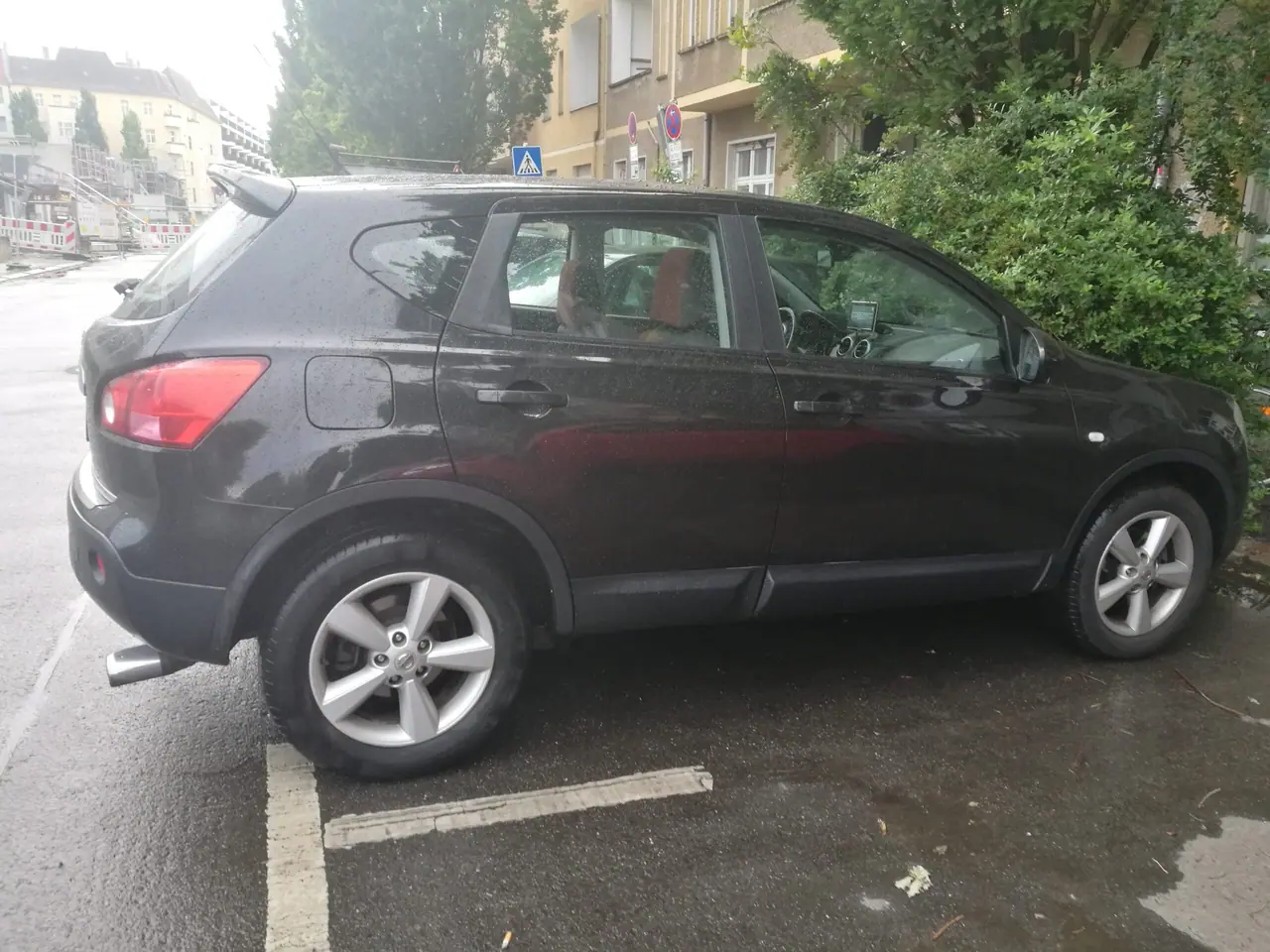
UK MOT data is the best large-scale reliability check for a car this old. Across 2.4 million MOT tests of J10 Qashqais built from 2007 to 2013, 36.8 percent failed, against 39.6 percent for the average car of the same years (CarGarages, based on DVSA data). The items flagged most often were driveshaft faults, worn track-rod ends (1.8 times the UK average), worn ball joints, position lamps and the airbag warning light, typically at around 105,000 miles (about 169,000 km).
In Germany the picture is similar. The ADAC places the Qashqai in the upper middle of its breakdown statistics, but at the TÜV (Germany's equivalent of the MOT) it has an above-average number of defects, mostly suspension mounts, steering joints, brakes and oil leaks from the drivetrain. Owners are less kind: in the Auto Express Driver Power survey of 2016, the Qashqai ranked 147th overall and 149th for reliability.
Nissan Qashqai J10 problems: what goes wrong
Suspension, steering and driveshafts
Rattles from the rear suspension and early failure of the rear shock absorbers are among the most common faults (Auto Express). What Car? says most pre-facelift cars had theirs fixed under warranty, but a later car can still need new dampers; WhoCanFixMyCar puts a replacement at £259.61 on average. Worn track-rod ends, ball joints and driveshafts are the typical MOT failures listed above.
Subframe and underbody rust
Car Checker reports poor factory rust protection on the subframe and suspension arms, with seized rear arm bolts and possible MOT or TÜV failures from about seven or eight years old in areas where roads are salted. A replacement subframe costs about €300 to €800 plus €200 to €400 labour, so look underneath before you look at the paint.
1.5 dCi cambelt
According to Auto Express, Nissan's schedule is a new cambelt every six years or 100,000 miles (about 161,000 km), at about £508, or £727 with the water pump. What Car? advises replacing belt, tensioners and water pump at least every four years or 60,000 miles (about 97,000 km), because a snapped belt can destroy the engine. Without proof of the last change, budget for it.
Diesel particulate filter and EGR
The DPF can clog on cars used mainly for short trips, and a replacement is expensive (What Car?). Honest John names DPF problems on the 2.0 diesel as a known weakness, and WhoCanFixMyCar puts a DPF clean at £223.40 on average. Car Checker recommends at least 20 minutes at motorway speed once a week to let the filter regenerate.
2.0 dCi engine bearings and software update
Car Checker warns that the big-end bearings on the 2.0 dCi can fail under high load, typically at 150,000 to 200,000 km on neglected engines. According to Car Checker, Nissan fixed this with a short engine-software update (an ECU remap); ask a dealer to confirm it has been done using the VIN.
Turbocharger
A stuttering engine under acceleration and an uneven idle can point to a turbo problem, usually sticking valves. WhoCanFixMyCar quotes £706.69 on average for a new turbo, although limited damage can sometimes be repaired.
Clutch and dual-mass flywheel
Some owners report smoke and a burning smell from the clutch (What Car?), and the ADAC lists the clutch slave cylinder among the breakdown causes for 2009 cars. On manual 2.0 dCi cars the dual-mass flywheel typically needs replacing by 120,000 to 150,000 km; a rattle at idle and a vibrating pedal are the warning signs (Car Checker).
CVT automatic
Honest John calls the failure rate of the CVT transmissions unacceptably high. Car Checker lists whining, shuddering and sudden loss of drive as symptoms, recommends a fluid change every 40,000 to 60,000 km and puts a specialist rebuild at about €2,500 to €3,500. Manual cars are not affected.
Petrol engines: chain and ignition coils
The 1.6 and 2.0 petrols are the simplest engines in the range, with no turbo or DPF. Listen for a chain rattle lasting more than a few seconds after a cold start, and expect individual ignition coils to fail at around 80,000 to 120,000 km (Car Checker).
Electrics, battery and keys
The ignition barrel can fail and stop you removing the key or switching the engine off, a repair Auto Express puts at £500. The remote key fob can also play up. Car Checker reports that many 2.0 dCi cars drain the battery when parked: a normal draw is 8 to 11 mA, but affected cars draw 70 to 170 mA.
Water leaks
A musty smell can point to a leak at the edge of the windscreen (What Car?), so lift the carpets and check the footwells.
Common problems that belong to other Qashqais
Some of the Qashqai problems you will read about online concern the second generation (J11), not the J10. The recall for a rear brake hose that the wheel-arch liner could wear through covered J11 cars built from 2013 to 2016 (Honest John), and the recall for a ceramic capacitor in the radiator fan controller that could fail was also a J11 campaign (Haynes). Haynes also lists excessive oil consumption with a rapidly dropping oil level as a J11 problem. On any older model, still check the oil level on the dipstick and ask how often it needed topping up.
Recalls
Auto Express counts five recalls over a possible loss of steering control between 2007 and 2012, a 2012 recall because the power steering assistance could fail on cars built between August 2010 and August 2011, one for possible engine seizure caused by the air-con compressor and two for possible fuel leaks. The ADAC adds a burst turbo intake hose on 1.5 and 2.0 dCi cars built in 2010–2011, a brake pipe rubbing on the CVT and a steering-wheel hub that could crack on cars built in spring 2012. Have a Nissan dealer check the VIN for open recalls.
The first Qashqai invented a whole class of car. Buy the one with the thickest service file, not the shiniest paint.
Running costs
Auto Express gives a service interval of 12 months or 12,500 miles (about 20,000 km), alternating minor and major services: about £189 and £209 for petrols, £259 and £319 for diesels. Coolant is due every five years (£65), and the air-con should be checked every three years.
Safety
In 2007 Euro NCAP gave the Qashqai five stars for adult occupants with a record 36.83 of 37 points, four stars for children and two for pedestrians (Nissan).
Which Qashqai J10 should you buy?
Auto Express advises buying the newest one you can afford, which also gets you the improved 2010 facelift. The ADAC's pick is the 1.6 dCi with 130 PS; for towing, the rarer 2.0 dCi with all-wheel drive. WhoCanFixMyCar names the 2007–2010 diesels as the years to avoid. If you mainly drive short distances, a manual 1.6 or 2.0 petrol sidesteps the cambelt, DPF and CVT risks altogether.
Buying checklist
- Ask for a full service history with regular oil changes, and check the UK MOT history online for repeated advisories.
- Check the oil level on the dipstick and ask how often it needed topping up.
- Have an independent garage put the car on a lift: subframe, suspension arms, sills and wheel arches.
- 1.5 dCi: proof of the last cambelt and water pump change.
- 2.0 dCi: proof of the engine-software update and the state of the DPF.
- CVT: smooth pull-away without whining, shuddering or slipping, and documented fluid changes.
- Petrol: no chain rattle after a cold start.
- Listen for rattles from the rear suspension and knocks from the front over bumps.
- Check the carpets for damp, and test the ignition, the key fob and all electrics.
- Have a dealer check the VIN for open recalls.
Verdict
The first Qashqai is a sensible used family car if it has been serviced properly, and it fails the MOT less often than the average car of its age. Most Nissan Qashqai J10 problems are wear, rust and maintenance issues you can spot before you buy. Choose a facelifted car, prefer a manual, and expect suspension and brake work at the next MOT or TÜV. For a similar alternative, read our 2012 Mitsubishi ASX guide.
FAQ
Is the first Nissan Qashqai reliable?
Reasonably. J10 Qashqais fail the UK MOT less often than the average car of the same age (36.8 against 39.6 percent), and the ADAC ranks it in the upper middle for breakdowns. The weak points are suspension, steering joints, brakes, the diesel cambelt and DPF, and the CVT.
Which Qashqai J10 engine is best?
The ADAC recommends the 1.6 dCi with 130 PS. The 1.5 dCi is economical but weak at higher speeds, the 1.6 petrol suits town driving and the 2.0 petrol is livelier but thirstier. A manual petrol avoids the DPF, cambelt and CVT risks.
How big is the Qashqai J10's boot?
410 litres in the five-seater, or 1,513 litres with the rear seats folded (ADAC, Auto Express).
What is the Qashqai+2?
A seven-seat version from 2008, 211 mm longer than the standard car, with two extra seats that fold into the floor; the ADAC says they only suit small children.
Based on manufacturer data, crash tests, MOT data and owner and workshop reports, not on our own test drive. Sources: ADAC used-car report, What Car?, Auto Express, Honest John, CarGarages (DVSA MOT data), WhoCanFixMyCar, Car Checker 2.0, Car Checker 2.0 dCi, Nissan (Euro NCAP), UK Car Discount, Honest John (J11 recall), Haynes (J11).