Volvo XC60 (2008–2017) problems and how to buy a good one.
Mostly yes: the first XC60 beats the TÜV and MOT averages. Check EGR and oil use on 2.0 engines, the Haldex service and the five-cylinder belts.
The short answer
What are the common problems with the first Volvo XC60 (2008–2017), and is a used one a good buy?
- The first Volvo XC60 (2008–2017) passes the German TÜV and the British MOT more often than the average car of its age, and a D4 earned top marks in a 100,000 km Auto Bild long-term test.
- The risks depend on the engine – EGR and oil consumption on the 2.0 four-cylinders, belts, coolant loss and the 205 PS D5 on the 2.4 five-cylinder diesel, and the Powershift dual-clutch on early four-cylinder petrols.
- Buy a facelift car from 2013 with full service history, ask for proof of Haldex and gearbox fluid changes and let a Volvo dealer check every recall by VIN.
Volvo showed the first XC60 at the Geneva Motor Show in March 2008 and built it until 2017, when the second generation took over (Volvo, Auto Bild). It was designed while Ford owned Volvo and shares its platform with the Land Rover Freelander 2 (Autocar). It was the first car with City Safety as standard, a technology that brakes automatically at low speed (Volvo) and fits Volvo's reputation for safety.
This guide covers the common Volvo XC60 problems engine by engine, what the TÜV and MOT data say, the recalls to check, the 2015 and 2016 US models and which version to buy. In short: the body and chassis are tough, but the engine type, the gearbox and the fluid history matter most and decide whether a used one is a bargain or a project.
The Volvo XC60 (2008–2017) at a glance
- March 2008: world premiere in Geneva. The first cars reached European dealers in the autumn; UK showrooms got them from October 2008 (Volvo, Fleet News) and Germany in November 2008 (Volvo).
- 2009: the US launch followed as the 2010 model year, with six-cylinder petrol engines only (Volvo, Carvana).
- 2012: a 240 hp four-cylinder T5 petrol joined the range (Auto Express).
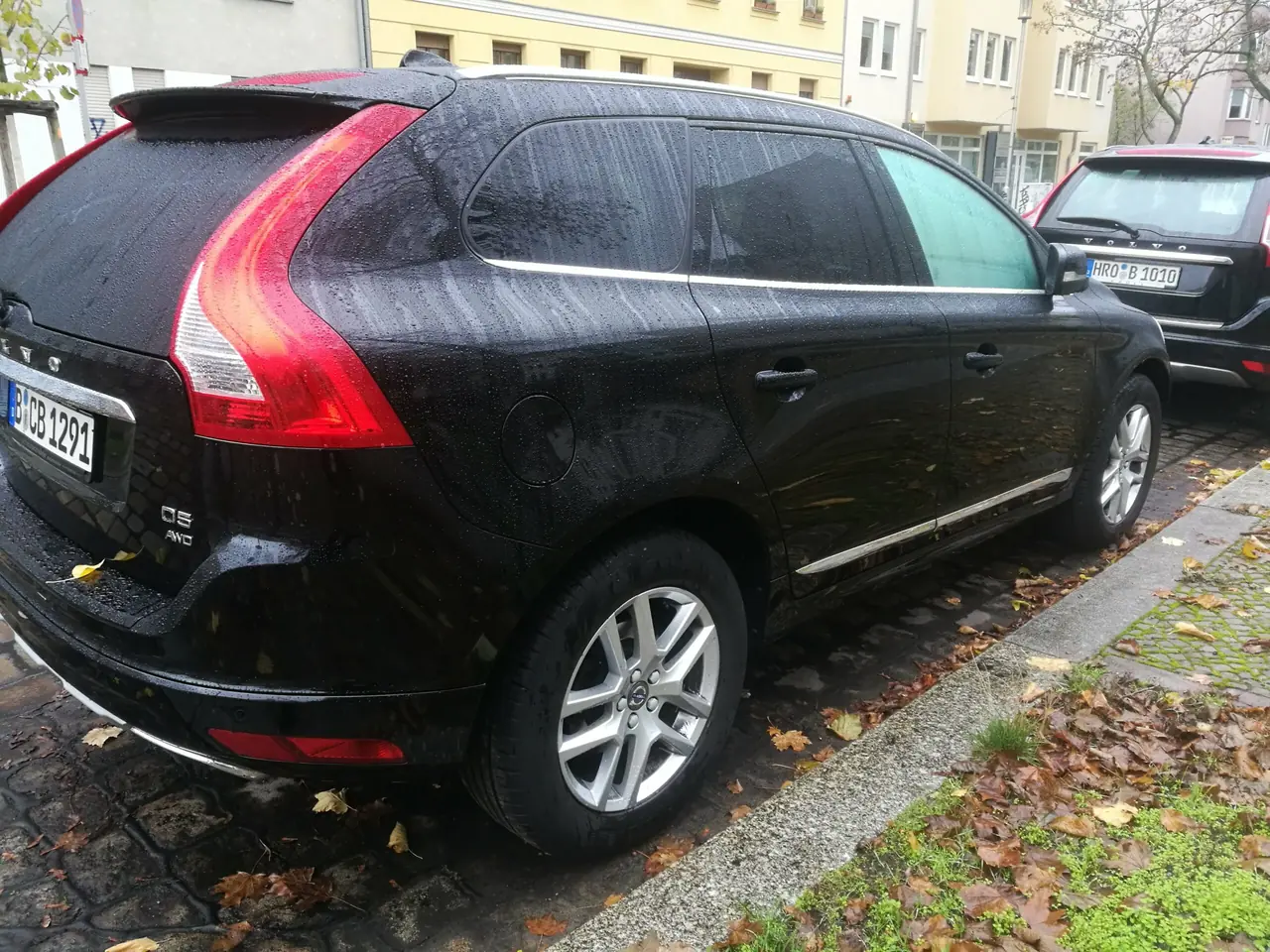
- 2013: facelift with a new grille, one-piece headlights, new tail lights and a 7-inch display for the infotainment system; LED indicators moved into the mirrors (What Car?, mobile.de, Gebrauchtwagenberater).
- Autumn 2013: Volvo's own new four-cylinder engines (VEA, sold as Drive-E) arrived with an eight-speed automatic; the Powershift dual-clutch gearbox was dropped in October 2013 (mobile.de, Gebrauchtwagenberater).
- 2015: the four-cylinder D4 went from 181 to 190 PS, and in March the D3 switched from five to four cylinders (Gebrauchtwagenberater).
- 2017: the second XC60 replaced it (Auto Bild).
Inside Volvo the first generation is known as Y20 (mobile.de). It is about 4.63 m long, weighs at least 1.8 tonnes and has a boot of 495 litres, or 1,455 litres with the rear seats folded (t-online, mobile.de).
Engines and specs
| Engine | Badges | Power | Years | Notes |
|---|---|---|---|---|
| 2.4 five-cylinder diesel | 2.4D, DRIVe, D3, D4, D5 | 136–220 PS | 2008–2017 | timing belt; 2.4D and DRIVe only until 2010 |
| 2.0 four-cylinder diesel (VEA) | D4 | 181 PS, from 2015 190 PS | late 2013–2017 | timing belt, eight-speed automatic |
| 2.0 four-cylinder diesel (VEA) | D3 | 150 PS | 2015–2017 | entry model |
| 2.0 four-cylinder turbo petrol | 2.0T, T5 | 240 hp (T5) | until 2013 | Powershift dual-clutch |
| 2.0 four-cylinder petrol (Drive-E) | T5, T6 | 240 hp (T5), 306 PS (T6) | from 2014 | eight-speed, T6 with turbo and supercharger |
| 3.2 six-cylinder petrol | 3.2 | 235–240 hp | until 2015 | no turbo; in the US replaced by the T5 AWD |
| 3.0 six-cylinder turbo petrol | T6 | 281–325 hp | from 2008 | timing chain, AWD only; in Europe replaced by the 2.0 T6 |
Figures from Auto Bild, Auto Express, Gebrauchtwagenberater, mobile.de, Car Checker and the US sources listed below. In Europe almost every XC60 is a diesel; petrol versions sold badly and are scarce (Gebrauchtwagenberater). Auto Bild's range runs from 136 PS for the weakest D3 to 306 PS for the T6.
The D4 and T5 badge trap
On later cars, the badge on the tailgate does not tell you the engine type. Auto Express points out that Volvo used the D4 and T5 names for both 2.0-litre and 2.4-litre engines: the front-wheel-drive versions got the 2.0, the all-wheel-drive versions the 2.4. A 2015 D4 AWD is therefore a five-cylinder with a six-speed automatic, a 2015 D4 front-wheel drive a four-cylinder with eight speeds. Check the engine code in the registration papers or the service book before you compare prices.
Gearboxes and all-wheel drive
- Manual: offered on diesels; mobile.de does not recommend it.
- Six-speed Geartronic automatic: an Aisin torque-converter gearbox (Car Checker), used on six-cylinders and AWD models.
- Eight-speed Geartronic automatic: on the facelifted front-wheel-drive four-cylinders (Auto Express). Autocar finds it smoother than the six-speed.
- Powershift dual-clutch (Getrag 6DCT450): on the 2.0T and T5 petrols until October 2013 (Gebrauchtwagenberater).
- AWD: not permanent. A Haldex coupling sends power to the rear wheels when the front ones slip (Gebrauchtwagenberater). At launch every XC60 had AWD (Auto Express); front-wheel drive came later.
Fuel economy
US EPA combined figures: 27 mpg for the T5 Drive-E, 25 mpg for the T6 Drive-E, 21 mpg for the 3.2 AWD and 20 mpg for the six-cylinder T6 AWD (cars.com, CarGurus). In Consumer Guide's long-term test, a 281 hp T6 averaged 19.5 mpg in mixed driving. Car Checker puts the T6 at 11 to 13 l/100 km in daily use. Auto Bild calls the 2.0 four-cylinder diesel well insulated and frugal, and mobile.de advises against the petrols in Europe because of their high consumption.
Living with it
The XC60 is a comfort car. Auto Express praises the ride, the quiet motorway manners and the high driving position, but says it is not a driver's car: the steering feels artificially heavy, and the body leans in corners. mobile.de describes the steering as soft and also notes the lean in fast corners. R-Design trim and big optional wheels make the ride a little firmer (Auto Express), and large wheels on low-profile tyres tend to get kerbed (Autocar).
The boot is average for the class (mobile.de), and taller passengers find rear legroom tight (CarGurus). Towing limits vary widely between engines, so caravanners should check the figure for the exact version (Autocar). Against its rivals, mobile.de sees the BMW X3 as the sportiest choice, the Mercedes GLC as the most comfortable and the Audi Q5 in between. If you want more space, read our Volvo XC90 guide.
Reliability: TÜV and MOT record
The German TÜV data in Auto Bild's report are good for an SUV this old, especially because the tested XC60s had covered about a third more kilometres than the average car:
| Age | No defects (XC60) | No defects (average) | Major defects (XC60) | Major defects (average) |
|---|---|---|---|---|
| 2–3 years | 93.2% | 89.4% | 4.2% | 6.5% |
| 6–7 years | 83.8% | 78.8% | 10.3% | 13.6% |
| 10–11 years | 68.8% | 64.7% | 18.5% | 22.9% |
| 12–13 years | 59.2% | 56.0% | 22.7% | 28.4% |
The table shows the XC60 ahead of the average at every age. Weak points in that report: axle springs worn by the firm suspension, steering joints and drive shafts with age, rear lights and indicators, and oil leaks that rise clearly with age. Brake discs do better than average. A D4 earned the top grade after more than 100,000 km in Auto Bild's long-term test.
In Britain, a 2014 XC60 passed 76.0% of its MOT tests at ten years old, against 58.8% for the average car of that age, based on 13,162 tests in official DVSA data (passyourmot). Tyres and brakes were the most common failures. Honest John lists a 78.2% pass rate from 8,902 tests in 2021 for 2014 cars. The oldest cars from 2008 passed 68.6% of 299 tests in 2021 (Honest John).
What Car? quotes CAP data saying the electronics typically last about 80,000 miles and the brake discs about 55,000 miles, while big items such as engine, gearbox or air conditioning usually need work only after 100,000 miles. In the ADAC breakdown statistics only the last three registration years were recorded, and they did well; the main causes were the starter battery, the EGR valve and the turbocharger (Gebrauchtwagenberater).
Volvo XC60 problems: what goes wrong
These are the common problems by engine and system, with the sources that report them.
2.0 four-cylinder diesel: EGR and oil consumption (D3, D4 from late 2013)
The most common complaint about the newer diesels is the exhaust gas recirculation. Autocar warns that the water-cooled EGR system on Euro 6 diesels, especially the D4, clogs with soot (carbon build-up) and turns on the engine warning light, the check engine light. mobile.de reports rough running after cold starts. Parkers adds that leaking EGR valves can lose coolant and, if ignored, overheat the engine and damage the head gasket.
Oil consumption is the second issue. Parkers says engines built before 2016 can burn oil and may need new pistons and rings; mobile.de sees it on D4s with higher mileage, from about 100,000 km, but not as a mass problem. The 2.0 diesel is also subject to an engine fire recall (see Recalls).
2.4 five-cylinder diesel: belts, coolant and the 205 PS D5
The five-cylinder is considered robust if it is serviced. Parkers gives the timing belt interval as 108,000 miles or ten years and recommends a new auxiliary belt every five years. Gebrauchtwagenberater reports occasional broken auxiliary belts (there is a recall) and coolant loss on quite a few cars. The oldest engines could have trouble regenerating the particulate filter; this was addressed by a software update.
Avoid the D5 with 205 PS: Gebrauchtwagenberater reports cracked cylinder heads and worn cylinder liners more often on this version, and Auto Bild also warns that it can suffer engine damage. Car Checker lists further wear items for the D5: the turbocharger from about 120,000 km (1,500 to 3,000 euros), clogged EGR valves and coolers, the particulate filter on short-trip cars, swirl flaps and a leaking brake vacuum pump.
Petrol engines: Powershift and oil consumption
Gebrauchtwagenberater calls the Ford-sourced petrol engines very reliable but warns about the Powershift dual-clutch gearbox fitted to the 2.0T and T5 until October 2013: jerky starts, unclean shifts, oil loss and occasional gearbox failure. Buy one only with full history. Auto Bild also notes that the dual-clutch sometimes shifts roughly.
On the 3.0 six-cylinder T6, Car Checker lists excessive oil consumption on engines built before about mid-2013, a clogged crankcase breather (PCV) and water pumps that fail between 100,000 and 160,000 km. In the US, owners of later 2.0 four-cylinder and 2.5 five-cylinder petrols reported heavy oil use; more on that in the US section below.
Automatic gearbox
The Aisin automatics are generally sound (Gebrauchtwagenberater), but they need fresh fluid. Autocar recommends a change every three years, Gebrauchtwagenberater a flush about every 60,000 km. Parkers reports slow or jerky shifts on the six-speed and jerky low gears on the eight-speed, where a software update is sometimes the solution. Car Checker names valve body wear on the six-speed TF-80SC between 120,000 and 180,000 km, with repairs of 1,200 to 1,500 euros. On a test drive, check for smooth shifts, especially when changing down (Autocar).
Haldex coupling, angle gear and rear differential
The Haldex system is mature, but neglected oil turns to sludge that blocks the pump, and the rear wheels stop driving; the usual sign is spinning front wheels (Gebrauchtwagenberater). Gebrauchtwagenberater advises an oil and filter change right after purchase and then about every 30,000 km; Parkers gives 40,000 miles. Car Checker also lists wear in the angle gear on the D5, typically between 130,000 and 160,000 km, and a humming rear differential on T6s mainly from 2008 to 2011.
Suspension, steering and brakes
The firm suspension wears out springs, and Gebrauchtwagenberater sees springs and dampers failing more often than average from the third German inspection. Autocar expects dampers and springs to need replacing at around 100,000 miles. Drive over speed bumps and listen for noises: knocks from the steering joints and drive shafts are typical (Auto Bild). What Car? reports a power steering fault where the high-pressure line could leak and assistance could suddenly fail. The electronic parking brake may refuse to release because a door sensor wrongly reports an open door (Auto Express, Autocar); on facelift cars it can release too early (mobile.de).
Water leaks and electrics
Early cars can let water in through a badly bonded windscreen (Autocar, Gebrauchtwagenberater); a screen that gives slightly when you press it from inside is a warning sign. Autocar also mentions damp around the ceiling light cluster. Car Checker warns that water can damage the central electronic module (CEM), which is expensive to replace.
The XC60's electrics are sensitive to a weak battery, and batteries can fail after about two years (Gebrauchtwagenberater). Other issues: temperamental central locking (Auto Bild), door locks that stick below freezing on early cars (Auto Express), a tailgate that will not close fully, failed tailgate struts that are costly at the dealer (Autocar), seat heaters, the blind-spot system and parking sensors that react to rain (Gebrauchtwagenberater).
The XC60 rarely ruins you in one blow. It nibbles: belts, fluids, EGR valves and a Haldex pump.
Recalls
Auto Express counts 33 recalls for the first XC60. The German list compiled by Gebrauchtwagenberater from KBA and ADAC data includes:
- 2008–2009: a software fault could stop the engine fan, raising the coolant temperature (six-cylinder petrol and five-cylinder diesel).
- 2009–2010: worn auxiliary belt tensioners, fuel line covers fitted wrongly and a short circuit that could stop the driver's airbag from deploying.
- 2013–2016: the intake manifold could deform from overheating, with a fire risk. What Car? separately reports an engine fire recall for the 2.0 diesel that covers around 70,000 cars in the UK.
- 2014–2017: air pockets in the cooling system after filling, also with a fire risk.
- 2015–2016: engine electronics faults and cracked fuel hoses.
- All years: front seat belts. In the US this is campaign 20V378 from December 2020: the steel cable that anchors the front belts can fatigue, and dealers replace it on both front seats (NHTSA via vehicleflaws).
Auto Bild adds loose gear linkages, a leaking diesel line and the power steering. mobile.de notes that most recalls concern cars from before the facelift. Ask a Volvo dealer to check open recalls by VIN; the work is free, so there is no reason to wait.
The 2015 and 2016 Volvo XC60 in the US
US buyers never got the diesels. The 2010 XC60 came with a 235 hp 3.2 six-cylinder or a 281 hp 3.0 turbo T6 with AWD, both with a six-speed automatic (Edmunds, KBB). For 2011 the outputs rose to 240 and 300 hp, and the T6 R-Design got 325 hp for 2012 (Consumer Guide, everyauto).
The 2015 model year was the most confusing, with six versions (Edmunds):
| 2015 version | Engine | Power | Drive | Gearbox |
|---|---|---|---|---|
| T5 Drive-E | 2.0 four-cylinder turbo | 240 hp | FWD | eight-speed |
| 3.2 AWD | 3.2 six-cylinder | 240 hp | AWD | six-speed |
| T5 AWD (2015.5) | 2.5 five-cylinder turbo | – | AWD | six-speed |
| T6 Drive-E | 2.0 four-cylinder, turbo and supercharger | 302 hp | FWD | eight-speed |
| T6 AWD | 3.0 six-cylinder turbo | 300 hp | AWD | six-speed |
| T6 AWD R-Design | 3.0 six-cylinder turbo | 325 hp | AWD | six-speed |
The T6 Drive-E arrived in May 2014 (KBB). In Edmunds' testing, a T6 R-Design reached 60 mph in 6.2 seconds. For 2016 the T6 Drive-E line grew to include AWD and R-Design versions (Carvana).
The main issue for these years is oil consumption. A class action in New Jersey (Buchanan v. Volvo Car USA) claimed that the piston rings of 2.0 four-cylinder and 2.5 five-cylinder engines in certain 2013–2016 models let oil burn; it was dismissed in May 2023 after a private settlement whose terms were not published (ClassAction.org). Owners on CarComplaints.com report that Volvo offered affected customers an oil consumption test and extended warranty cover of 8 years or 100,000 miles for affected cars, which many used cars have now passed. Ask a Volvo dealer whether the VIN is covered, and walk away from a car that needs a quart every 1,000 miles.
The 2015 XC60 earned five stars overall from the NHTSA, with four stars for rollover (vehicleflaws).
Prices and running costs
In Germany, a first XC60 starts at about 6,000 euros (Auto Bild); Gebrauchtwagenberater sees high-mileage cars from about 8,000 euros and late cars from 2015 at up to about 30,000 euros. New, the 2.4D AWD cost 33,900 euros and the T6 43,500 euros in 2008 (Volvo).
In the UK, Parkers values used examples between £1,591 and £17,162, and Autocar lists deals from £2,490. In the US, CarGurus gives an average asking price of about $10,300 for a 2015 XC60 and $11,569 for a 2016, and TrueCar's 2015 listings ranged from $7,750 to $19,106 in listings we looked at in November 2026. Prices change quickly; compare local listings.
Car Checker estimates annual running costs for a T6 at 1,050 to 1,950 euros for 15,000 km, including a repair reserve of 450 to 900 euros. Budget for the maintenance that owners skip: Haldex oil, gearbox fluid and, on the five-cylinder diesel, the timing belt. For diesels that mostly do short trips, Car Checker recommends at least 20 minutes on the motorway every week to keep the particulate filter clean.
Safety
Euro NCAP gave the XC60 five stars in 2009: 94% for adult occupants, 79% for children, 48% for pedestrians and 86% for safety assist (Parkers). City Safety, which brakes automatically below 30 km/h, was standard on every car, and Euro NCAP gave it one of its first Advanced awards in 2010 (Volvo). Auto Bild counts the early collision warning among the car's strengths. mobile.de recommends looking for cars with the blind-spot assistant, lane assist, adaptive cruise control and the collision warning with full auto brake, because pedestrian detection depends on the adaptive cruise.
Which Volvo XC60 should you buy?
- Best all-rounder in Europe: a facelift car from 2013 (Gebrauchtwagenberater) with the 2.0 D4 and eight-speed automatic. mobile.de recommends exactly this combination and calls AWD unnecessary for most drivers. Check EGR history and oil consumption.
- If you need AWD or tow: a later five-cylinder D4 or D5 AWD with belt changes on time and documented Haldex service. Gebrauchtwagenberater's tip is the younger five-cylinder diesel.
- In the US: a 2016 T5 or T6 Drive-E, if oil consumption is documented as normal or was fixed by Volvo, or a six-cylinder T6 AWD with a clean history.
- Avoid: the D5 with 205 PS, a Powershift petrol without full history and any car that burns oil without explanation.
Buying checklist
- Read the TÜV or MOT history for repeated advisories on springs, steering joints, oil leaks and tyres; be aware that most issues on this list come down to fluids, belts and EGR valves.
- Check the engine code; do not trust the D4 or T5 badge.
- 2.0 diesel: ask about EGR work and oil consumption, and whether the intake manifold recall was done.
- 2.4 diesel: proof of the last timing belt and auxiliary belt change, and no coolant loss.
- Automatic: smooth shifts on the test drive, especially down; proof of fluid changes.
- AWD: proof of Haldex oil and filter changes; an "AWD disabled" warning or front wheels spinning on a slippery start point to a failed pump (Car Checker, Gebrauchtwagenberater).
- Press on the windscreen from inside, feel the interior carpets and the headlining for damp, and test the locks, tailgate and parking brake.
- Test all electrics with a healthy battery and have recalls checked by VIN; it makes sense to have a Volvo dealer or one of the independent specialists read the fault memory too.
Verdict
The first Volvo XC60 is a comfortable, very safe family SUV that ages better than most rivals in the TÜV and MOT data. It is not exciting to drive and it does not try to be. Pick the engine with care, insist on fluid and belt history, maintain it properly and avoid the known bad versions, and you get a lot of car for the money. For a German alternative, read our BMW X3 F25 guide.
FAQ
Is the first Volvo XC60 reliable?
Yes, for an SUV of its age. It passes the TÜV and the MOT more often than average, but oil leaks, springs, EGR valves and fluid-sensitive parts such as the Haldex coupling and the automatic gearbox need attention.
What are the most common Volvo XC60 problems?
EGR clogging and oil consumption on the 2.0 four-cylinders, belts and coolant loss on the 2.4 five-cylinder diesel, Haldex pump failure without oil changes, worn springs, water leaks around the windscreen and electrical faults caused by weak batteries.
Which XC60 engine is best?
In Europe, a 2.0 D4 with the eight-speed automatic or a later five-cylinder diesel with full belt history. In the US, a Drive-E petrol with normal oil consumption or the six-cylinder T6. Avoid the 205 PS D5.
Which Volvo XC60 years should you avoid?
There is no single bad year, but pre-facelift cars before 2013 had most of the recalls, the Powershift petrols until October 2013 need full history, and US 2013–2016 four- and five-cylinder petrols should be checked for oil consumption.
Is the 2015 Volvo XC60 a good used buy?
Yes, if you pick the right version. The 2015 T5 and T6 Drive-E are economical and have the smoother eight-speed, but check oil consumption and the seat belt recall. The six-cylinder T6 AWD is thirstier but avoids the four-cylinder oil issue.
Based on manufacturer data, crash tests, TÜV and MOT data and owner and workshop reports, not on our own test drive. Sources: Auto Bild TÜV report, Gebrauchtwagenberater, mobile.de, Auto Express (problems and recalls), Auto Express (engines), Autocar, What Car?, Parkers, Parkers safety, Car Checker D5, Car Checker T6, passyourmot, Honest John MOT, t-online, Edmunds 2015, Edmunds 2010, KBB, Consumer Guide, cars.com, CarGurus, TrueCar, Carvana, ClassAction.org, CarComplaints, vehicleflaws, Volvo 2010 model overview, Volvo City Safety, Euro NCAP Advanced award, Volvo Germany launch (PDF), Fleet News, everyauto.