BMW X3 F25 (2010–2017) problems and how to buy a good one.
Yes, if you pick the engine: the X3 F25 fails the UK MOT half as often as average, but N47 diesels and N20 petrols have timing-chain risks.
The short answer
What are the common problems with the BMW X3 F25, and is a used one a good buy?
- The second BMW X3 (F25, 2010–2017) fails the British MOT test about half as often as the average car of its age, and it does well in the ADAC breakdown statistics.
- The big risks depend on the engine code – timing chains on N47 diesels built until March 2014 and on N20 four-cylinder petrols, plus the EGR cooler fire-risk recall on almost every diesel.
- Buy a facelift car from April 2014 with full service history, listen for chain rattle on a cold start and get a BMW dealer to confirm every recall by VIN.
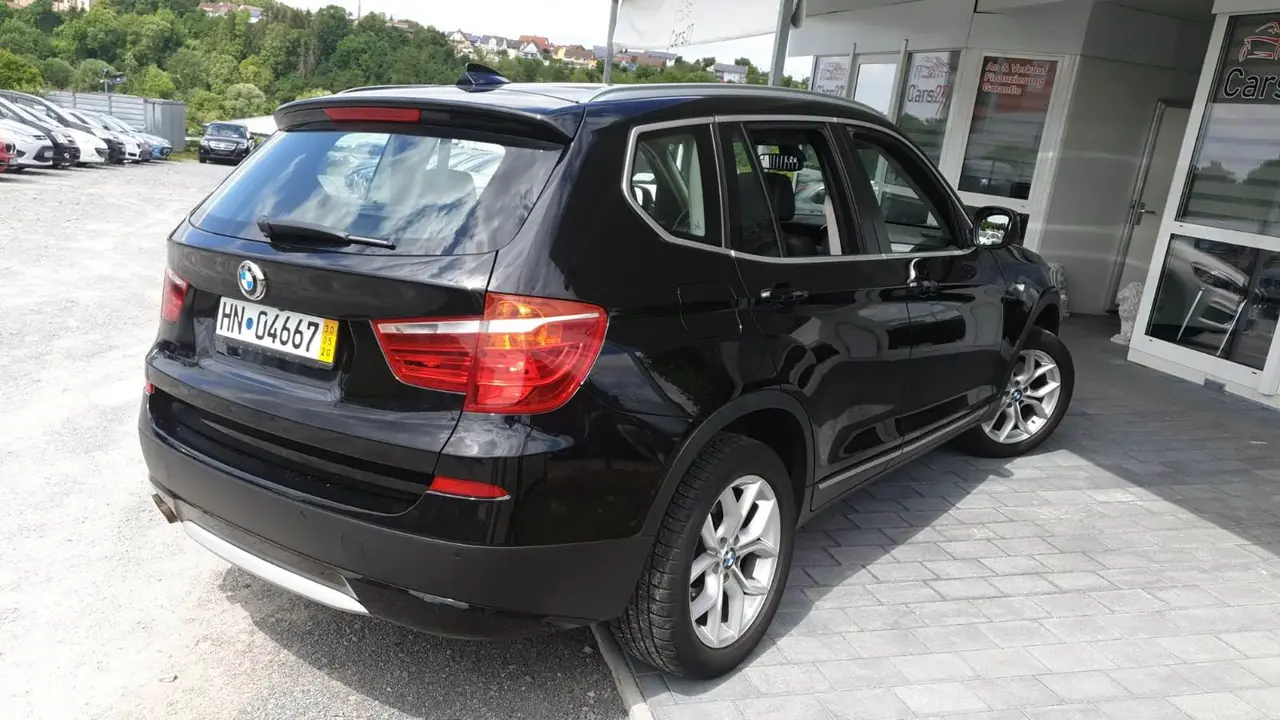
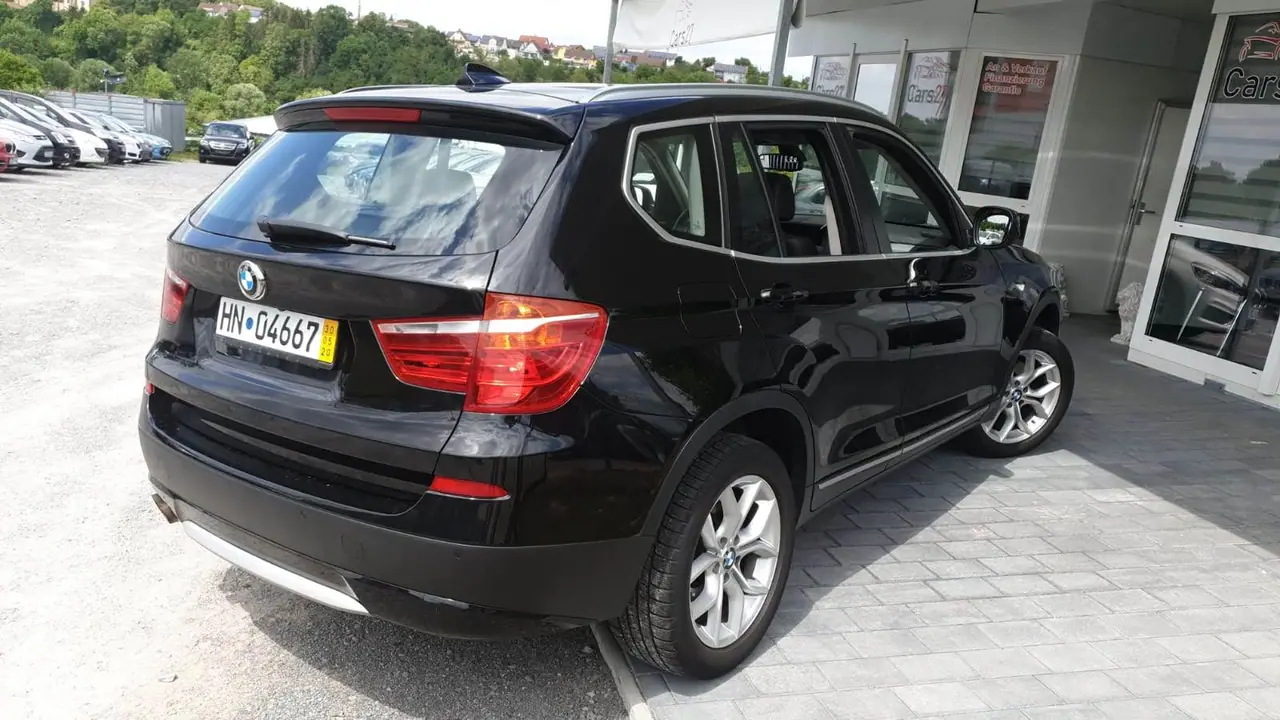
BMW built the second-generation X3, code-named F25, from 2010 to 2017 at its Spartanburg plant in the USA and sold more than 1.5 million of them (mobile.de). It is bigger and more comfortable than the first X3, and mobile.de calls it the best of the earlier X3 generations. Auto Express rates it "one of the most fun-to-drive family SUVs you could buy at the time"; What Car? calls it a good used buy.
This guide covers the common BMW X3 F25 problems engine by engine, what repairs cost, the recalls to check and which version to choose. In short: the car itself is solid, but the engine code under the bonnet decides how risky a used one is.
The BMW X3 F25 (2010–2017) at a glance
- Autumn 2010: launch in Germany and, in November, in the UK, at first only as the xDrive20d (Auto Express). The US got it as the 2011 model.
- Early 2012: the 28i petrol switches from the 258 PS six-cylinder to the 245 PS N20 four-cylinder turbo (mobile.de).
- April 2014: facelift production starts at Spartanburg; the last pre-facelift cars were built in March 2014 (BimmerToday). The 18d and 20d move from the N47 to the new B47 diesel with more power and Euro 6, and the front gets a new grille, wider bumpers and optional full LED headlights (bmwblog, mobile.de).
- July 2017: end of production (Auto Bild); the third-generation G01 goes on sale in the UK in November 2017 (Auto Express). In the US, 2017 is the last F25 model year.
Engines and specs
| Engine | Engine code | Power | Notes |
|---|---|---|---|
| 18d diesel | N47, B47 from April 2014 | 143 PS, 150 PS from 2014 | Rear-wheel drive; 0–100 km/h 9.9 s, later 9.5 s |
| 20d diesel | N47, B47 from April 2014 | 184 PS, 190 PS from 2014 | xDrive, the most common version |
| 30d / 35d diesel | N57 | 258 / 313 PS | Six-cylinder, automatic only |
| 20i petrol | N20 | 184 PS | 0–100 km/h 8.3 s; rear-wheel drive from 2014 |
| 28i petrol | N52 to February 2012, then N20 | 258 PS, then 245 PS | US: 240 hp four-cylinder from 2013 |
| 35i petrol | N55 | 306 PS (US: 300 hp) | Six-cylinder, rare in Europe |
| xDrive28d diesel (US) | N47 | 180 hp, 380 Nm | US market, 2015–2017 |
Power figures from mobile.de, Gebrauchtwagenberater and Edmunds; acceleration from Auto Bild; engine codes from Gebrauchtwagenberater, Car Checker and Euro Premium Parts. The boot holds 550 litres, or 1,600 litres with the 40:20:40 rear seats folded (mobile.de).
Timing chains on every engine
All X3 F25 engines use timing chains, not belts, so there is no cambelt to change (Auto Express). That is not the same as no risk: the N47 diesel and the N20 petrol are the two engines prone to stretched chains, and these timing chain issues are why early 20d cars are exactly the ones What Car? warns about.
Gearboxes and xDrive
Engines up to 200 PS came with a six-speed manual or the optional eight-speed ZF automatic transmission; everything stronger had the automatic only (mobile.de). Gebrauchtwagenberater rates the ZF eight-speed as reliable. Most cars have xDrive all-wheel drive; only the 18d and, from 2014, the 20i were rear-wheel drive (sDrive). All 2017 US models have the eight-speed automatic (Edmunds).
Fuel economy
| Engine | Official economy (UK) | About | CO2 |
|---|---|---|---|
| 18d manual | 60.1 mpg | 4.7 l/100 km | 124 g/km |
| 18d automatic | 55.4 mpg | 5.1 l/100 km | n/a |
| 20d manual | 55.4 mpg | 5.1 l/100 km | 135 g/km |
| 20d automatic | 57.6 mpg | 4.9 l/100 km | 129 g/km |
| 30d | 47.1 mpg | 6.0 l/100 km | 159 g/km |
| 35d | 46.3 mpg | 6.1 l/100 km | 164 g/km |
Official figures quoted by Auto Express, converted from UK gallons. Real driving uses more: in its test of a 20d, Carsguide averaged 7 l/100 km against a claimed 5.6. In the US, the EPA rates the 2013–2017 xDrive28i at 21 mpg city, 28 mpg highway and 24 mpg combined, up from 21 mpg combined for the 2011–2012 xDrive28i (mpgbuddy, EPA data).
Living with it
Driving dynamics are the X3's strong point: Auto Express praises the handling, grip, body control and well-weighted steering, but finds the ride firm, especially at low speed, even with the optional adaptive dampers in Comfort mode. The 2.0-litre four-cylinder diesel sounds gruff, less so after the facelift, and the six-cylinders are smoother; tyre noise and wind noise from the big door mirrors are noticeable at motorway speeds. Critics also missed some interior quality (mobile.de).
Specs vary a lot because the X3 had a long options list (Auto Express). mobile.de recommends leather, bi-xenon or the later LED headlights and parking sensors or a reversing camera, and warns that the panoramic roof is expensive to repair.
Reliability and MOT record
The British MOT (the UK roadworthiness test) is a good large-scale reliability check for cars of this age. Of 361,000 MOT tests of 2010–2017 X3 F25s, 19.4% were failures, against a UK average of 38.1% for cars of the same years (CarGarages, based on DVSA data). In other words, about 81% pass. Faults that turn up more often than average are indicator faults (3.3 times the UK average, typically around 88,000 miles or 140,000 km), worn brake pads (1.7 times, around 73,000 miles or 117,000 km), reversing lamps and seat-belt condition.
In Germany the TÜV (the German roadworthiness test) often criticises springs, dampers, the steering, the lights and oil leaks, while in the ADAC breakdown statistics the X3 does well, with the turbocharger as the main cause of breakdowns (Gebrauchtwagenberater). Owners are more mixed: in the UK, What Car? owners report electrical faults (the usual electrical gremlins), engine-component trouble, infotainment glitches and battery failures, and Auto Express says the X3 did well in its Driver Power owner surveys but less well on reliability.
BMW X3 F25 problems: what goes wrong
N47 diesel timing chain (18d, 20d until March 2014)
The pre-facelift four-cylinder diesel engines are known for timing chains that stretch or fail (Gebrauchtwagenberater, mobile.de). The warning sign is a metallic rattle for the first few seconds after a cold start (Car Checker). Budget for it: Car Checker puts replacing the chain at €1,500–2,500 and a replacement engine, if the chain fails, at €3,500–5,000. Gebrauchtwagenberater advises avoiding the N47 cars. The facelift B47 has revised chain parts and is far less affected (Car Checker). The US xDrive28d of 2015–2017 still used the N47 (Euro Premium Parts).
N20 petrol timing chain and oil pump (20i, 28i from 2012)
The N20 four-cylinder turbo petrol can suffer a stretched timing chain and a failing oil pump, and Gebrauchtwagenberater blames it for engine failures, mostly through a stretched chain; it advises avoiding the 20i and the four-cylinder 28i. Late oil changes make it worse. In the US this is the engine in the 2013–2017 sDrive28i and xDrive28i. The early 28i with the N52 six-cylinder has no known engine weak points, and the N55 in the 35i is known for high oil consumption and water pump failure (Gebrauchtwagenberater).
Six-cylinder diesels: bearings and oil leaks (30d, 35d)
The N57 six-cylinder is generally robust and has few weak points, but across BMW models it can wear its con-rod and main bearings (Gebrauchtwagenberater). Car Checker describes the 30d as a reliable engine that often passes 200,000 km with regular maintenance. Typical faults are leaking seals: an oil filter housing gasket at 80,000–140,000 km (up to €800) and a leaking valve cover gasket at 100,000–150,000 km; check the timing chain from about 150,000 km.
EGR cooler leak and fire risk (all diesels)
A leaking EGR cooler can let coolant into the intake manifold, which can melt and, in extreme cases, catch fire (Car Checker). BMW ran three recalls between November 2018 and February 2019 that affected a large number of diesel X3s (Auto Express); What Car? says they cover cars built from 5 August 2010 to 24 October 2017. The recall is free at a BMW dealer; Car Checker puts a private repair at €600–1,500 on the 20d. Signs are coolant loss, power loss and an exhaust smell in the cabin.
Particulate filter, EGR valve and swirl flaps (diesel)
Lots of short trips stop the diesel particulate filter (DPF) from regenerating, and fuel can dilute the engine oil (mobile.de). Car Checker estimates €150–300 for a forced regeneration, €300–600 for cleaning and €1,000–1,800 for a new DPF. Carbon build-up in the EGR valve shows up at 80,000–130,000 km with a rough idle and power loss, and the swirl flaps on pre-2014 N47 engines can break and damage the engine (Car Checker). The variable-vane turbo can stick; a new turbo costs €1,500–2,500.
Steering rack knock and power steering
A clunk from the electric steering rack over low-speed bumps is common at 60,000–120,000 km; a thrust-piece kit costs €100–250, a new rack €1,800–2,200 (Car Checker). Rarely, the electric power steering fails, with heavy steering and an off-centre steering wheel (Gebrauchtwagenberater). Cars built between 19 September 2011 and 8 December 2015 were recalled for an electrical fault that can make the steering heavier (What Car?).
xDrive transfer case
The transfer case is mostly just expensive to repair; mixed tyres, different tyre pressures and uneven tread depths speed up wear (Gebrauchtwagenberater). The typical failure is the actuator gear at 120,000–200,000 km: ABS, brake and 4x4 warnings come on together, and you may hear clicking after switching off (Car Checker). A repair kit costs €100–150, a professional repair €300–500 and a new unit €1,500–2,000. Gebrauchtwagenberater recommends regular transfer case oil changes, although BMW sets no interval.
Coolant pump, suspension and lights
The coolant pump and thermostat can fail at 80,000–130,000 km, with a coolant warning and quick overheating; expect €500–700 at an independent garage or €800–1,000 at a dealer (Car Checker). Tie rod ends wear sooner than on rival models, and broken springs affect pre-facelift cars (mobile.de). LED tail lights often fail because of a faulty circuit board, and the panoramic sunroof can leak (Gebrauchtwagenberater), so check for sunroof issues on a test drive.
Body, rattles and electrics
mobile.de reports rust on the tailgate trim, loose door seals, electronic glitches such as display faults and wind noise, plus rust on the spare wheel mounted under the rear. Auto Express adds creaks and rattles from the doors, seats, tailgate and parcel shelf, and calls the factory sat nav weak even for its time. On US cars, the most reported 2017 X3 problem on CarComplaints is a battery that won't hold a charge.
Recalls
In Europe and the UK the main recalls cover a VANOS bolt that can break on six-cylinder petrols built from September 2009 to November 2011, a vacuum pump that can stop the brake servo working on 2.0i and 2.8i cars built from June 2012 to August 2013, and a misassembled driver airbag cover on cars built from July to December 2012 (mobile.de). Rear Isofix mountings can work loose on cars built from 1 August 2010 to 15 April 2016; dealers weld on reinforcements (What Car?). Others covered the front passenger airbag (December 2013), a valve-timing fault that could cause limp-home mode (July 2014), the power steering, a fuel-flow restriction that could stall the engine (April 2018) and the EGR cooler (Auto Express). A ConnectedDrive security update applies to cars built from March 2010 to December 2014 (mobile.de).
In the US, NHTSA lists the LATCH child-seat anchor recall (16V333, 188,668 vehicles) for 2011–2017 models, an electric water pump connector that can short and cause a fire on 2013–2017 sDrive28i and xDrive28i (24V608), the EGR cooler on the 2015–2017 xDrive28d (18V755, superseded by 21V907), a high-pressure fuel pump that can stall the 2015–2017 xDrive28d (21V586) and a power steering control unit on some 2017 xDrive28i (16V704) (VehicleFlaws, NHTSA data). In every market, ask a BMW dealer to check the VIN for open recalls.
With the X3 F25, the engine code matters more than the trim. N47 diesels and N20 petrols need proof of a healthy timing chain.
The 2017 BMW X3: last year of the F25
In the US, the 2017 BMW X3 came as sDrive28i and xDrive28i with a 240 hp 2.0-litre turbo petrol, as xDrive28d with a 180 hp 2.0-litre diesel and as xDrive35i with a 300 hp six-cylinder (Edmunds). It is the most developed F25, but not trouble-free: NHTSA has 137 owner complaints for the 2017 model year, most often about the electrical system and engine cooling, and lists six recalls, from the water pump connector on the 28i to the EGR cooler and fuel pump on the 28d (VehicleFlaws). It scored five stars overall in NHTSA crash tests. A 2017 xDrive35i avoids the N20 four-cylinder; a 28i needs proof of the water pump recall and regular oil changes.
In Europe, the last F25 cars were built until mid-2017, and a car registered in late 2017 may already be the new G01 X3. Check the model code (F25 or G01) in the papers.
Running costs
The X3 tells you when it needs a service; Auto Express says to expect one every 24 months or 18,000 miles (about 29,000 km). Brake fluid is due every two years (about £61), an oil change costs about £140 on 2.0-litre cars and an air and oil filter change together about £375, with the 3.0-litres roughly 10% dearer. UK insurance groups run from 23 for an 18d SE to 43 for a facelift 35d, so the six-cylinders mean higher maintenance costs as well as higher premiums. BMW's long-life oil interval is 30,000 km or two years; Gebrauchtwagenberater says to at least halve it, and Car Checker recommends 10,000–15,000 km with a quality 5W-30. For a car with an N47 or N20, shorter oil change intervals are the cheapest insurance against chain trouble: you pay a little more for oil and save money on the engine.
Safety
Euro NCAP gave the X3 five stars in 2011, with 88% for adult occupants, 83% for children, 53% for pedestrians and 71% for safety assist; ESC and six airbags were standard (Euro NCAP, mobile.de). In the US, the 2017 X3 scored five stars overall, five for frontal and side impacts and four for rollover in NHTSA tests (VehicleFlaws, NHTSA data).
Which BMW X3 F25 should you buy?
For most buyers the best pick is a facelift xDrive20d with the 190 PS B47 and Euro 6, built from April 2014 (mobile.de). Gebrauchtwagenberater prefers a facelift car with a six-cylinder, petrol or diesel, and fully documented servicing. If you mostly do short trips, mobile.de suggests the 20i petrol, but Gebrauchtwagenberater warns about its N20, so only buy one with documented oil changes and a quiet chain. Auto Express names the sDrive18d SE manual as the cheapest to run, the xDrive20d SE auto as the family car and the xDrive35d M Sport auto for performance.
If you are asking which BMW X3 years to avoid, be aware that the honest answer is engines rather than years: in Europe, N47 diesels built until March 2014 and N20 petrols carry the biggest risk (Gebrauchtwagenberater). In the US, the 2011–2012 xDrive28i with the six-cylinder and the xDrive35i avoid the N20; the 35i's N55 is known for oil consumption and water pump failures. Gebrauchtwagenberater sees used F25s from about €6,000 and well-kept facelift cars from about €10,000 (July 2026). Alternatives from the same years include the Audi Q5, the Mercedes-Benz GLK and the Acura RDX (Which?, Consumer Reports).
Buying checklist
- Listen for a metallic chain rattle in the first seconds after a cold start, especially on N47 diesels and N20 petrols.
- Full service history with regular oil changes, ideally more often than the long-life interval.
- Diesel: proof of the EGR cooler recall with the latest part, and no oil above the maximum mark or smelling of fuel.
- Check that all four tyres match in size, brand and tread depth, and watch for ABS, brake and 4x4 warnings together (transfer case).
- Drive over cobbles to find knocks from the steering rack, tie rods or springs; a mechanic or BMW specialist can address a rack knock cheaply if it is caught early.
- If the seller offers one of the extended warranties, check that it covers the timing chain and the transfer case.
- Test every light, especially the LED tail lights and indicators, and look for damp under the panoramic roof.
- Check the coolant level and temperature gauge on a long test drive.
- Ask a BMW dealer to check the VIN for open recalls, including Isofix, vacuum pump, power steering and airbags.
Verdict
The BMW X3 F25 is a good used SUV if you choose by engine code. Its MOT record is far better than average, the ZF automatic is strong and the chassis is one of the best of its era. The major BMW X3 F25 problems sit in two engines, the N47 diesel and the N20 petrol, plus the EGR recall on the diesels. A post-facelift 20d or a six-cylinder with full history and completed recalls is the safe bet. For a newer coupé-style BMW SUV, read our 2021 BMW X4 guide; for a cheaper rival of the same years, see our Mazda CX-5 guide.
FAQ
Is the BMW X3 F25 reliable?
Mostly, yes. It fails the British MOT far less often than the average car of its age (19.4 against 38.1%), and it does well in the ADAC breakdown statistics. The weak points are the N47 diesel and N20 petrol timing chains and the diesel EGR cooler recall.
What are the common problems with the BMW X3 F25?
Timing chains on N47 diesels until March 2014 and on N20 petrols, the EGR cooler fire-risk recall, DPF and EGR valve trouble on short trips, steering rack knock, transfer case actuator failures, coolant pumps, worn tie rod ends and springs, failing LED tail lights and rattles.
Which X3 F25 engine is best?
A facelift 20d with the 190 PS B47 is the best all-rounder, and the six-cylinder diesels and the early N52 28i petrol have the fewest known weak points. Avoid N47 and N20 engines without proof of timing-chain work and regular oil changes.
Which BMW X3 years should you avoid?
Think engines, not years: in Europe, the N47 diesels built until March 2014 and the N20 petrols (20i and 28i from 2012). In the US, the 2013–2017 xDrive28i and sDrive28i use the N20, so check their history and the water pump recall.
Is the 2017 BMW X3 a good used buy?
It is the last and most developed F25, with five NHTSA stars. Check the recalls, especially the water pump connector on the 28i and the EGR cooler and fuel pump on the 28d, and prefer the 35i six-cylinder if you want to avoid the N20.
Based on manufacturer data, crash tests, UK MOT data and owner and workshop reports, not on our own test drive. Sources: mobile.de, Gebrauchtwagenberater, Auto Express (problems and recalls), Auto Express (engines), Auto Express (costs), What Car?, CarGarages (DVSA MOT data), Car Checker xDrive20d, Car Checker xDrive30d, Auto Bild, BimmerToday, bmwblog, Euro Premium Parts, Edmunds, mpgbuddy (EPA), Carsguide, VehicleFlaws (NHTSA), CarComplaints, Euro NCAP (PDF).