1951 Cadillac Series 62
Check the cylinder heads, the Hydra-Matic and the panel under the boot lid first. The 331 V8 is simple; rust and tired chrome are what get expensive.
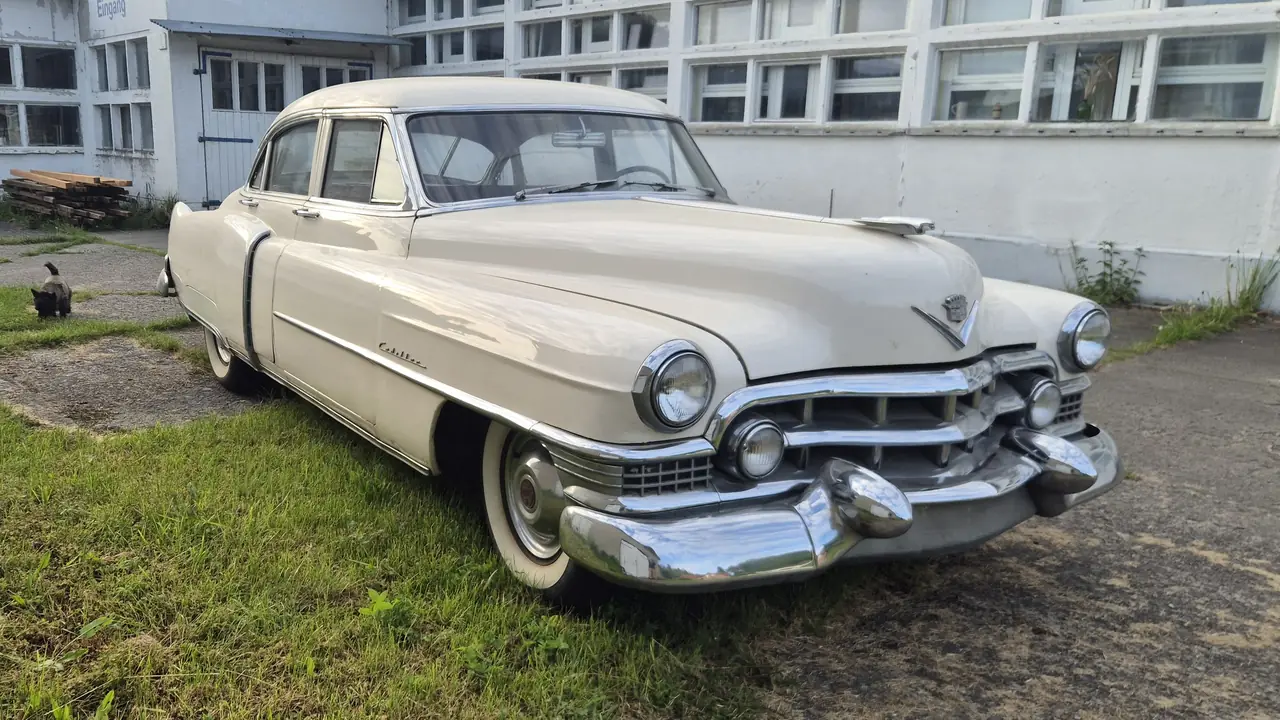 Photo: Apex Race
The short answer
What should you check before buying a 1951 Cadillac Series 62?
- The Series 62 was Cadillac's volume model in 1951, with 81,844 of the 110,340 Cadillacs built that year. Every one had the 331 cu in (5.4-litre) OHV V8 with 160 hp and a standard four-speed Hydra-Matic.
- Known weak points are cracked cylinder heads, overheating, a tired Hydra-Matic, worn suspension and rust under the boot lid, in the floors and rockers and around the body mounts.
- Sedans are the cheapest way in, and convertibles often cost twice as much or more. Chrome and trim are the expensive part of any restoration.
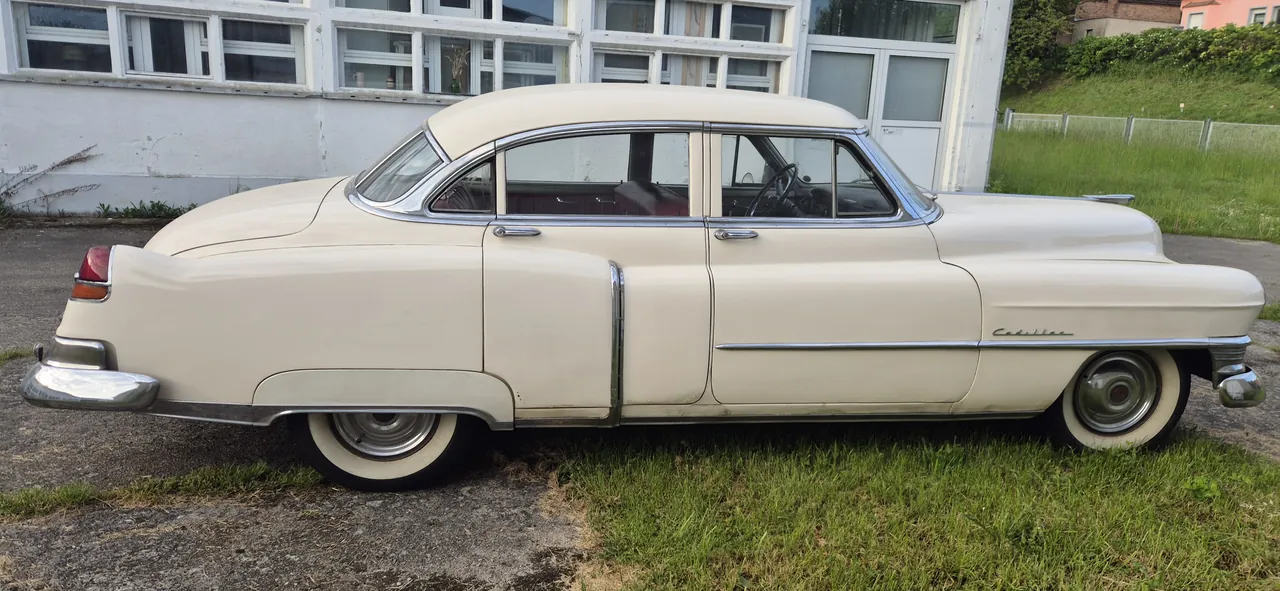
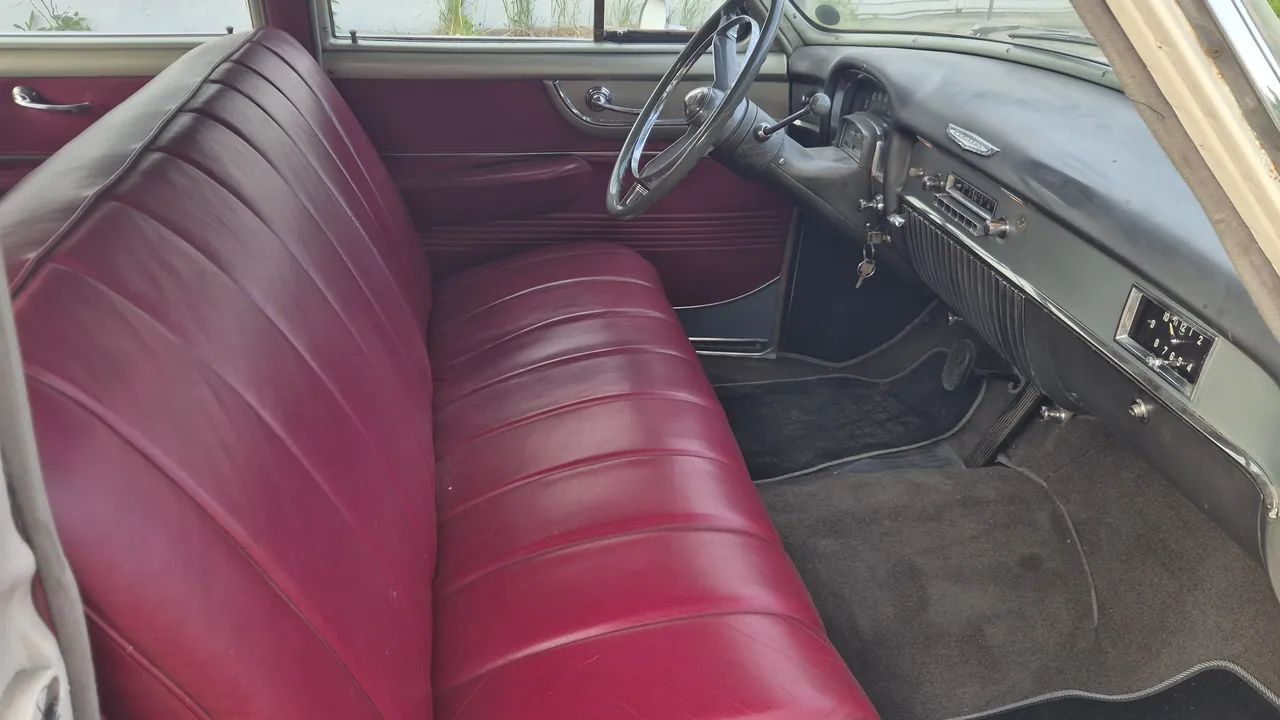
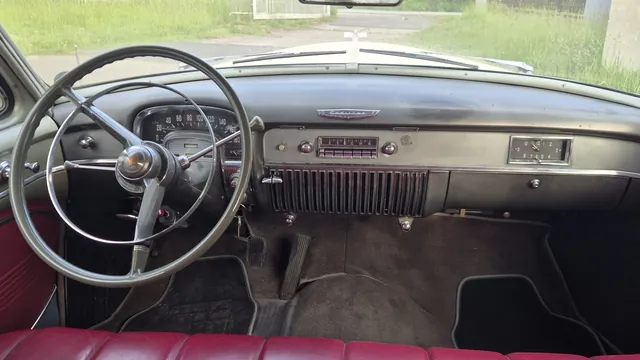
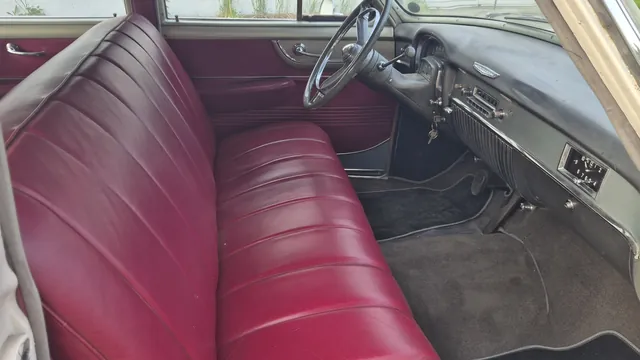
Cadillac sold the Series 62 from 1940 to 1964 (Wikipedia). The third generation, built from 1948 to 1953, is the one that gave Cadillac its tail fins under GM design chief Harley Earl (Retro Rides). According to Hagerty, the P-38 Lightning fighter plane inspired them. In 1951 the Series 62 was the backbone of the brand: Cadillac built 110,340 cars that year, and 81,844 of them were Series 62s (conceptcarz). This guide covers the 1951 car and notes where the other years of the generation differ. The photos in this guide are our own.
History and versions
The 1948 cars brought the new body and the first fins. In 1949 Cadillac replaced the old 346 cu in side-valve V8 with a new overhead-valve 331 cu in V8. It made 160 hp and weighed about 200 lb less than the engine it replaced (Wikipedia). For 1950 the cars got lower and sleeker, with a longer bonnet and a one-piece windscreen. Hydra-Matic and hydraulic window lifts became standard on the Series 62 (Hagerty, RM Sotheby's).
The 1951 update was a light facelift with more chrome and bullet-shaped bumper guards (Hagerty). The cheaper Series 61 was dropped in the middle of the year because sales were slow (Hagerty). Body styles were the four-door sedan, the club coupé, the convertible and the Coupe de Ville hardtop. The sedan was the bestseller, with 54,596 built at a list price of $3,530. Cadillac also built 10,132 club coupés and 6,117 convertibles (conceptcarz). If you want a longer car, that's a different model: only the Series 75 Fleetwood limousine was longer than the 62 sedan (Hagerty).
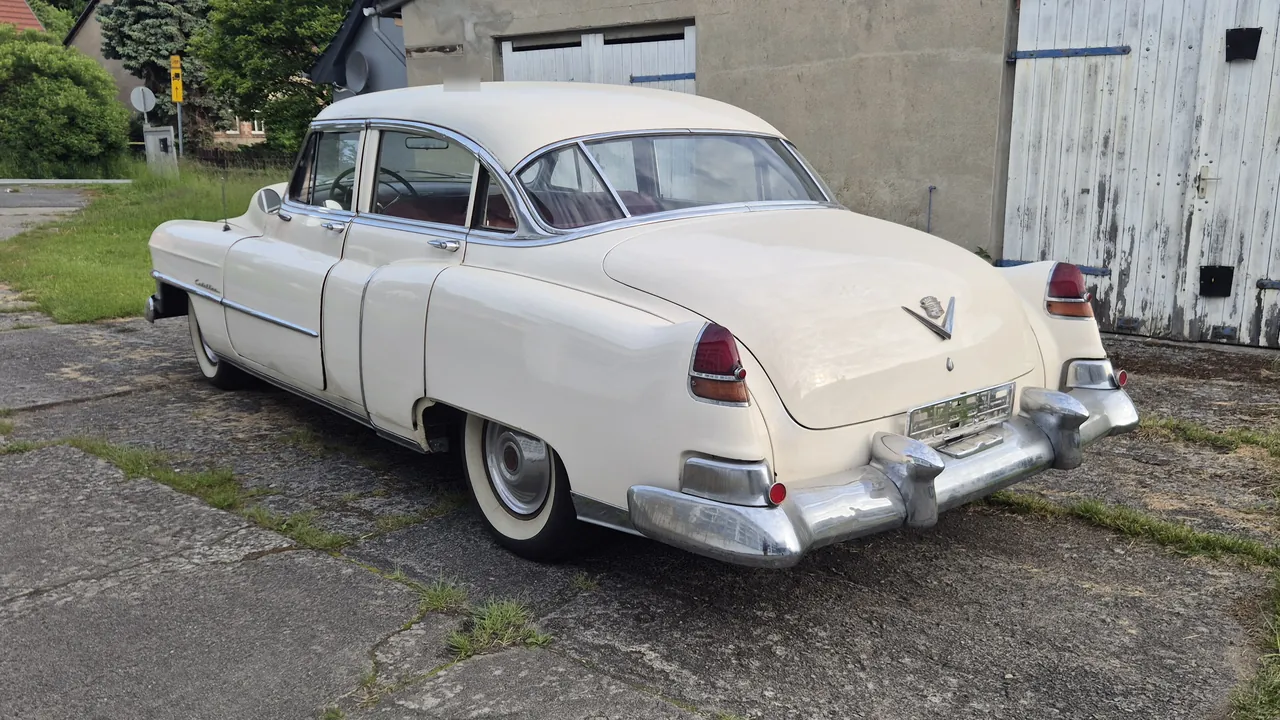
In 1952 power rose to 190 hp (Wikipedia), and the Dual-Range Hydra-Matic arrived (Hemmings). The 1953 cars made 210 hp (Gooding) and are easy to spot by their one-piece rear window. 1953 was also the first year of the Eldorado (conceptcarz). After a fire at the Hydra-Matic factory in 1953, Cadillac fitted Buick's Dynaflow to a number of cars, Series 62s included (Hemmings).
Engines and specs
| Model year | Power (331 V8) | Gearbox | How to spot it |
|---|---|---|---|
| 1950 | 160 hp | Hydra-Matic, standard | lower body, one-piece windscreen |
| 1951 | 160 hp | Hydra-Matic, standard | extra chrome, bullet-shaped bumper guards |
| 1952 | 190 hp | Dual-Range Hydra-Matic | |
| 1953 | 210 hp | Dual-Range Hydra-Matic, some Dynaflow | one-piece rear window |
In 1951 the 331 V8 (5,424 cc) made 160 hp at 3,800 rpm and 312 lb-ft (423 Nm) at 1,800 rpm (conceptcarz). It ran a Carter two-barrel carburettor and drove the rear wheels through a four-speed Hydra-Matic (Hagerty). The wheelbase is 126 inches, or 3.2 metres. It had independent front suspension with coil springs, a live rear axle on semi-elliptic leaf springs and hydraulic drum brakes on all four wheels (RM Sotheby's, Gooding). Our old version of this article listed coil-sprung independent rear suspension. That was wrong.
Living with it
The Hydra-Matic makes the car easy to drive, and the big V8 has plenty of low-down torque. But it is a heavy car on four drum brakes, so leave plenty of distance and expect to brake early. Retro Rides warns that the suspension works hard on these heavy cars, so budget for new parts unless they were replaced recently. The V8s can overheat, and that causes other problems, so a healthy radiator and cooling system matter more than anything else on a hot day. We found no reliable fuel consumption figure from the period, so we won't guess one.
Engine parts are still available. Specialists such as All Cadillacs of the '40s and '50s supply heads, camshafts and Hydra-Matic flywheels, according to a Hemmings parts feature. In Germany a car this age can usually get an H plate if it's in original, well-kept condition. Check the details with your inspection body.
Rust and weak points
- Cylinder heads: Ed Cholakian, founder of All Cadillacs of the '40s and '50s, told Hemmings the heads are the one real weak point of these engines. They simply crack. He gets calls for heads from 1949 to 1955 cars all the time, and he has used heads crack-tested before he sells them.
- Cooling: The V8s can overheat, and that creates other problems (Retro Rides).
- Hydra-Matic: The four-speed automatic should change smoothly. If it doesn't, expect an expensive rebuild (Retro Rides). Properly maintained, the gearbox was trouble-free by 1950 (Hemmings).
- Suspension: On a heavy car it wears quickly. If it hasn't been rebuilt recently, budget for parts (Retro Rides).
- Rust: Check the chassis, especially around the body mounts (Retro Rides). Owners on the H.A.M.B. forum say that 1949–52 cars almost always have rust or a repair in the panel below the boot lid. When the boot seal fails, water collects in a channel there. They also name the boot floor, the floors (especially the driver's footwell), the inner and outer rockers, the lower front wings behind the wheel openings, the areas around the rear wheel openings and the A-pillars. Reproduction panels for the boot area are available.
- Chrome: Damaged or faded brightwork is extremely expensive to restore (Retro Rides).
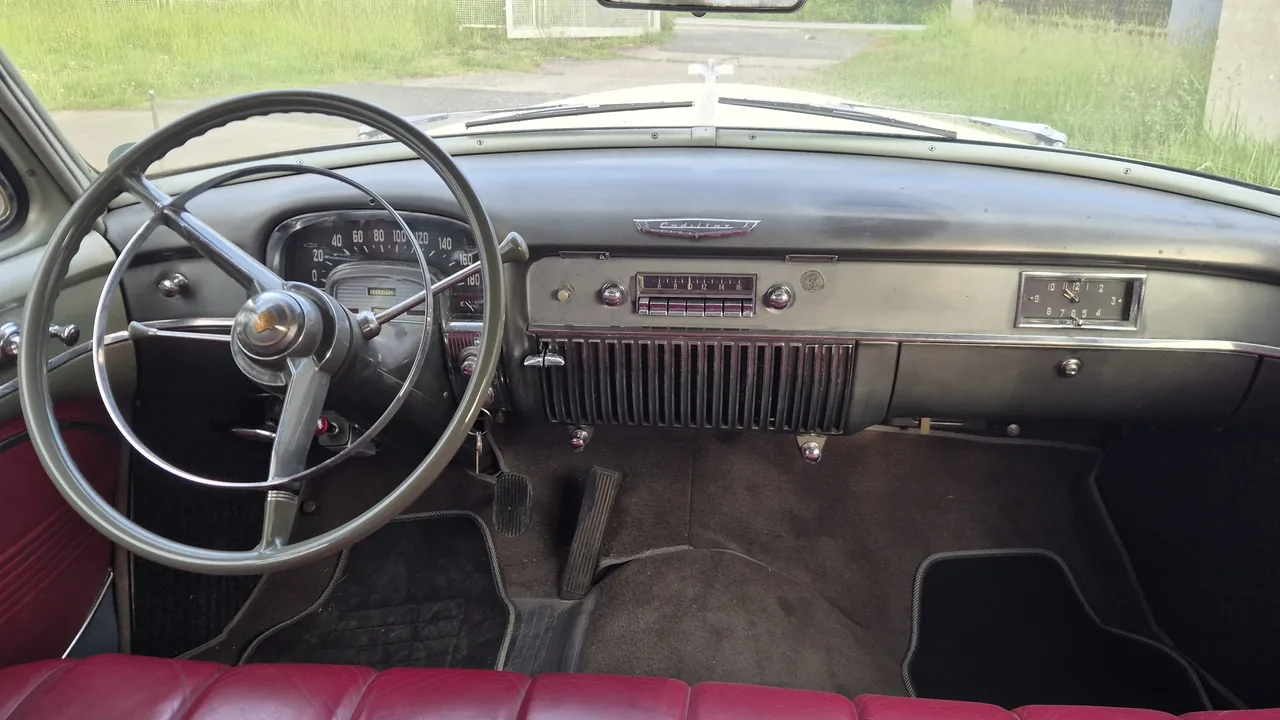
- Power features: Test the windows, seats and, on a convertible, the power top (Retro Rides).
The 331 V8 and the Hydra-Matic are well understood. What ruins the budget is rust under the boot lid and a whole car's worth of tired chrome.
Prices
Values depend on the body style and the condition far more than on the year. Retro Rides, an Australian classic-car magazine, reported in 2024 that usable 1948–58 Cadillacs needing cosmetic work started at about A$30,000. Excellent original or well-restored cars cost more than twice that, and Series 62 convertibles sold for close to A$120,000 there. The magazine rates these cars 5 out of 10 as an investment. In the US, a 1953 Series 62 sedan sold for $11,000 at Mecum in 2024 (conceptcarz). A repainted 1951 convertible that had been in one family for 30 years was bid to $22,000 on Hagerty's online auction in August 2026. At the top end, Gooding estimated a 1951 convertible with well-documented history at $120,000 to $150,000.
Buying checklist
- Ask whether the heads have been crack-tested or replaced. Look for coolant in the oil, and let the engine get properly hot in traffic.
- Check the radiator, water pump and hoses, and watch the temperature gauge on the test drive.
- On the test drive, the Hydra-Matic should go through all four gears smoothly, without slipping or flaring between shifts.
- Put the car on a lift. Check the chassis at the body mounts, the floors, the rockers, the boot floor and the panel below the boot lid. Lift the boot mat.
- Check the lower front wings, the areas around the rear wheel openings and the A-pillars, and ask to see under the carpets.
- Price every damaged piece of chrome: bumpers, grille, trim strips.
- Test the power windows, the seats and, on a convertible, the top.
- Check the steering and suspension for play, and make sure the brakes pull straight.
- Make sure the serial number matches the title and the trim tag. For an H plate in Germany, the car needs to be largely original. Check with your inspection body.
Verdict
The 1951 Series 62 is a comfortable, easy-going cruiser from the first years of the tail fin. The engine and gearbox are simple, and parts can still be found. Spend your money on the most solid body and the best chrome you can find, because those are the expensive parts to fix. A sedan or club coupé is the affordable way in. A convertible costs considerably more. For American muscle from 16 years later, read our 1967 Dodge Charger guide.


FAQ
How much power does a 1951 Cadillac Series 62 have?
The 331 cu in (5.4-litre) V8 makes 160 hp at 3,800 rpm and 312 lb-ft (423 Nm) at 1,800 rpm. In 1952 it was raised to 190 hp, and in 1953 to 210 hp.
Does the 1951 Series 62 have an automatic gearbox?
Yes. The four-speed Hydra-Matic has been standard on the Series 62 since 1950. The Dual-Range version followed in 1952.
What are the typical problems?
Cracked cylinder heads, overheating, a worn Hydra-Matic and tired suspension. On the body, look for rust under the boot lid, in the boot floor, the floors and rockers and around the body mounts. Expensive chrome repairs are the other big cost.
How many were built?
Cadillac built 81,844 Series 62s in 1951, out of 110,340 cars in total. Of these, 54,596 were sedans, 10,132 club coupés and 6,117 convertibles (conceptcarz).
Based on period data, classic-car magazine reports, auction descriptions and owner reports, not on our own test drive. Sources: Retro Rides buyer's guide, conceptcarz (1951 specs and production), conceptcarz (1951 body styles), conceptcarz (1953 sales), Hagerty (1951 sedan), Hagerty (1951 convertible), Hagerty valuation notes, Wikipedia, RM Sotheby's (1950 convertible), RM Sotheby's (1950 equipment), Gooding (1951 convertible), Gooding (1953 convertible), H.A.M.B. owner thread. Hemmings quotes are from its Series 62 buyer's guide and Cadillac parts feature.